
English Library Armchair
When you search for an english library armchair, you are looking at substantial seating designed for reading rooms and studies, spanning the Georgian, Regency, and Victorian eras.
English Library Armchair
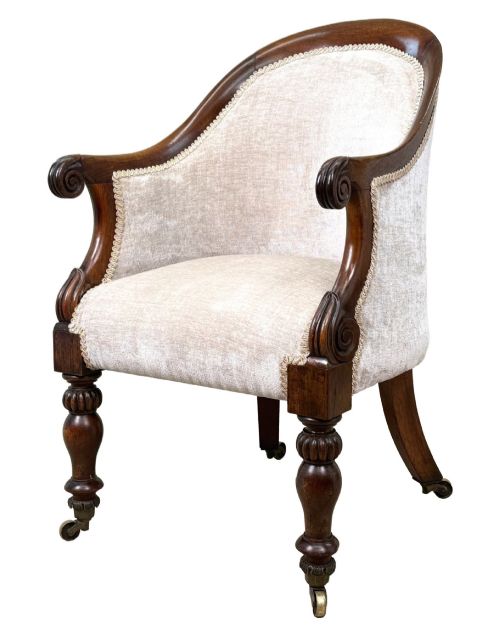
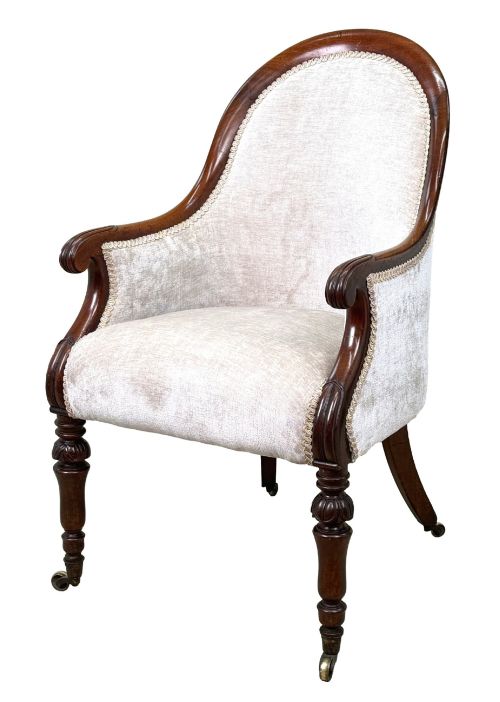
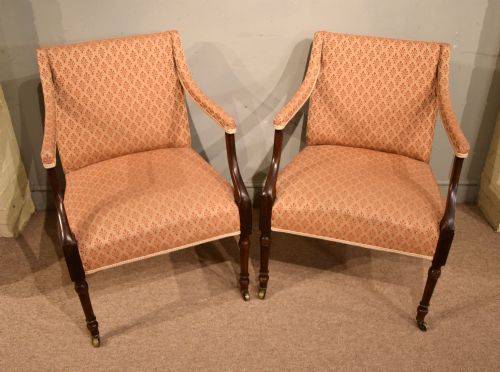
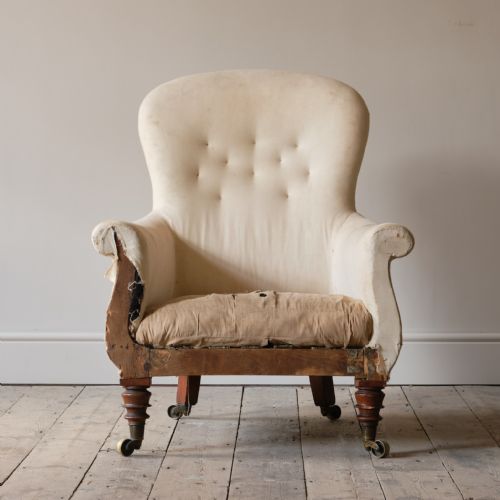
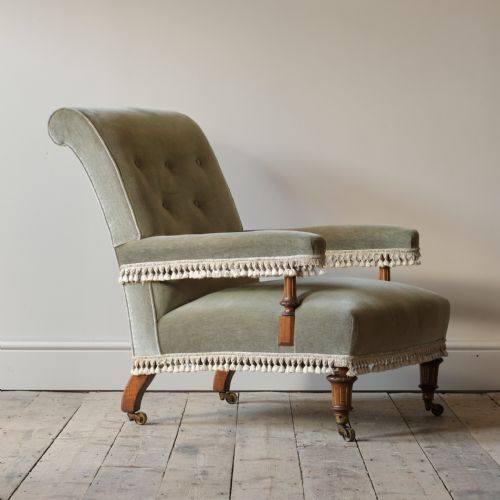
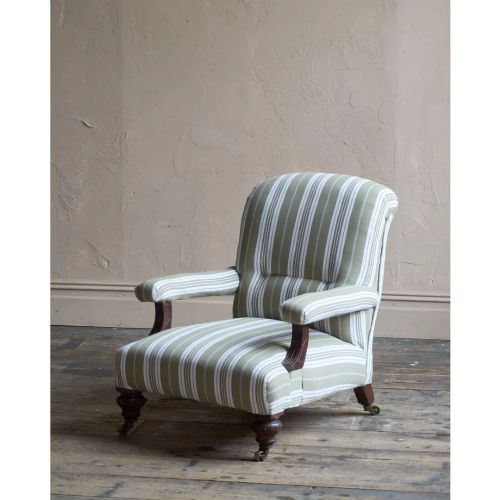
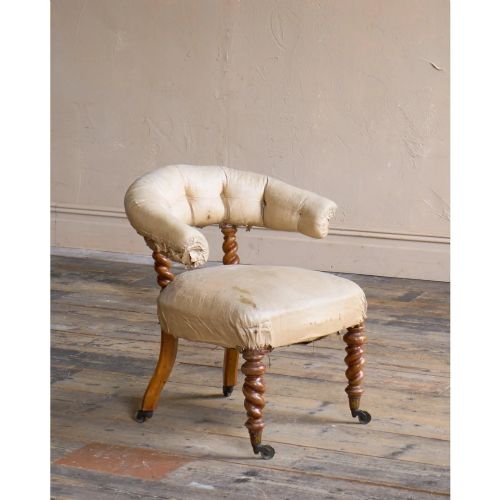
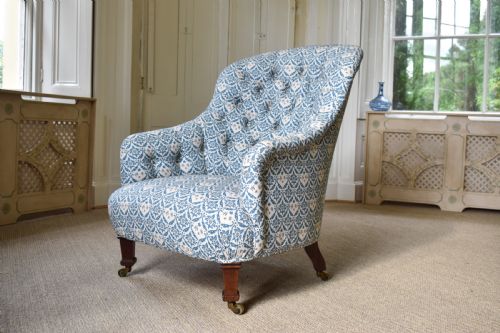
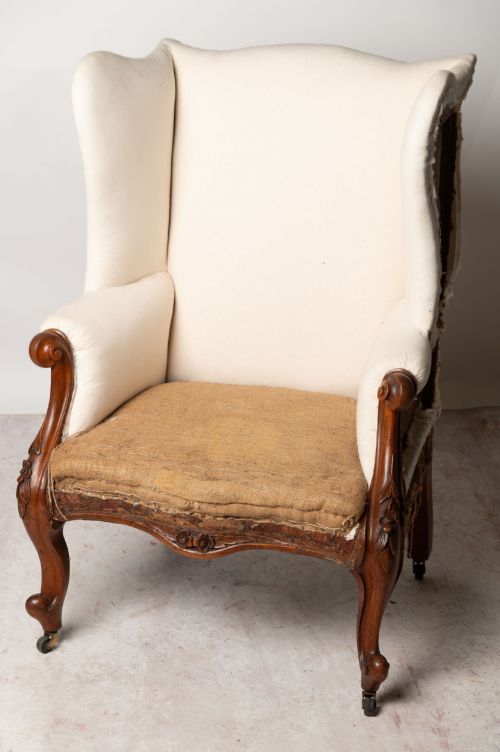
An english library armchair is a heavy, comfortable seat designed for long hours of reading in studies, libraries, and country houses. The pieces on this page span from the 18th century through the Regency and Victorian periods, including Edwardian and early 20th-century club chairs.
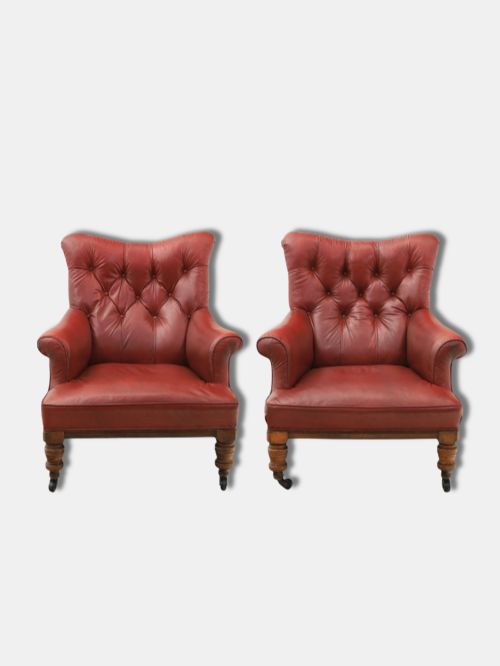
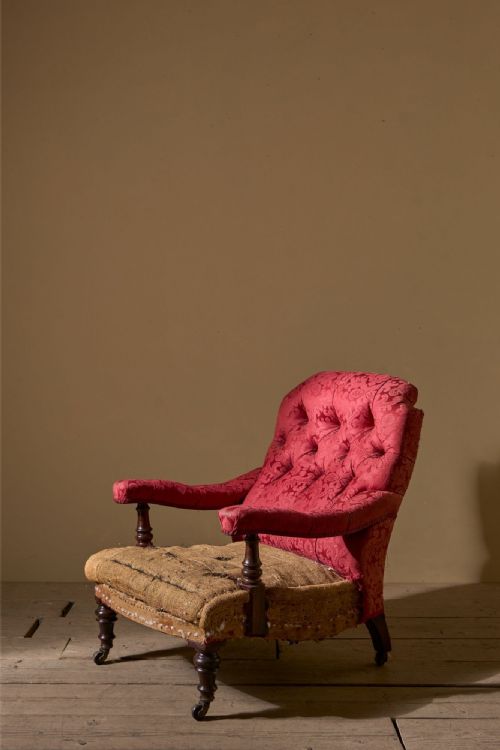
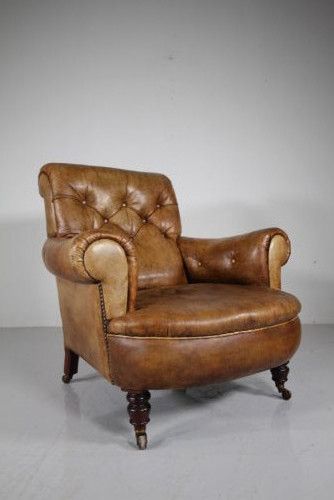
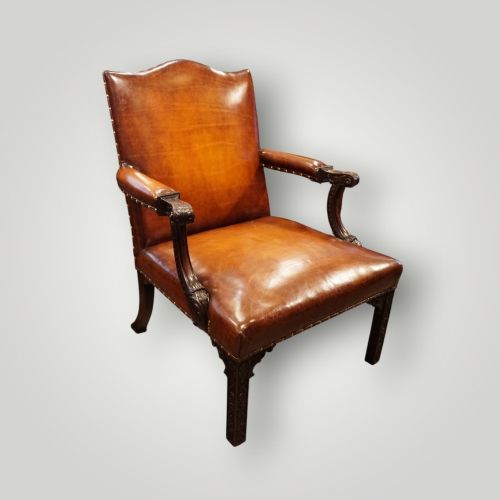
Forms range from deep-seated button-back armchairs and Gainsborough chairs to metamorphic library chairs that fold into steps. You will frequently encounter mahogany and rosewood frames paired with leather or fabric upholstery, alongside simpler oak country house models.
Materials and construction
Makers built the structural frames of solid woods like mahogany, walnut, oak, and rosewood, often incorporating carved details, scroll arms, or brass castors. Show frames displayed polished timber, while upholstered versions concealed the internal hardwood structure beneath webbing and stuffing.
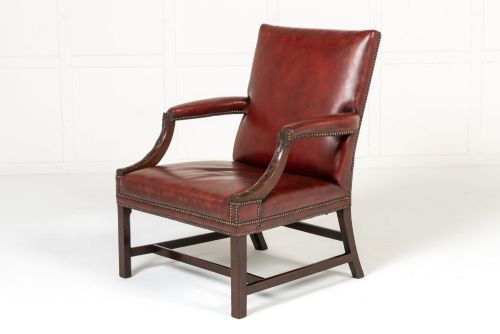
Upholstery utilised traditional hide, leather, velvet, and fabric, sometimes secured with close-nailing or buttoning. Specialised forms such as bergères incorporated woven cane panels into the frame.
Period styles span from 18th-century Georgian designs through Regency, Victorian, and Edwardian eras up to the 1920s.
Assessing quality in construction and material
The distinction between ordinary and superior examples lies in the weight of the timber and the precision of the joinery in the frame. Hand-dyed hides and finely carved mahogany show a level of artisan skill that elevates a piece far above standard utilitarian seating.
Proportion and stance dictate the visual success of the chair, particularly in oversized or deep-seated country house models. Original surfaces and untouched patination on the wood and leather distinguish pieces that retain their historical integrity.
Gillows·C. Hindley & Sons·Howard & Sons
The English Library Armchair Glossary
- Gainsborough chair
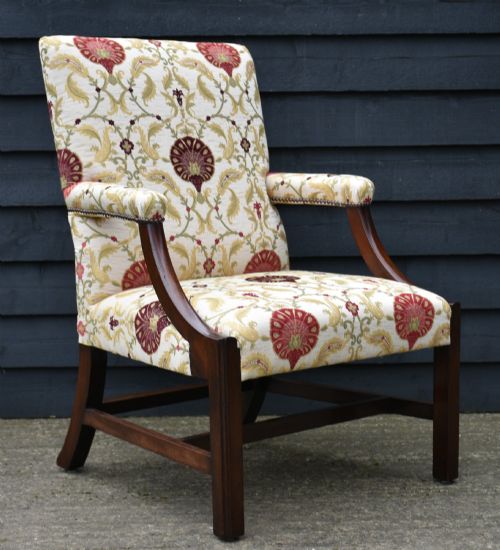
- A wide, open-armed Georgian armchair with a padded back and seat. It typically stands on straight, square legs connected by stretchers.
- Metamorphic
- A piece of furniture designed to transform into another functional object. In this category, armchairs frequently unfold into a set of library steps.
- Smoker's bow
- A low-backed wooden armchair with a continuous curved rail and turned spindles. These Windsor-style seats are commonly found in country houses.
- Tub chair
- An upholstered seat with a curved, enclosing back that sweeps down into the arms. It provides a compact and enclosed seating position.
English Library Armchair: Frequently Asked Questions
What is a library armchair?
A library armchair is a sturdy, comfortable seat traditionally kept in a home study or library for reading and writing. These pieces feature robust wooden frames and upholstered seats designed for sustained use.
They appear in various styles from the Georgian and Victorian periods, often utilising mahogany or leather to withstand heavy daily wear.
How do I date an english library armchair?
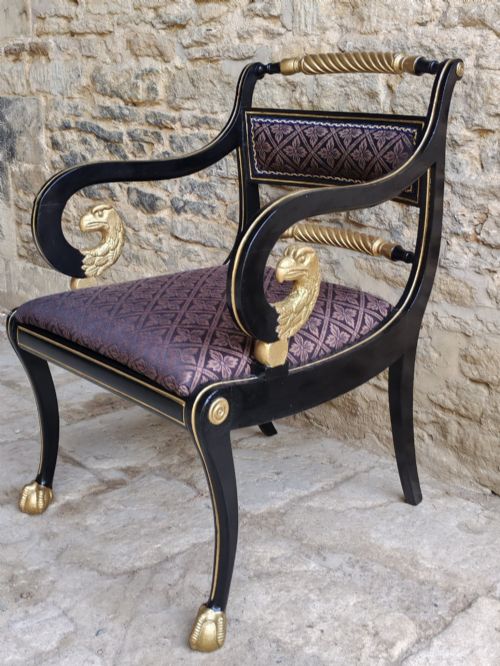
Dating relies on identifying stylistic markers, timber choices, and construction methods specific to periods like Regency or Victorian. Regency pieces often show ebonised details or scroll arms, while Victorian examples lean towards deep-seated button backs.
Secondary woods and the style of the legs further narrow down the era of manufacture.
What is a metamorphic library chair?
A metamorphic library chair is a dual-purpose piece that transforms from an armchair into a set of library steps. This clever design helped readers reach high shelves in tall bookcases.
Mechanisms vary, but most involve folding or pivoting the upper sections to reveal sturdy wooden steps beneath the seat.
How do I care for leather upholstery?
Leather upholstery requires regular dusting and occasional treatment with appropriate leather dressings to prevent drying out. Keeping the hide away from direct sunlight and heat sources preserves the original leather.
Natural patination develops over time, so cleaning should focus on gentle maintenance rather than harsh chemical restoration.