




English Iron Fire Tools
English iron fire tools bring practical craft and period weight to the hearth, combining iron, steel, and brass into sturdy companion sets.
English Iron Fire Tools
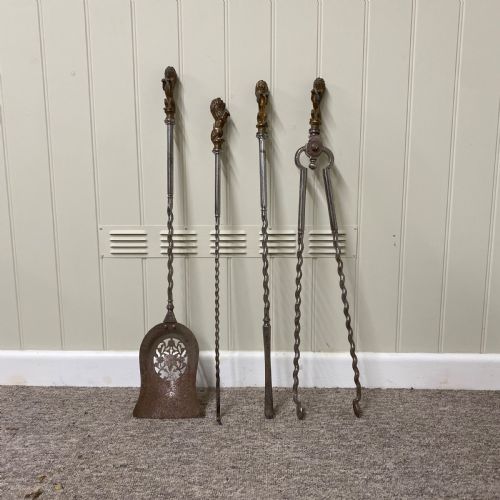
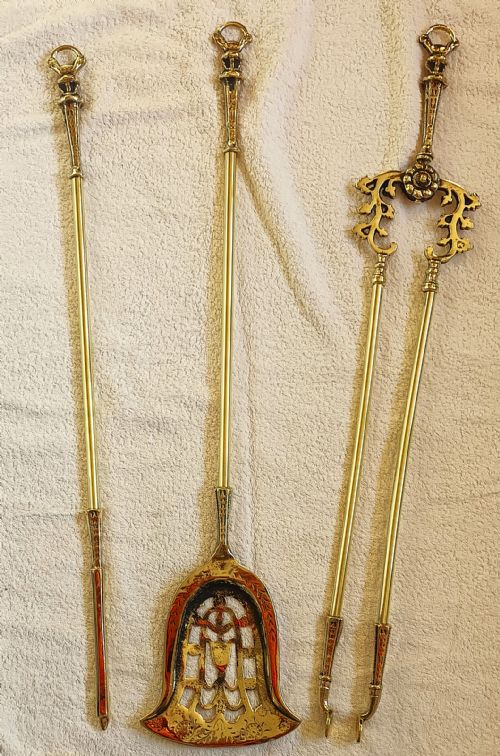
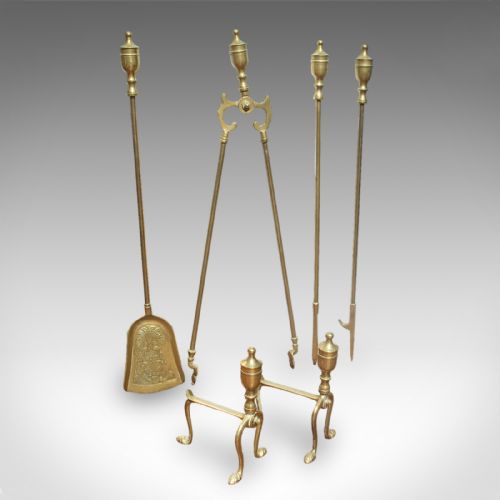
When you search for english iron fire tools, you encounter functional hearth equipment spanning the Georgian, Victorian, and early twentieth-century periods. These items include fireplace tools, companion sets, and specific tool rests designed to organise shovels, pokers, and tongs.
The most common variants on this page are Victorian brass-mounted sets and nineteenth-century steel fire irons. Country house inglenook tools and Aesthetic Movement or Art Nouveau rests also appear among the selections.
The objects serve both utility and display near the fireplace, combining durable metal shafts with decorative handles. Their forms reflect the changing domestic tastes of their respective eras, from austere Georgian steel to elaborate Victorian brass.
Materials and construction
These pieces rely on durable metals such as iron, wrought iron, and cast iron for their core structural strength. Steel and brass provide contrasting elements, particularly for working shafts and decorative handles.
Makers shaped the metal through forging and casting, pairing robust iron bodies with polished brass fittings or gilt metal accents. Tool rests and companion stands utilise cast iron and brass to support the hanging iron implements.
English Iron Fire Tools Retail Price Guide 2026
Typical asking prices for english iron fire tools among the pieces listed under this phrase on Sellingantiques today, from the lower quarter to the upper quarter. They describe what is for sale here now, not the wider market.
Victorian households expected fireside tools to look dignified even when covered in soot and ash.
Assessing quality and execution
The distinction between standard utility items and finer companion sets lies in the weight of the metal and the crispness of the casting. Better examples display balanced proportions in the shovel blades and poker shafts.
Material combination also elevates a piece, where solid brass handles are securely pinned to forged steel rather than cast as a single weak unit. Surface finish and the preservation of original patination separate well-kept sets from heavily worn hardware.
The English Iron Fire Tools Glossary
- Companion set
- A matched collection of fireplace tools, typically comprising a shovel, poker, and tongs, often accompanied by a stand or rest.
- Fire irons
- The individual working implements used to tend a solid fuel fire, including pokers, tongs, and shovels.
- Aesthetic Movement
- A late nineteenth-century style focusing on visual and material qualities rather than narrative or historical themes.
- Inglenook
- A large recessed hearth space in older houses, requiring longer or heavier fire tools for reaching deep into the fire basket.
- Fire dog
- A horizontal metal support used in pairs to hold logs in an open fireplace, occasionally incorporating rests for companion tools.
English Iron Fire Tools: Frequently Asked Questions
What tools come in a set?
Standard sets typically include a shovel, a poker, and a pair of tongs designed to manage coal or wood.
Additional pieces may involve companion stands or matched tool rests to hold the implements upright beside the hearth.
How do I date these pieces?
Dating relies on stylistic clues such as Aesthetic Movement motifs, Victorian brass casting techniques, or earlier Georgian steel forms.
Material choices also help, as nineteenth-century pieces frequently combine wrought iron with polished brass mounts.
Are steel and iron sets different?
Steel sets often date to the Georgian period or lean towards utilitarian Victorian designs with a focus on dark, forged surfaces.
Iron and brass combinations introduce brighter decorative elements while maintaining the heavy structure needed for daily hearth work.
How do I place tool rests?
Tool rests and companion stands sit directly on the hearth floor or integrate with fire dogs to keep implements within reach.
They prevent tools from leaning awkwardly against the wall or mantelpiece while protecting surrounding surfaces from ash.