


English Imari Plates
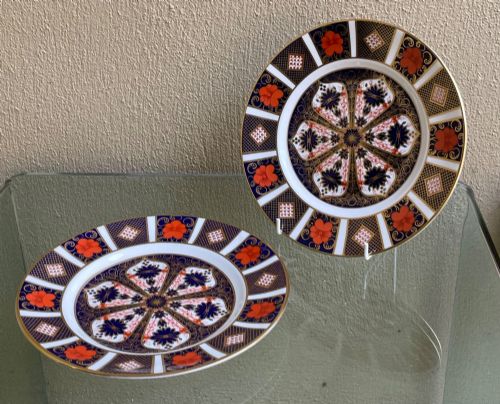
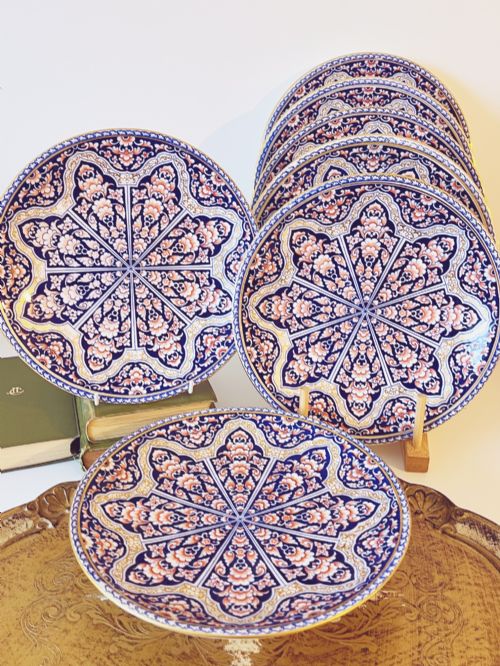
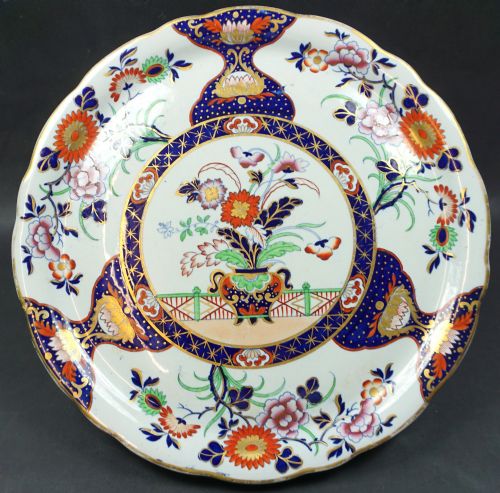
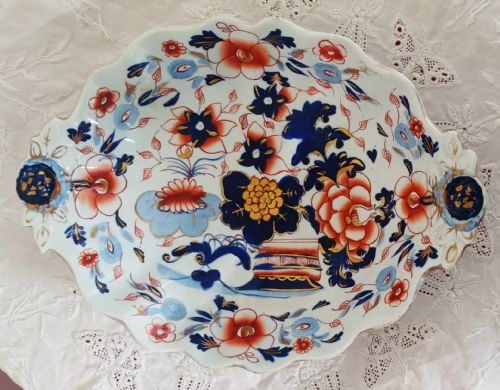
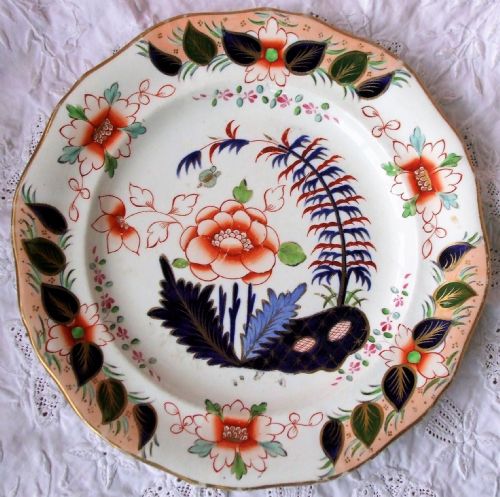
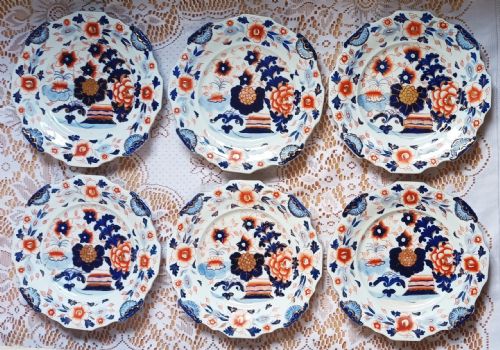
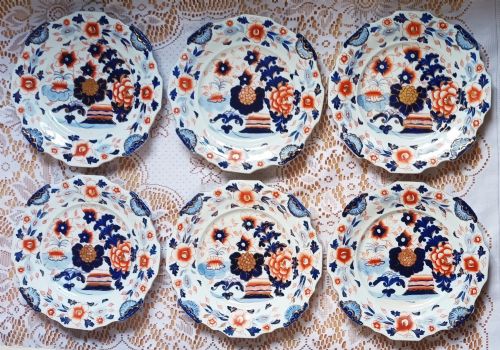
These English Imari plates bring bold cobalt blue, rich iron-red enamel, and sparing gold leaf to the table, offering a striking display of historic ceramic artistry.
English Imari Plates
When you search for english imari plates, you encounter vibrant tableware created by notable factories during the Georgian, Victorian, and later periods. These pieces draw direct inspiration from traditional Japanese export wares, adapting Eastern motifs into distinctive British ceramic forms.
The selections on this page span individual plates, soup bowls, serving platters, and complete dessert services. Ironstone china and porcelain dominate the offerings, often decorated with stylized flora, dragons, and compartmentalized designs.
Makers such as Mason's, Royal Crown Derby, and Chamberlain Worcester appear frequently across the inventory. The forms range from everyday utilitarian dishes to decorative comports meant for formal dining rooms.
Materials and Technique
Potters utilised durable ironstone, refined bone china, and porcelain as the structural base for these ceramics. Ironstone provided a sturdy, heavy body suitable for everyday service, while porcelain allowed for delicate, translucent dessert plates.
Decoration relied on underglaze cobalt blue combined with overglaze iron-red enamel and gold leaf accents. Firing processes fixed the vibrant palette permanently to the glaze, creating the rich contrast characteristic of the style.
Listings feature eighteenth-century porcelain alongside nineteenth-century ironstone plates.
Quality Variations
The precision of the hand-applied enamel work separates simpler factory output from superior artistic achievements. Crisp brushwork on complex patterns like the dragon in compartments indicates a higher tier of production.
The weight and translucency of the ceramic body also dictate the standard of the piece. Fine porcelain bodies with heavily gilt highlights sit at the upper end of the range, contrasting with robust ironstone built for daily utility.
Royal Crown Derby·Hicks and Meigh·John Davenport·Flight Barr and Barr·John Ridgway·Chamberlain Worcester·Minton·Mason
The English Imari Plates Glossary
- Ironstone
- A patented ceramic body invented in the nineteenth century for its exceptional durability and resistance to chipping. It provides a heavy, opaque alternative to porcelain.
- Imari style
- A decorative scheme mimicking Japanese export porcelain featuring a palette of cobalt blue, iron-red, and gold. English potters reinterpreted these motifs throughout the Georgian and Victorian eras.
- Comport
- A raised dish or bowl used for serving fruit or sweets as part of a dessert service. These elevated vessels form the decorative centrepiece of a table setting.
- Underglaze
- A decoration applied to the ceramic body before the glaze is fired, protecting the pigment beneath a glassy layer. Cobalt blue is the primary colour utilised in this technique.
- Gilt
- A thin application of gold leaf or gold paint used to highlight rims and patterns. It adds a reflective sheen to the finished ceramic surface.
English Imari Plates: Frequently Asked Questions
What are English Imari plates?
These are British ceramics decorated in the Japanese export style using cobalt blue, iron-red enamel, and gold. Factories produced them across the eighteenth and nineteenth centuries for dining and display.
They combine Eastern aesthetic influences with European ceramic bodies like ironstone and porcelain. The resulting tableware remains popular for both collection and table service.
How were dessert services used?
Historic dessert services accommodated the final course of a formal meal, which typically featured fruit, nuts, and sweet confections. The set included comports for elevation alongside matching plates.
Hostesses displayed these services prominently to demonstrate wealth and taste. Guests used the individual plates for portioning sweets at the table.
How do I date an ironstone plate?
Dating relies on maker marks stamped or printed on the underside of the ceramic body. Registry marks and factory-specific ciphers provide precise years or stylistic windows for production.
The weight, shape, and pattern style also offer clues to the era of manufacture. Early nineteenth-century pieces often feature bolder hand-painted motifs compared to later iterations.
Can I use these plates today?
Many sturdy ironstone plates remain suitable for careful daily use or special dining occasions. Hand washing preserves the delicate overglaze enamels and gold leaf from detergent wear.
Porcelain and fine bone china pieces require more cautious handling due to their age. Owners often display them on walls or in cabinets to protect the historic glaze.