



English Glass Ornament
These English glass ornament pieces bring rich colour and tactile form to a room, offering the charm of Victorian and Edwardian craftsmanship.
English Glass Ornament
When you search for an english glass ornament, you encounter a varied selection of decorative items stretching from the nineteenth century into the early twentieth century. The selection ranges from functional inkwells and mantel lustres to novelty figures and vases.
You are most likely to meet Victorian and late Victorian examples fashioned in glass, earthenware, and glazed ceramics. These pieces frequently incorporate distinct decorative elements like cane decoration, hand-blown techniques, and applied glass eyes.
How they were made
Maker workshops utilised hand-blown glass and specialised formulations such as cranberry glass, milk glass, and satin glass to achieve varied translucency and depth. Artisans also employed wheel engraving on glass surfaces to render detailed classical imagery.
Makers combined glass elements with earthenware bodies, glazes, and gilded bronze mounts. Items like novelty inkwells and ceramic figures frequently integrated inset glass eyes for added realism.
English Glass Ornament Retail Price Guide 2026
Typical asking prices for english glass ornament among the pieces listed under this phrase on Sellingantiques today, from the lower quarter to the upper quarter. They describe what is for sale here now, not the wider market.
Several fierce bulldogs, stags, and owls bravely hold your ink and menus with their unblinking original glass eyes.
What varies in quality
Quality rests in the precision of the glass manipulation, seen in the clean execution of cane patterns and the even saturation of cranberry or satin glass finishes. Superior wheel engraving displays sharp detail and accurate classical proportions.
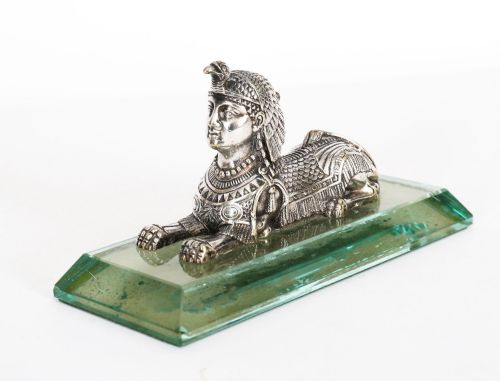
At the higher end, ornamentation incorporates well-cast gilded bronze or sterling silver components alongside original glass eyes. Lesser examples show simpler moulding and less refined surface finishing.
Webb's·Sampson Mordan
The English Glass Ornament Glossary
- Cranberry glass
- A rich red-pink transparent glass coloured with gold chloride during production. It appears frequently in nineteenth-century tableware and decorative mantel lustres.
- Cane glass
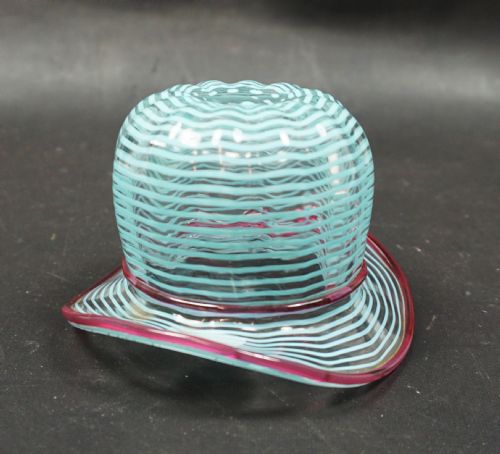
- Glass decorated by incorporating sections of coloured glass rods into the hot metal. This technique creates complex striped or patterned optical effects.
- Satin glass
- Art glass treated with an acidic vapour bath to produce a velvety, matte surface texture. It gained popularity during the late Victorian period.
- Mantel lustre
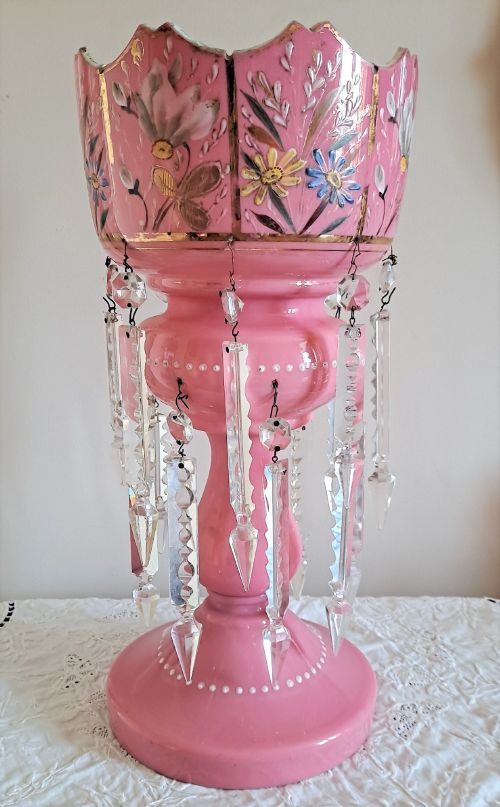
- A decorative glass or ceramic vase fitted with dangling glass prisms designed to reflect candlelight. They were traditionally displayed in pairs on fireplace mantels.
English Glass Ornament: Frequently Asked Questions
What is cranberry glass?
Cranberry glass is a distinctive transparent red glass produced by adding gold to the molten batch. It gained immense popularity during the Victorian era for decorative tableware and mantel lustres.
Craftsmen often combined this rich red glass with clear or white glass edgings to create high-contrast decorative pieces.
How do I date these items?
Dating relies on identifying period characteristics, material formulations like satin or milk glass, and stylistic cues such as Neoclassical motifs or Victorian novelty designs. Examining the manufacturing techniques provides further chronological clues.
Makers often incorporated specific materials and mounting styles that reflect the prevailing aesthetics of the nineteenth and early twentieth centuries.
Where were these pieces displayed?
These decorative objects were traditionally showcased on mantelpieces, in display domes, or on occasional tables within period interiors. Mantel lustres and vases added colour and caught the ambient light of the room.
Smaller novelty items like inkwells and figural ornaments served functional roles on desks while displaying skilled craftsmanship.