



English Glass Claret Jug
An english glass claret jug brings Victorian dining tables to life, offering a brilliant vessel for serving wine with style and substance.
English Glass Claret Jug
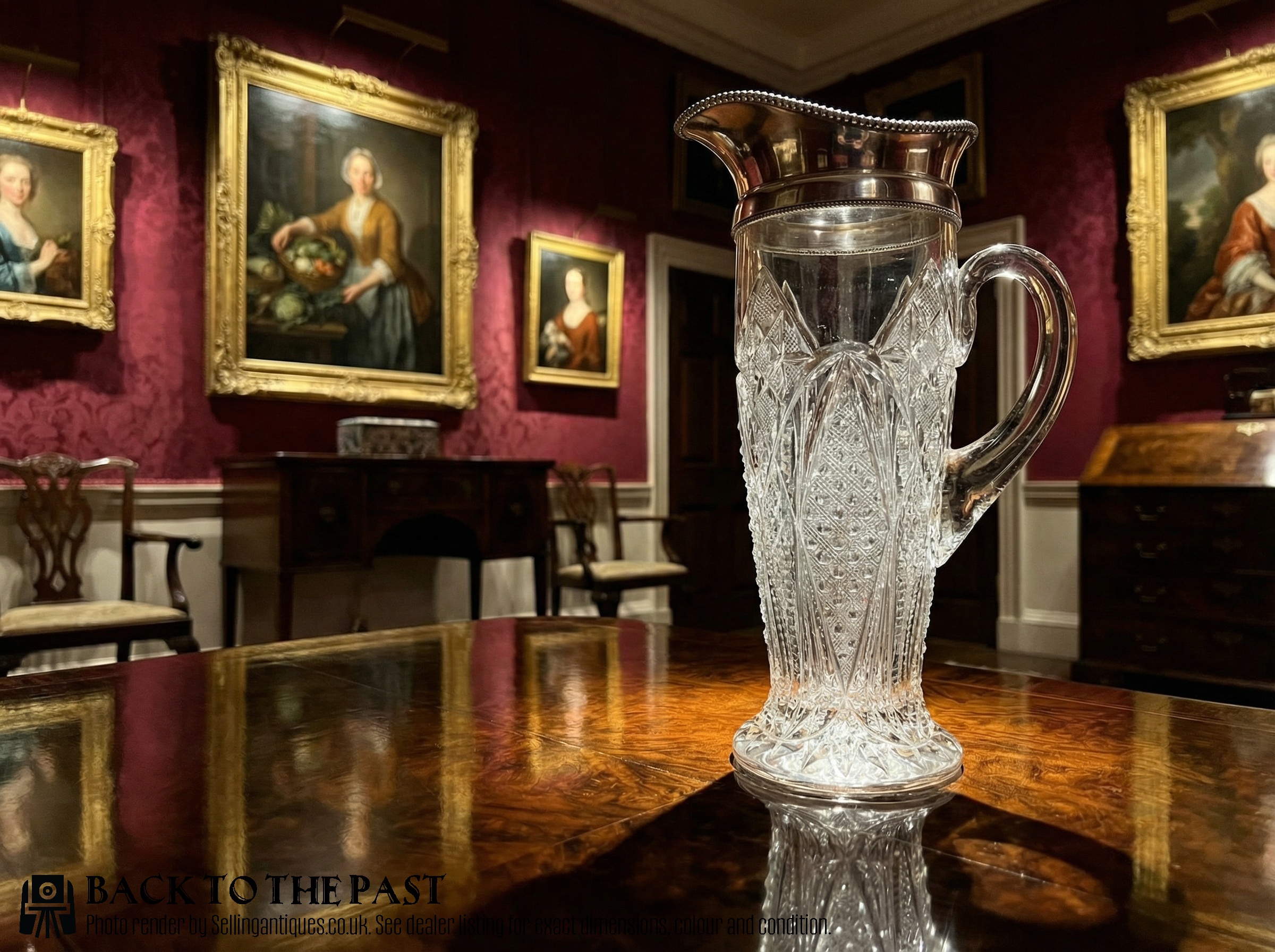
The forms span from straightforward cut crystal ewers to novelty owl jugs and Arts and Crafts pewter designs. Most examples pair clear or coloured glass bodies with silver plate or solid silver mounts and hinged lids.
Originating mostly from the nineteenth and early twentieth centuries, these jugs reflect changing dining customs. They range from large magnum vessels to compact whisky noggins.
Materials and construction
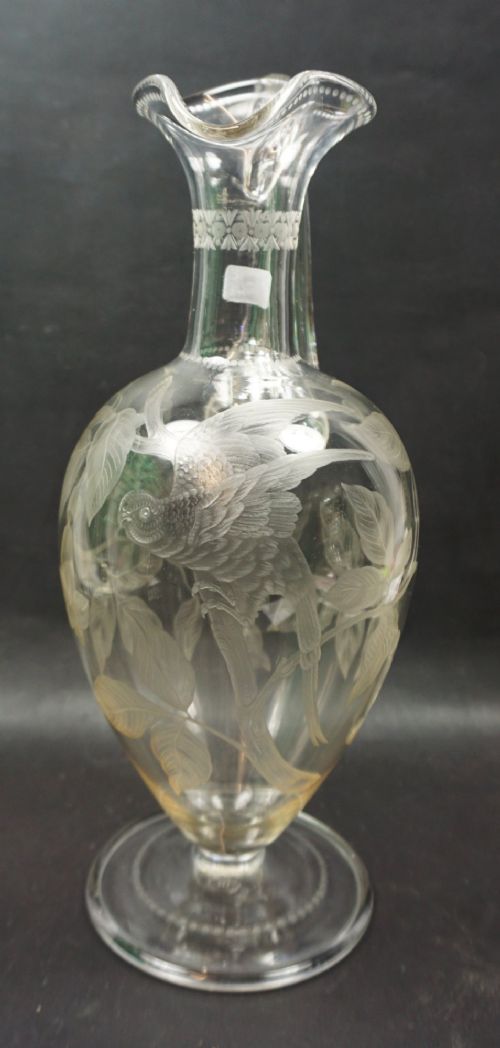
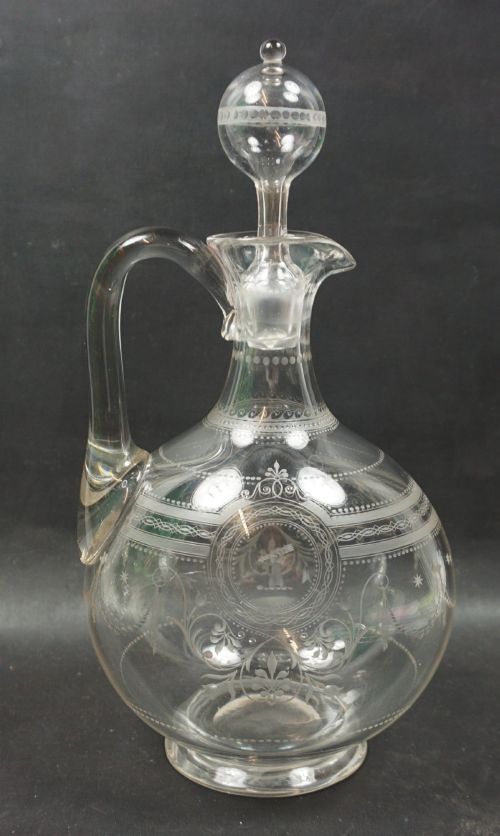
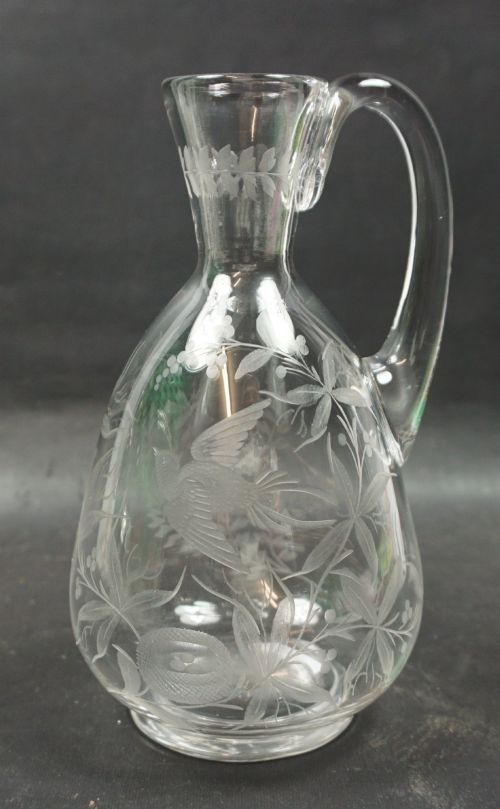
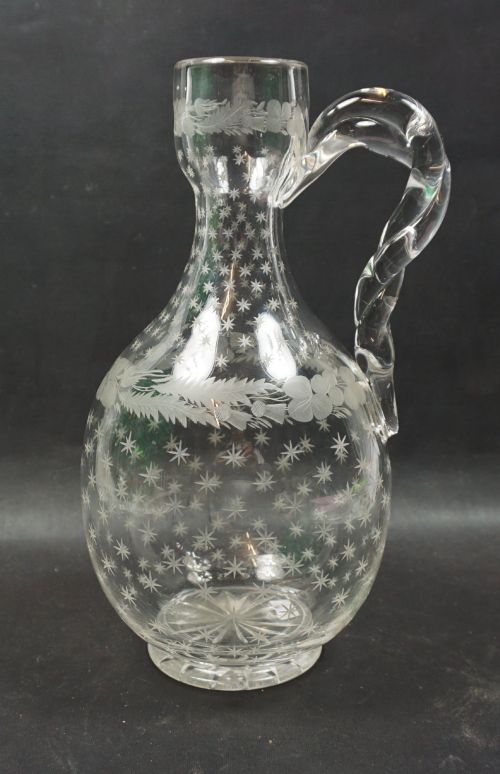
Makers utilised clear crystal, cut glass and coloured glass for the main bodies, often applying wheel engraving to depict fruiting vines, dolphins or latticinio threads. The glass portions required skilled blowing and deep cutting to catch the light.
Metalworking formed the other half of the process, with silver plate, solid silver and Tudric pewter shaping the handles, collars and hinged lids. These metal mounts were secured directly to the glass necks, often featuring elaborate thumbpieces.
English Glass Claret Jug Retail Price Guide 2026
Typical asking prices for english glass claret jug among the pieces listed under this phrase on Sellingantiques today, from the lower quarter to the upper quarter. They describe what is for sale here now, not the wider market.
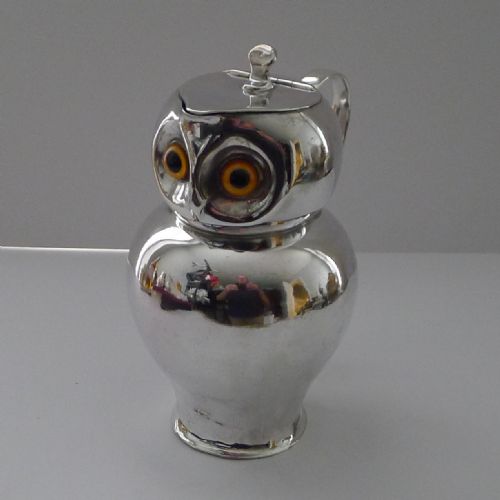
One exceptional Edwardian jug takes the form of a silver-plated owl complete with blinking glass eyes.
Assessing quality and craftsmanship
Quality rests in the crispness of the glass cutting and the weight of the metal mounts. Finer pieces display deep, hand-polished facets and substantial silver plating that wears evenly over decades.
Design ambition also separates standard production items from workshop pieces created by noted designers and firms. Balance, proportion and secure fitting of the handle dictate the overall success of the piece.
Richardsons·Archibald Knox for Liberty Co
The English Glass Claret Jug Glossary
- Ewer
- A large jug with a wide spout and a curved handle, traditionally used for serving wine or water. Many Victorian claret jugs take this classic shape.
- Latticinio
- A glassblowing technique featuring fine opaque white or coloured glass threads embedded within clear glass. This method creates delicate internal patterns.
- Tudric
- A brand name used by Liberty & Co for pewter wares during the Arts and Crafts period. These pieces often display distinct organic motifs.
- Silver Plate
- A layer of silver fused to a base metal, commonly utilised for the handles and mounts of nineteenth-century serving vessels.
- Noggin
- A small drinking vessel or mug, sometimes fitted with a silver top, used for spirits rather than claret.
English Glass Claret Jug: Frequently Asked Questions
How do I clean an old glass claret jug?
Wash the glass by hand using warm soapy water and a soft bottle brush. Avoid submerging metal mounts for extended periods to protect the silver plate.
Dry the metal immediately with a soft cloth to prevent water spots and keep the hinged lid open until completely dry inside.
Were these jugs only used for claret?
Victorian dining habits employed these vessels for various wines, cordials and champagne. Larger magnum versions served multiple guests at formal dinners.
Smaller iterations functioned as whisky noggins or dessert wine decanters depending on the capacity and shape of the glass body.
How can I date my claret jug?
Examine the style of the glass cutting, the mounting design and any hallmarks stamped on the metal components. Victorian pieces often feature heavy wheel engraving and robust silver plate.
Arts and Crafts examples show distinctive pewter work, while Edwardian items lean towards lighter mounts and simpler geometric patterns.
Can I still use these jugs for serving wine?
These pieces remain fully functional for modern dining provided the interior is clean and free from old sediment. Check that the hinged lid operates smoothly before pouring.
Hand washing is essential to preserve the antique glass and metal mounts from harsh dishwasher detergents.