
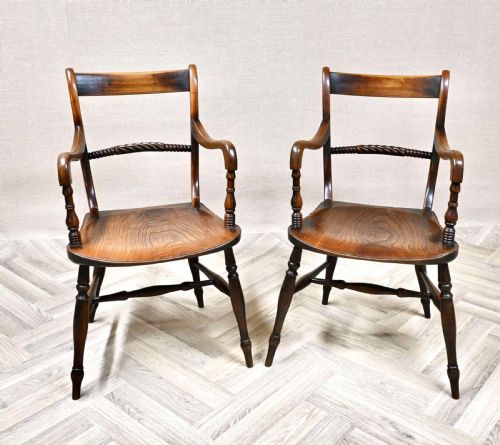
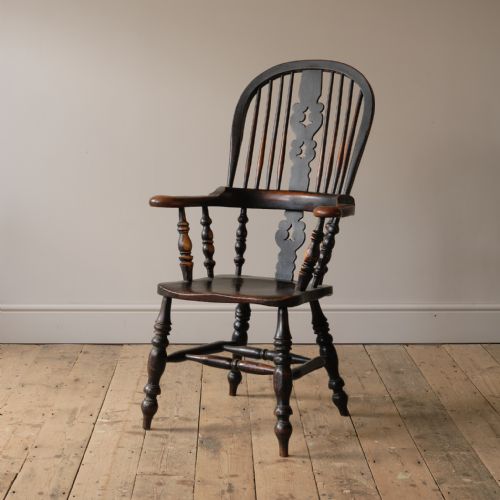

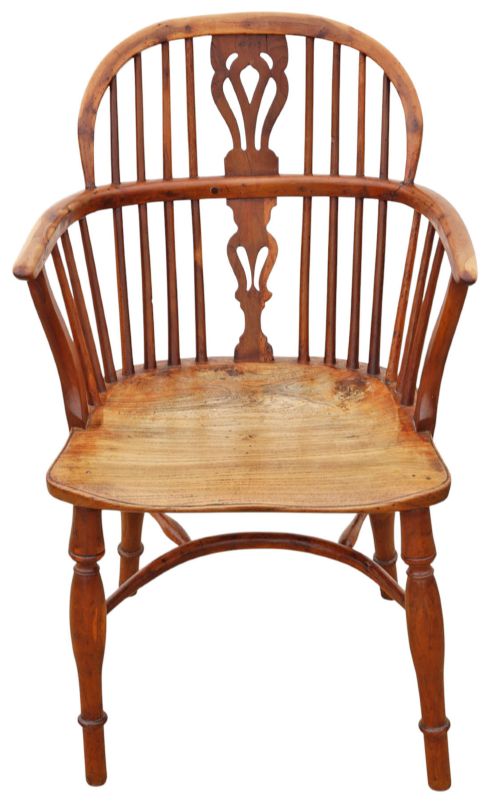
English Elm Chair
An English elm chair carries the honest grain and sturdy construction of country workshops, offering a tangible link to domestic history.
English Elm Chair
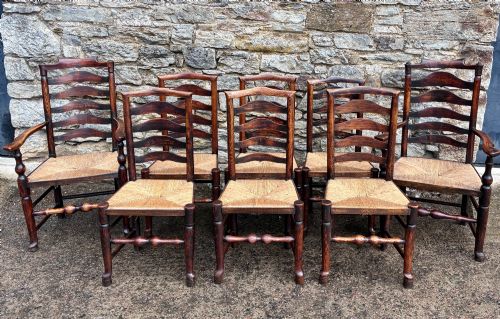
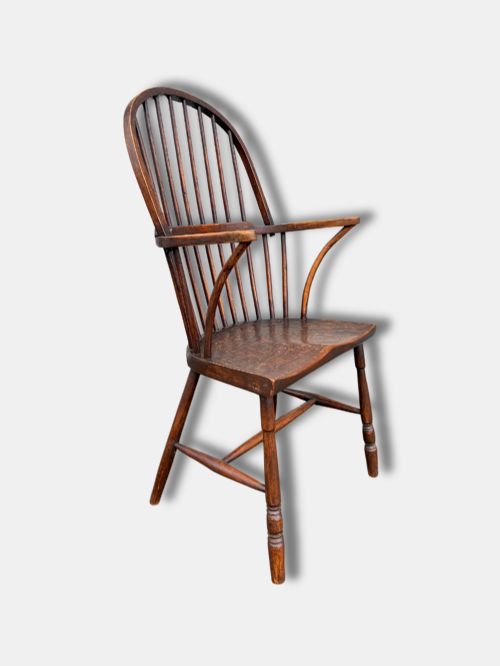
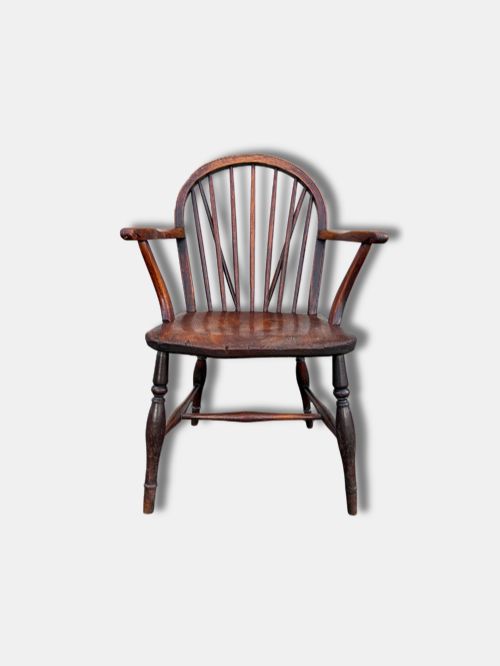
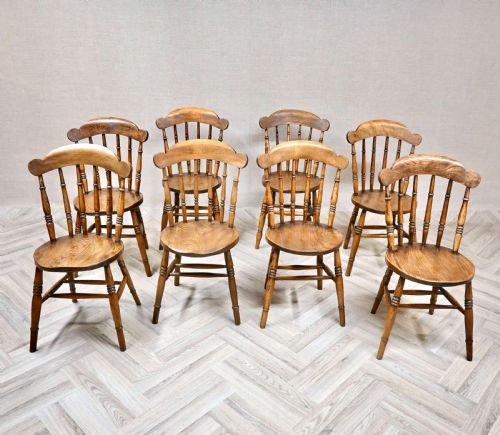
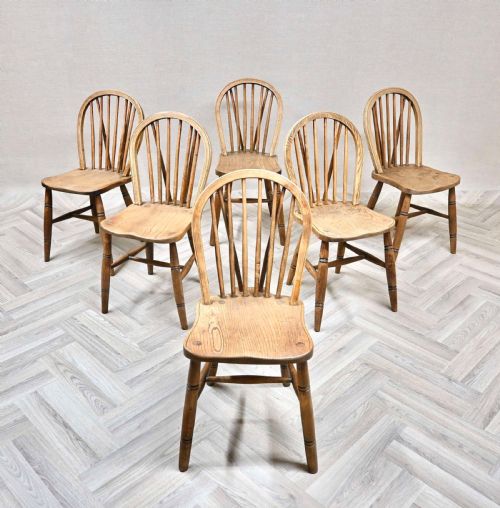
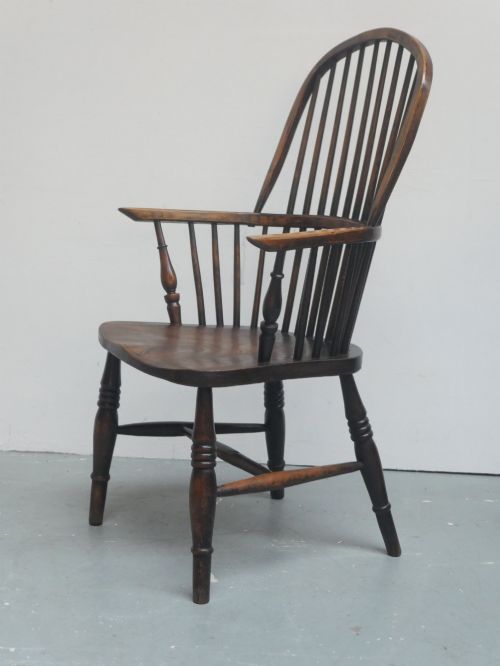
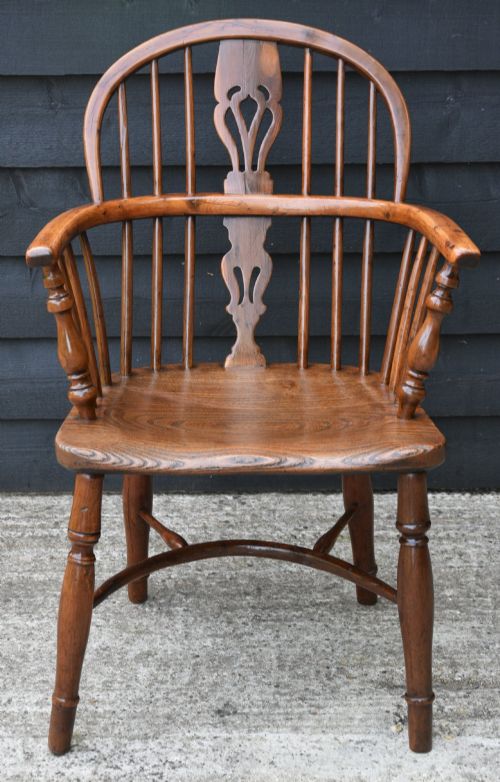
An English elm chair brings rustic utility into domestic spaces, appearing most often as a Windsor armchair, kitchen dining seat, or low-back smoker's bow. These pieces emerge from periods spanning the Georgian era through the Victorian age and into the early twentieth century.
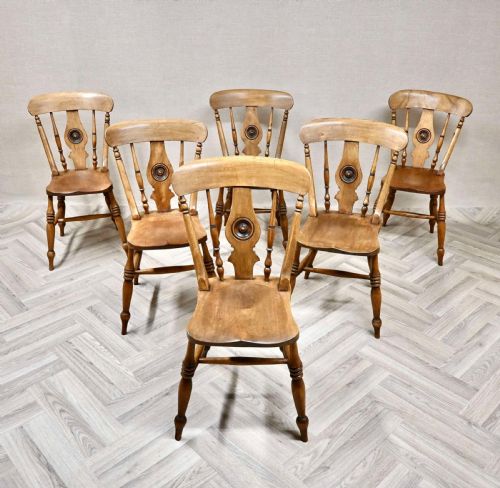
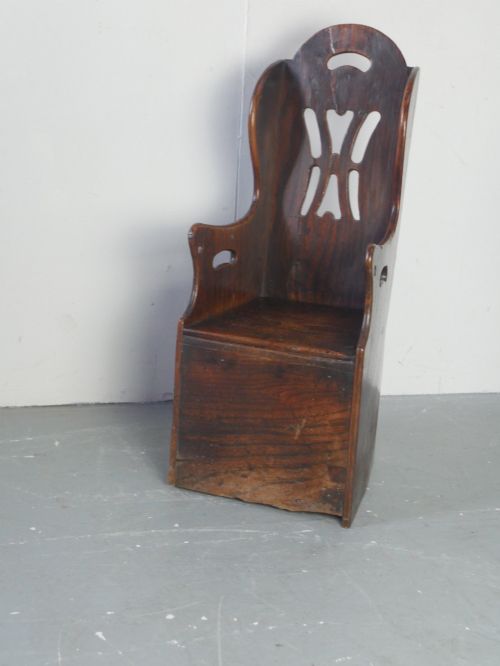
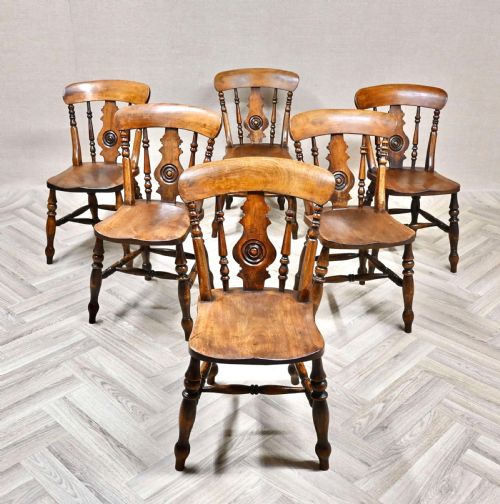
Makers shaped these forms in regional vernacular styles, utilising solid timber seats carved for comfort and spindle backs designed for strength. Sets of kitchen chairs and individual children's chairs sit alongside robust carvers fashioned in local English traditions.
How They Were Made
Craftsmen built these chairs using a combination of woods, pairing elm seats with ash or beech for bent elements and spindles, and occasionally incorporating yew or oak. Elm provided a tough, interlocking grain for the solid plank seat that resisted splitting under daily use.
Turned components and steam-bent hoops created the supportive backs, relying on wedged tenon joints to secure the uprights directly into the seat slab. Regional turners utilised pole lathes to shape legs and stretchers before assembling the frame by hand.
Listings feature woods including elm, ash, beech, yew, oak, and laburnum across Georgian and Victorian periods.
What Varies in Quality
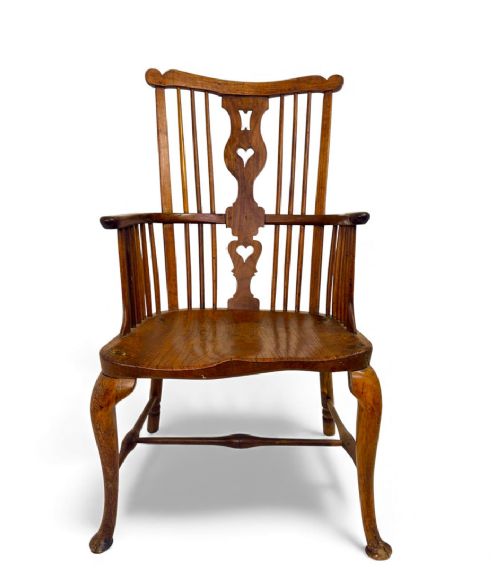
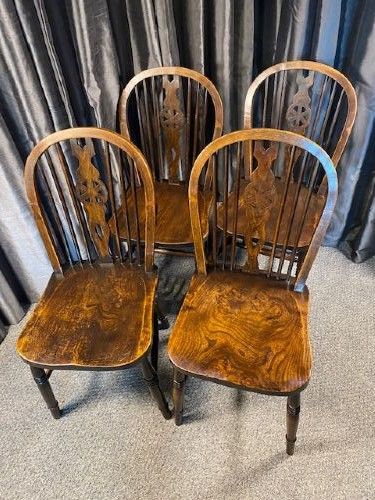
The distinction between ordinary and superior examples lies in the selection of timber and the harmony of the proportions. Yew wood additions, expressive grain patterns in the elm seat, and well-balanced wheel backs or comb backs elevate certain examples above standard utility seating.
Construction details such as generous saddle seats, slender well-turned spindles, and retained historic surface patination define the finer pieces. Workshops that maintained careful control over joinery produced chairs with enduring structural integrity and visual presence.
J Spencer
The English Elm Chair Glossary
- Windsor chair
- A chair built with a solid wooden seat into which the legs and back spindles are directly inserted. This form dominates vernacular English country seating.
- Smoker's bow
- A low-backed Windsor armchair with a continuous curved arm rail, often found in nineteenth-century parlours and public houses. These chairs feature sturdy turned spindles and comfortable scooped seats.
- Comb back
- A Windsor chair style where the upper back resembles the upright teeth of a comb, often featuring a raised headboard. This early form offers distinct architectural height.
- Patina
- The deep surface sheen and colour developed by wood over centuries of handling, cleaning, and exposure to light. Good patina reveals the genuine age of the timber.
English Elm Chair: Frequently Asked Questions
What is an English elm chair?
An English elm chair is a traditional wooden seat featuring a sculpted elm timber plank base combined with turned ash or beech spindles. These pieces range from kitchen dining sets to robust Windsor armchairs.
They reflect regional woodworking traditions across Britain, spanning the eighteenth and nineteenth centuries. Each chair serves as a practical example of country vernacular furniture.
How do I identify a Windsor chair?
A Windsor chair is distinguished by its heavy solid wood seat, which acts as the central anchor for the legs below and the back spindles above. This distinct construction method separates them from framed upholstery chairs.
Many examples feature bentwood hoops, arm rails, and distinctive back splats such as wheels or stick backs. They were built for everyday durability in domestic and commercial settings.
Where were these chairs made?
These chairs were produced in regional workshops across England, with notable production centres in the Thames Valley and High Wycombe. Local turners utilised native timbers available in the surrounding countryside.
Different regions developed characteristic back designs and turning patterns. Lincolnshire and Scottish workshops also contributed distinct local interpretations of the form.
How should I care for elm furniture?
Elm furniture benefits from stable indoor environments away from direct heat sources and drastic humidity changes. Natural wax applications help nourish the dry timber and maintain the surface sheen.
Gentle dusting with a soft cloth prevents dust accumulation in the carved grain and joints. Avoiding harsh chemical polishes preserves the historic patina developed over generations.