



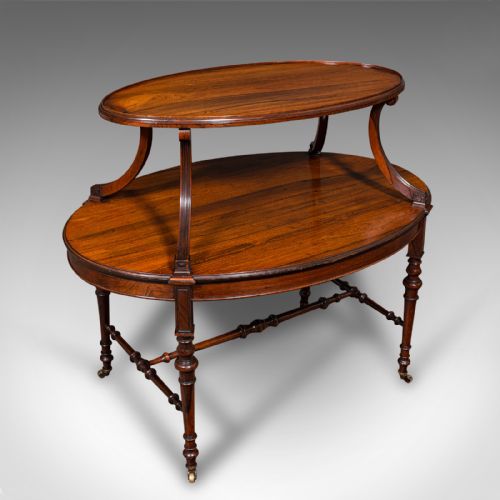

English Dumbwaiter
These English dumbwaiter pieces are tiered serving stands and occasional tables designed to hold food or drink, bringing practical elegance to any dining room.
English Dumbwaiter
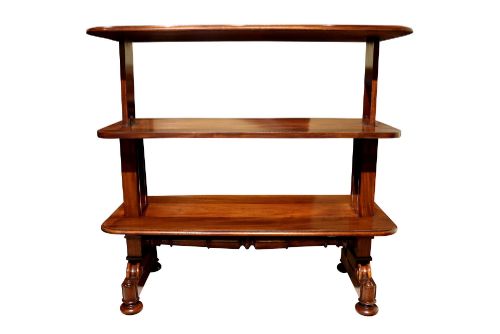
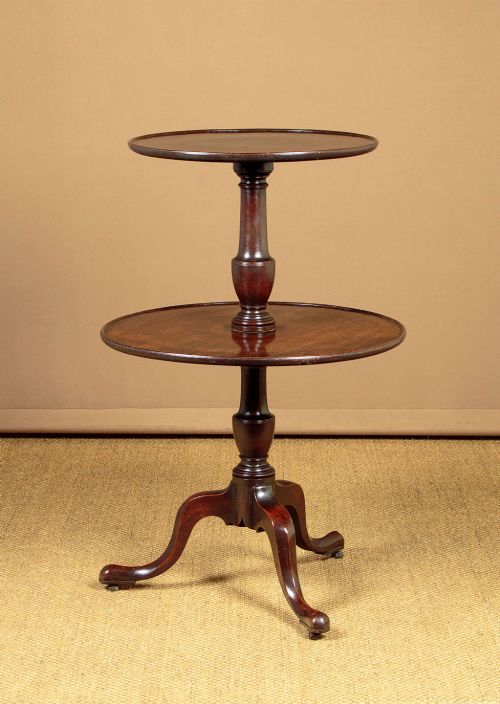
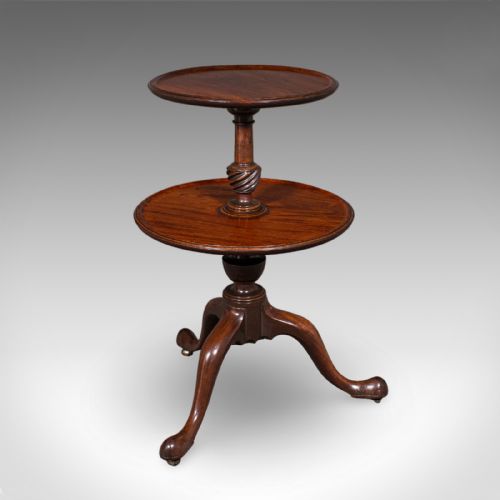
An english dumbwaiter is a tiered serving stand designed to hold dishes, glasses, or tea ware during meals without the need for constant service from staff. These pieces appear in forms ranging from two-tier round tables to substantial three-tier buffets and folding cake stands.
The versions most commonly met on this page span the Georgian, Regency, and Victorian periods. They take the shape of revolving tiers supported on central pedestals or upright framework structures intended for practical use in dining rooms and country houses.
How they were made
Makers utilised dense timbers such as mahogany, oak, and walnut, often turning solid stock for pedestals or applying burr walnut veneer to display rich grain patterns. Brass fittings secure the tier supports and joints, adding both structural stability and visual contrast against the dark timber.
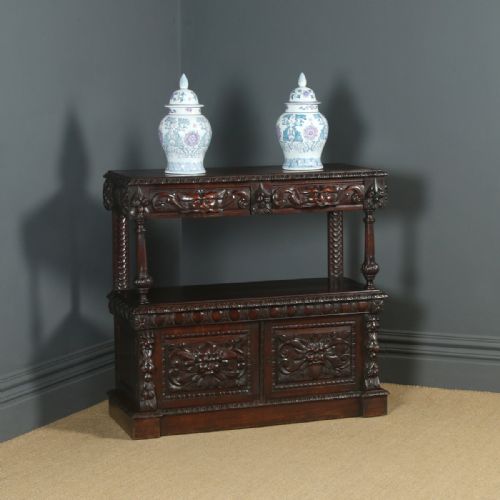
Joinery techniques focus on stability under load, utilising strong column supports and graduated circular tiers that decrease in diameter from bottom to top. Carved details such as green man motifs appear on later Victorian oak examples, while earlier Georgian and Regency pieces rely on clean turning and polished wooden surfaces.
English Dumbwaiter Retail Price Guide 2026
Typical asking prices for english dumbwaiter among the pieces listed under this phrase on Sellingantiques today, from the lower quarter to the upper quarter. They describe what is for sale here now, not the wider market.
What varies in quality
The selection of timber grain and the crispness of the turning define the upper tier of these pieces. Fine examples display carefully matched mahogany or burr walnut veneer alongside sturdy, well-balanced pedestal bases that bear weight evenly across each tier.
Simpler pieces rely on plain oak or standard mahogany construction with straightforward joinery. The proportion between the tiers and the quality of the original brass hardware distinguish standard utility items from finer dining room furnishings.
The English Dumbwaiter Glossary
- Tier
- A single horizontal shelf or platform on a multi-level stand. Dumbwaiters typically feature two or three graduating tiers.
- Pedestal
- A central vertical support column rising from a tripod or footed base. It holds the weight of the revolving or fixed tiers above.
- Veneer
- A thin layer of figured wood applied over a secondary timber base. Burr walnut veneer provides decorative patterns on surface tops.
- Rise and fall
- A mechanical mechanism allowing tiers to adjust in height. This enables the stand to transform for different serving functions.
English Dumbwaiter: Frequently Asked Questions
What is an english dumbwaiter used for?
These tiered stands served dining rooms by holding extra plates, glasses, and dishes close to the table. They allowed diners to help themselves during meals without servants present in the room.
Today, they function as display stands or occasional tables in living spaces, holding books, plants, or decorative items while retaining their traditional profile.
How do I date an english dumbwaiter?
Dating relies on timber choice, turning style, and overall proportions. Georgian and Regency examples often feature mahogany with slender pedestals and graduated round tiers.
Later Victorian pieces introduce carved oak, heavier frames, and decorative motifs such as green man details. Structural construction methods also help confirm the period of manufacture.
What woods were used for these stands?
Mahogany is the most frequent timber found on these pieces, valued for its strength and dark reddish tone. Oak appears in both earlier country house pieces and later Victorian furniture.
Walnut and burr walnut veneer also feature across the selection, providing decorative grain figures on table surfaces and tiers.
Are all dumbwaiters revolving?
Many traditional round dumbwaiters feature revolving tiers that allow diners to spin dishes around the central column for easy access. Other forms, such as rectangular buffets and folding cake stands, remain stationary.
The listings include both rotating tiered round tables and fixed serving stands or sideboards.