


English Dale Landscape Artwork
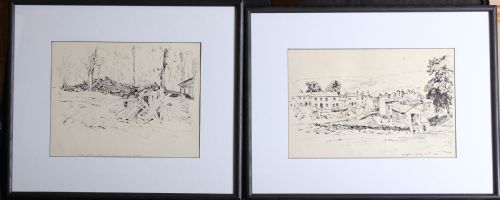
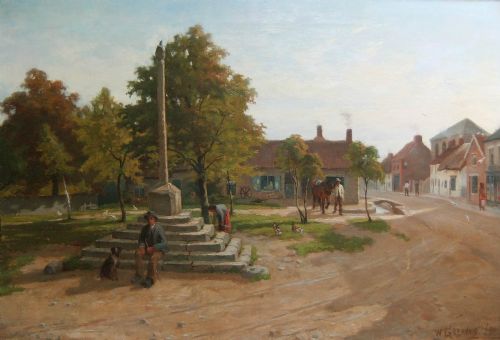
English dale landscape artwork captures the distinct beauty of northern valleys through the eyes of regional painters working across the late nineteenth and mid-twentieth centuries.
English Dale Landscape Artwork
An English dale landscape artwork brings the rural topography of Yorkshire valleys such as Wensleydale, Swaledale, and Wharfedale directly into view. These pieces record specific rivers, stone barns, and ancient castles through direct observation of northern light and weather.
The works appearing on this page span several decades, starting from Victorian realism through to early twentieth-century British impressionism and mid-century modern realism. Viewers encounter compositions ranging from tranquil river scenes to dramatic castle ruins.
Watercolours on paper and oil paintings on canvas or board dominate the selection. Regional painters captured the changing seasons across these dales, preserving agricultural labour, quiet waters, and rugged terrain in finished landscapes.
What Varies in Quality
The strength of an English dale landscape artwork lies in the artist's command of regional light and topographical accuracy. Superior examples demonstrate a confident handling of pigment that evokes the damp air and shifting illumination unique to northern valleys.
Compositional balance distinguishes the finest pieces from routine topographical recording. Works that integrate structural elements such as barns, bridges, or fortifications with the surrounding dale terrain display a more accomplished artistic vision.
The listings span from eighteen-ninety to nineteen-fifty, tracking the transition from Victorian realism through to mid-century modern approaches in northern landscapes.
Fred Lawson·William Greaves·Arthur Reginald Smith·Reginald Grange Brundrit·John Frederic Greenwood·Herbert Royle·Ernest Higgins Rigg
The English Dale Landscape Artwork Glossary
- Watercolour
- A painting method in which the paints are made of pigments suspended in a water-based solution. Artists applied these translucent washes onto paper to depict open Yorkshire views.
- British Impressionism
- A painting style reflecting the influence of French movements adapted by British artists. Practitioners focused on natural light and outdoor subjects.
- Oil paint
- A slow-drying paint made with pigments suspended in a drying oil. This medium allowed painters to build rich textures for moorland and valley scenes.
- Realism
- An artistic movement focused on representing everyday subjects truthfully. Victorian and mid-century realists depicted local farms and rivers without idealisation.
English Dale Landscape Artwork: Frequently Asked Questions
Where do these dale scenes take place?
The artworks focus specifically on Yorkshire locations, including Wensleydale, Swaledale, Wharfedale, and Yoredale. Painters set up their easels near local landmarks such as Bolton Castle, Aysgarth Falls, and Grinton Bridge.
These particular valleys offered artists a rich combination of rivers, stone vernacular architecture, and dramatic topography that defined the northern landscape school.
What mediums were used for these landscapes?
Artists worked primarily in oil paint and watercolour, applying them to canvas, prepared board, or paper. Ink was also utilised alongside watercolour for preparatory lines and definition.
Oil paintings provided heavier texture for moorland light, while watercolours offered fluidity for capturing river mays and gathering valley weather.
How do I date an English dale landscape?
Dating relies on stylistic shifts from late Victorian realism through early twentieth-century impressionism to mid-century modern approaches. Signatures, inscriptions on reverse sides, and known artist active periods provide further chronological markers.
Many works carry specific dates or reflect the distinct aesthetic markers of the decades between eighteen-ninety and nineteen-fifty.
How should I frame and display these works?
Watercolours on paper require conservation mounting behind glass to protect the pigment from moisture and ultraviolet light. Oil paintings on canvas or board benefit from traditional wooden frames that suit their period of creation.
Keeping them away from direct sunlight preserves the integrity of both the paper supports and the oil pigmennts.