

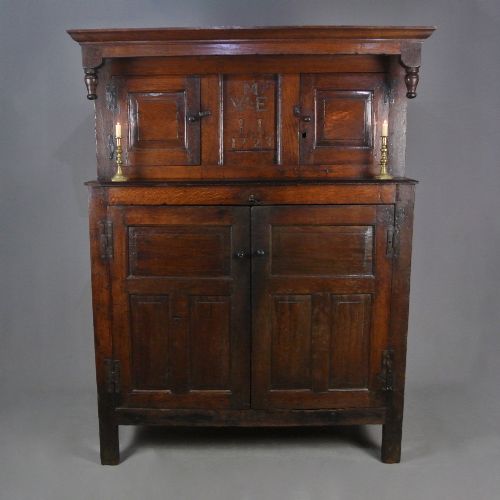
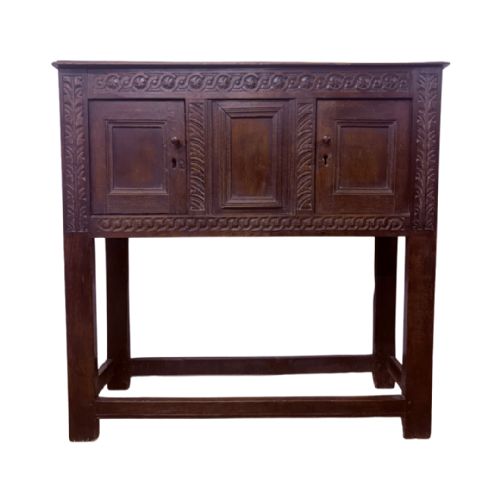

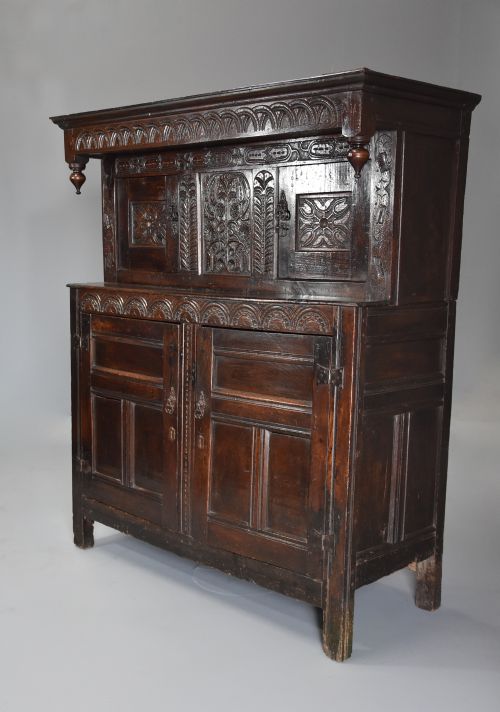

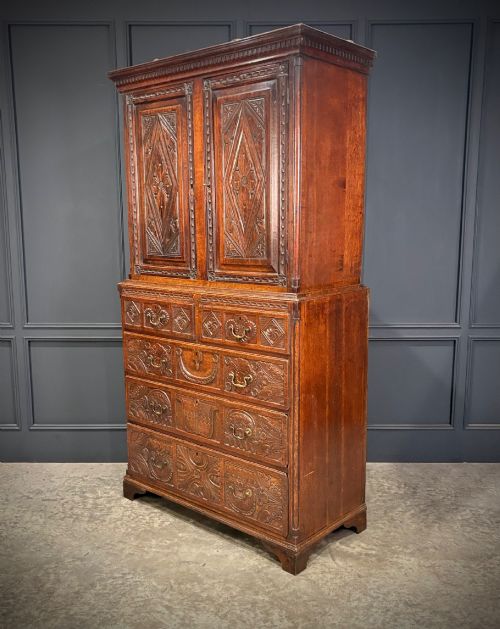


English Court Cupboard
An English court cupboard is a sturdy historic storage piece built to display plate and provisions, prized for deep carving and rich timber character.
English Court Cupboard
An English court cupboard is a traditional form of storage furniture designed primarily for the domestic interior, appearing frequently in robust timber structures. Buyers searching for an English court cupboard will encounter examples spanning multiple centuries, from sixteenth-century origins to eighteenth-century vernacular adaptations.
The pieces on this page range from full-size seventeenth-century joined examples to smaller eighteenth-century items and later nineteenth or twentieth-century revivals. Forms include press cupboards, livery cupboards, and miniature furniture alongside standard court cupboard layouts.
Origins stretch across periods such as Jacobean, Carolean, and Georgian, reflecting shifts in domestic storage needs. The core utility remains a tiered cabinet structure intended for displaying valuables and storing provisions.
What varies in quality
The standard of carving determines much of the visual distinction between examples, ranging from simple geometric incisions to deep relief work. Depth and clarity of execution separate everyday utility pieces from finer decorative commissions.
Timber selection and the survival of original surface patination influence the character of each piece. Intact structural framing and period hardware contribute significantly to the integrity of early joined furniture.
English Court Cupboard Retail Price Guide 2026
Typical asking prices for english court cupboard among the pieces listed under this phrase on Sellingantiques today, from the lower quarter to the upper quarter. They describe what is for sale here now, not the wider market.
The inventory includes miniature furniture forms alongside large seventeenth-century joined cupboards and later revival pieces.
The English Court Cupboard Glossary
- Court cupboard
- A traditional tiered storage cabinet used for displaying plate and storing household provisions. They usually feature enclosed upper or lower sections.
- Joined oak
- Furniture construction using interlocking mortise and tenon joints secured with wooden pegs. This method provided exceptional strength before the widespread use of metal screws.
- Press cupboard
- A heavy storage piece featuring a closed upper cupboard section used originally for linen and clothing. It represents a close relative of the standard court cupboard form.
- Livery cupboard
- A small ventilation-focused cupboard historically used for storing food rations or candles. These pieces often incorporated turned spindles to allow air circulation.
- Fruitwood inlay
- Decorative contrasting wood inserts set flush into the primary oak surface. This technique added geometric or floral patterns to the cabinet facade.
English Court Cupboard: Frequently Asked Questions
What is an English court cupboard?
An English court cupboard is a heavy timber storage piece built with stacked compartments for display and storage.
They originate mostly from the sixteenth through eighteenth centuries and serve as focal points in period interiors.
How were court cupboards used?
These cupboards functioned as status symbols in the dining hall or parlour for displaying silver and pewter plate.
The lower sections provided enclosed space for storing food, linens, and household provisions.
How do I live with one?
Court cupboards require stable room humidity and protection from direct heat sources to preserve dry historic oak.
Their substantial presence suits large dining rooms or hallways where they can stand clear of heavy traffic.
How do I tell periods apart?
Sixteenth and seventeenth-century examples rely on heavy joined oak frames with strapwork and geometric carved panels.
Later eighteenth-century and revival pieces often display cleaner vernacular lines or simplified proportions.