






English Country Trunk
An English country trunk grounds a room in centuries of domestic utility, offering sturdy timber storage carved or panelled by regional hands.
English Country Trunk
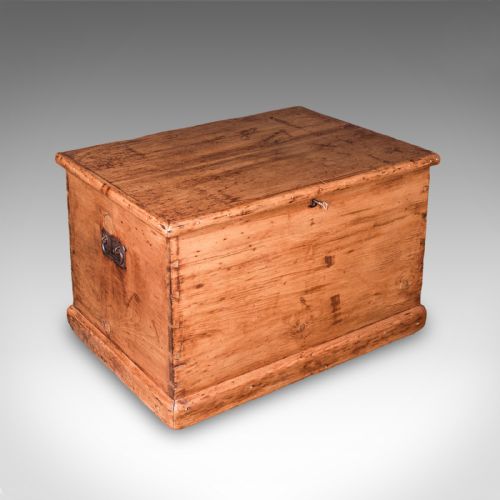
An English country trunk appears in forms such as coffers, blanket boxes, and mule chests, fashioned primarily for domestic storage in rural households. These pieces span from the sixteenth century through the Victorian era, reflecting shifts in vernacular woodworking across generations.
The material record on this page leans heavily toward solid oak, alongside pine and iron or brass hardware. Regional variations emerge from the North Country down to the West Country, showing distinct local carving traditions and construction methods.
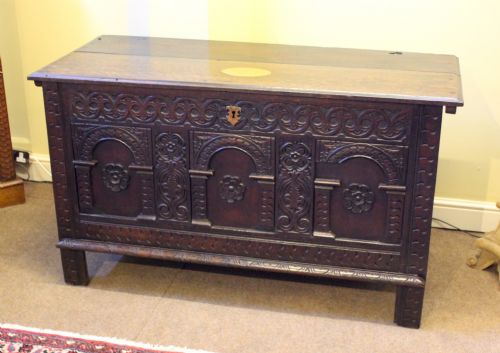
Buyers most frequently encounter robust oak coffers and blanket chests dating from the seventeenth and eighteenth centuries. These utilitarian items served dual purposes as seating and secure storage for linens, documents, and personal belongings.
How they were made
Joinery relies on heavy timber construction, utilising frame and panel techniques alongside boarded construction seen in early sixteenth-century pieces. Hewn oak planks form the primary carcass, joined with pegged mortise and tenon joints designed to withstand heavy domestic use.
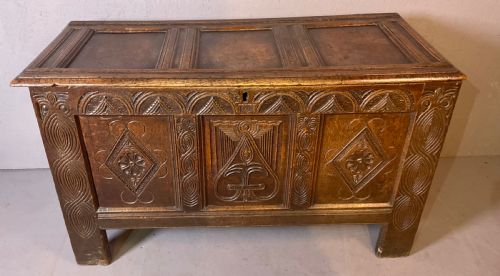
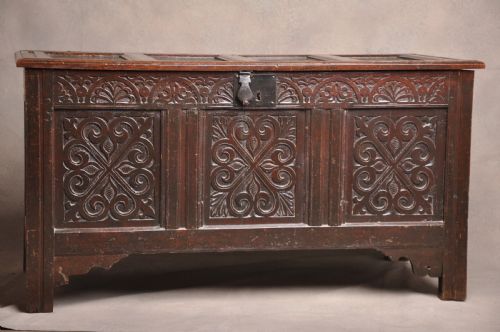
Decoration is achieved through scratch carving, geometric relief panels, and simple mouldings cut directly into the solid wood. Iron hinges, brackets, and brass escutcheons reinforce the lids and lockplates, reflecting the blacksmith's craft alongside the carpenter's.
English Country Trunk Retail Price Guide 2026
Typical asking prices for english country trunk among the pieces listed under this phrase on Sellingantiques today, from the lower quarter to the upper quarter. They describe what is for sale here now, not the wider market.
Several trunks double as window seats, proving that ancestors knew how to multitask their furniture when space got tight.
What varies in quality
The integrity of the original timber and the retention of early surfaces separate standard examples from finer survivals. Unaltered boards with honest patina and original hardware hold greater historical value than pieces burdened by excessive replacement parts or modern interventions.
The sophistication of the carving and the proportion of the carcass dictate the aesthetic standing of each trunk. Crisp scratch carving or well-executed panel work on seventeenth-century coffers demonstrates a higher tier of regional craftsmanship.
The English Country Trunk Glossary
- Coffer
- A heavy wooden chest traditionally used for storing valuables, linens, or dry goods. These sturdy boxes often double as benches in period interiors.
- Mule chest
- A storage chest featuring one or more drawers built into the base beneath the main compartment. This form bridges the evolution between the traditional coffer and the modern chest of drawers.
- Scratch carving
- A simple decorative technique where a profile or pattern is scraped or scratched directly into the surface of the wood using a specialised tool. It provides linear enrichment on early vernacular furniture.
- Boarded construction
- A method of building chests by nailing or pegging vertical planks together at the edges without a internal frame. This represents an early and direct approach to cabinetmaking.
- Escutcheon
- A protective plate surrounding a keyhole, usually fashioned from brass or iron. It prevents the wood around the lock from splitting with repeated use.
English Country Trunk: Frequently Asked Questions
What is an English country trunk used for today?
These trunks serve as functional storage solutions in modern homes, holding heavy woollen blankets, bed linen, or bulky household items. Placed at the foot of a bed or in a hallway, they also double as sturdy seating benches.
The deep interior space accommodates items that clutter living areas, while the solid wooden top provides a useful surface for display. Their robust construction ensures they handle daily domestic life just as they did centuries ago.
How do I date an antique oak coffer?
Dating relies on observing construction methods, tool marks, and stylistic clues left by the carpenter. Boarded chests and simple scratch carving usually point to sixteenth or early seventeenth-century origins, while raised panels and mule drawers indicate later Georgian periods.
Examining the underside, hinges, and the type of fixings used also helps establish age. Hand-forged ironwork and pegged joinery distinguish genuinely old vernacular pieces from later reproductions.
Are these trunks entirely original?
Survival over centuries often means pieces accumulate minor repairs, replacement hinges, or restored feet. Honest age-related wear is standard for vernacular furniture that has worked hard in country houses for generations.
Checking listings carefully reveals the extent of original timber versus replaced elements. Many collectors accept minor sympathetic restorations provided the main carcass and primary panels remain undisturbed.
How do I care for antique pine and oak?
Maintaining these timbers requires keeping them away from direct heat sources and sudden humidity changes to prevent splitting. Regular dusting with a dry cloth and occasional application of appropriate beeswax preserves the dry, honest finish.
Avoiding modern silicone polishes ensures the timber breathes and retains its natural patina. Gentle care allows the historic surface to mature further over the decades.