


English Country River Scene
An english country river scene captures the quiet pulse of historic waterways, offering buyers a window into pastoral life through period paintings.
English Country River Scene
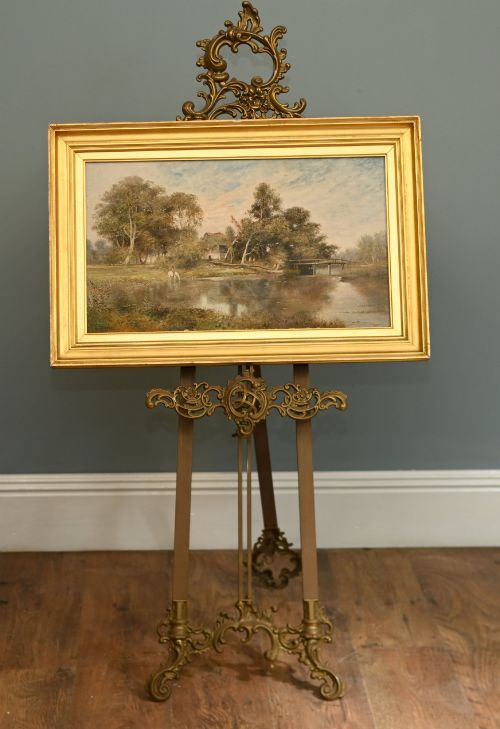
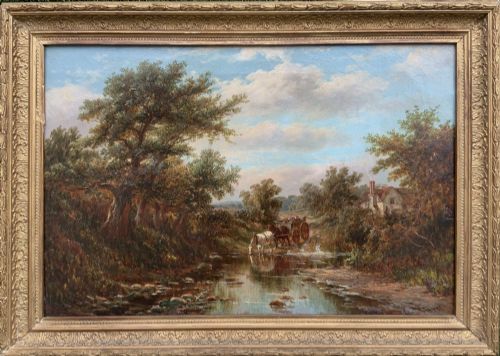
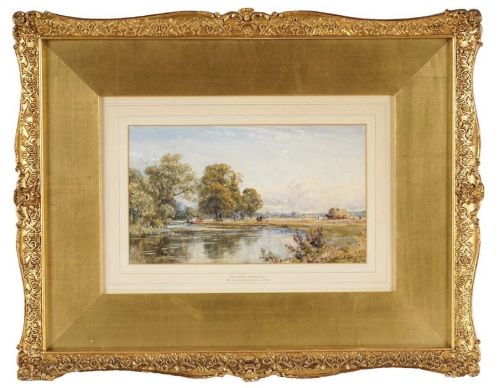
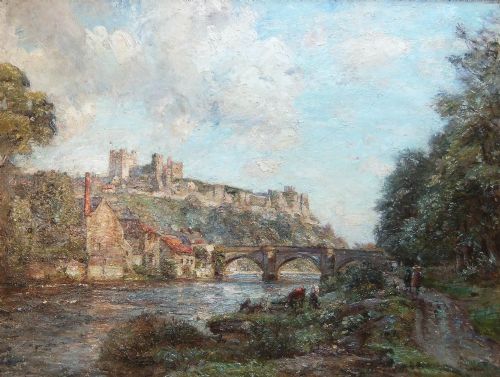
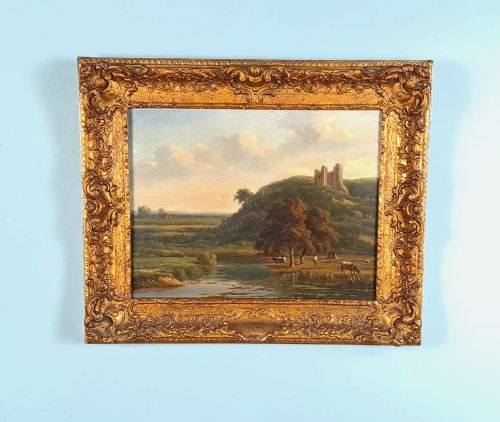
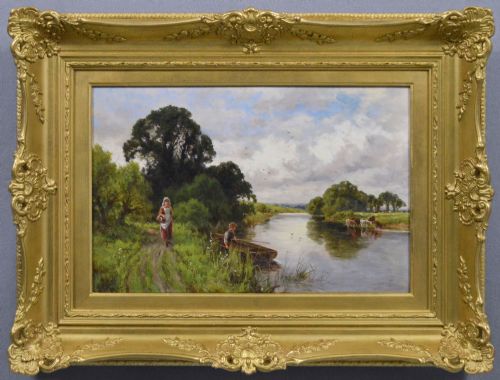
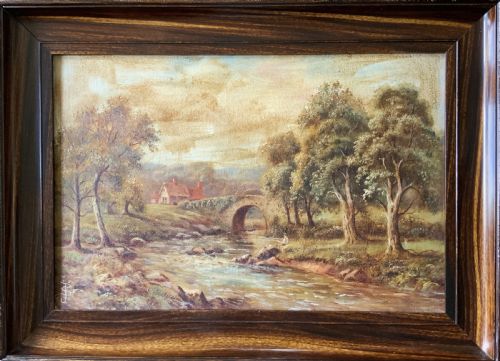
An english country river scene brings together historic waterways, rural life, and native wildlife rendered in paint or on paper. You will most frequently encounter nineteenth-century and early twentieth-century examples, ranging from expansive canvases to intimate watercolours.
The works span Georgian, Victorian, and later British art movements, depicting specific locations like the Thames, the Severn, and the Stour. Painters recorded these landscapes with varying focus, sometimes placing human figures, cattle, or anglers at the water's edge.
Compositions often balance natural scenery with signs of local industry, such as mills, bridges, and moored boats. These pieces serve as historical records of rural topography before modern development altered the riverbanks.
Materials and technique
Artists utilised oil on canvas, wood panel, or board to build durable compositions with rich textures. Watercolours on paper offer a lighter touch, capturing the translucent qualities of light on water and open skies.
Pigments were applied with varying brushwork, from the tight detail of Victorian naturalism to the looser strokes of British impressionism. Many works retain their original giltwood frames, which complement the tones of the painted landscape.
Anglers appear so frequently in these waters that one might suspect the fish were posing.
Distinctions in quality
Quality rests upon the artist's ability to render light, atmosphere, and movement in water convincingly. Stronger works demonstrate confident brushwork and a coherent sense of space, whereas weaker examples can feel static or formulaic.
The specificity of the location and the inclusion of well-rendered figures or animals elevate a piece. Original framing and clear attribution to a listed painter also distinguish superior examples from unsigned decorative works.
Robert Thorne Waite·Herbert Royle·Henry H Parker·Sydney Yates Johnson·Henry John Kinnaird·Charles Harmony Harrison·Thomas Baker·William Manners·Thomas Creswick·Paul H Ellis·John Syer Junior·Henry Cheadle·Robert Winchester Fraser·Ebenezer Wake Cook·Robert Gallon·Thomas Thomas·Thomas Sidney Cooper·Maud Raphael Jones·Everett Watson Mellor
The English Country River Scene Glossary
- Giltwood
- Carved wood treated with gold leaf or gilt paint, commonly used for period picture frames. This finish adds reflective warmth to the edges of an oil painting.
- Watercolour
- A painting method where fine pigment is suspended in water-soluble binders on paper. It relies on the white of the paper to provide luminosity.
- Impressionism
- An art movement focusing on transient effects of light and ordinary subject matter. British practitioners adapted these ideas to native rural landscapes.
- Pastoral
- A style depicting the idealized peacefulness of rural and agricultural life. These scenes often feature livestock, gentle streams, and rustic cottages.
- Canvas
- A heavy woven fabric stretched across a wooden frame to serve as a painting surface. It remains the standard support for historical oil paintings.
English Country River Scene: Frequently Asked Questions
How do I date an english country river scene?
Dating relies on stylistic clues, clothing styles of any figures depicted, and framing materials. Signatures and stretcher construction often provide further chronological markers.
Comparison with documented works by the same artist helps narrow the decade of creation. Exhibition labels on the reverse can also confirm the exact period.
Were these paintings created outdoors?
Many artists made preliminary watercolours and sketches outdoors to capture accurate light and topography. Finished oil paintings were typically completed later in the studio.
This method allowed painters to combine on-site observations with traditional compositional rules. En plein air painting became more common toward the end of the nineteenth century.
How should I hang and light these artworks?
Paintings and watercolours require placement away from direct sunlight and damp environments to protect the canvas and paper. Controlled picture lights enhance the visibility of darker oil pigments.
Watercolours are particularly sensitive to light and benefit from UV-filtering glass. Maintaining stable room temperature prevents the wood panels and frames from warping.
What is the difference between oil and watercolour versions?
Oil paintings feature heavier textures and deeper colour saturation on canvas or wood panels. They offer greater durability and a more substantial visual presence.
Watercolours present a lighter, more transparent quality on paper behind glass. They tend to capture atmospheric weather and delicate river mist with distinct fluidity.