





English Country Coffer
An English country coffer is a sturdy domestic chest built for storage, carrying the honest grain and marks of centuries past.
English Country Coffer
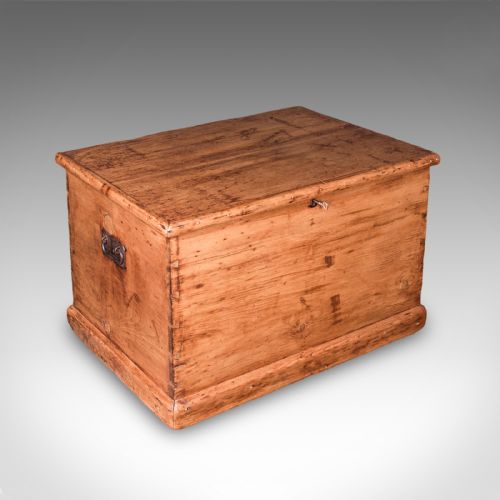
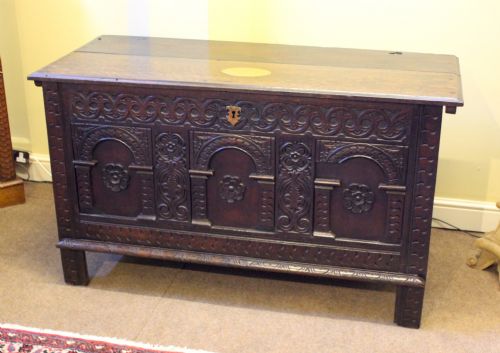
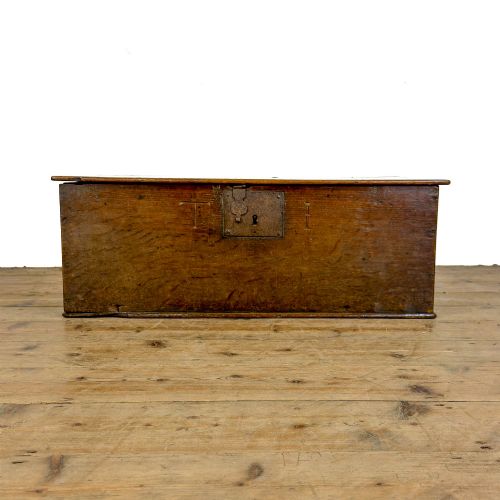
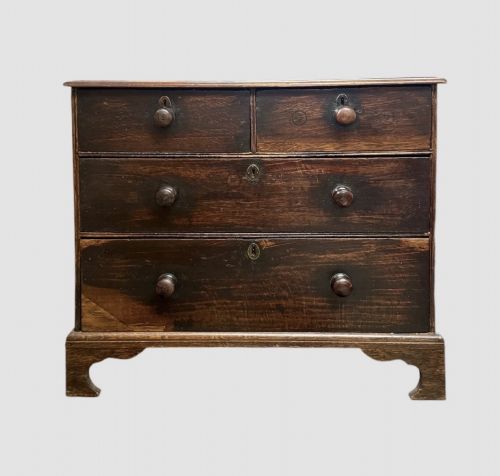
When you search for an english country coffer, you encounter utilitarian storage pieces designed for domestic life across the sixteenth, seventeenth, and eighteenth centuries. These items range from boarded six-plank boxes and carved joined coffers to mule chests fitted with lower drawers.
Makers rooted these pieces in regional English traditions, producing robust furniture intended for daily household use rather than formal display. Over time, heavy handling imparted a warm patina to the timber, distinguishing these utilitarian trunks from urban case furniture.
Construction and materials
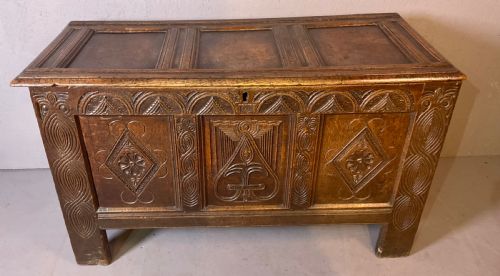
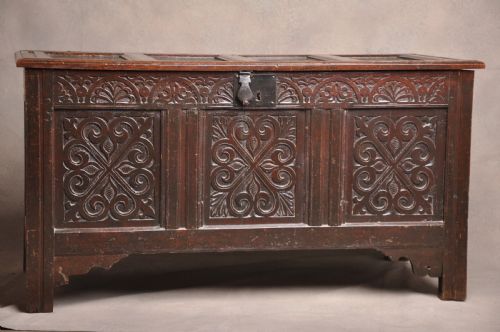
Joiners built the traditional english country coffer using heavy oak boards joined by pegged mortise and tenon frames or simple edge-pinned boards. Early examples utilised straightforward six-plank board construction, whilst later pieces incorporated multi-panel fronts and boarded lids.
Workshops relied on native timber, predominantly oak supplemented by elm, fruitwood, and pine, working by hand with saws, adzes, and chisels. Iron hinges, brackets, and brass lock plates secured the lids, often accompanied by scratch carving or low-relief geometric panels.
English Country Coffer Retail Price Guide 2026
Typical asking prices for english country coffer among the pieces listed under this phrase on Sellingantiques today, from the lower quarter to the upper quarter. They describe what is for sale here now, not the wider market.
Recorded forms extend beyond standard chests to include box settles, wall boxes, court cupboards, and storage benches.
Judging quality and character
Quality in an english country coffer rests upon the integrity of the original timber and the retention of early structural elements like floorboards, hinges, and feet. Pieces retaining their initial surface finish and unblemished proportions command greater regard than those altered or excessively restored over generations.
The sophistication of the joinery and any surface ornamentation, such as scratch carving or panel moulding, separate standard utilitarian trunks from finer regional pieces. Well-balanced proportions and untouched patination indicate a higher tier of vernacular craftsmanship.
The English Country Coffer Glossary
- Coffer
- A large wooden chest traditionally used for storing valuables, textiles, or documents. These sturdy boxes formed an essential part of early domestic interiors.
- Mule chest
- A storage chest featuring one or more drawers built into the base beneath the main compartment. This hybrid form bridges the traditional coffer and the chest of drawers.
- Boarded construction
- A method of building chests by pinning flat planks directly together at the edges without a separate internal frame. This technique characterises early six-plank boxes.
- Joined coffer
- A chest constructed with an independent frame of stiles and rails enclosing inset panels. This technique offered superior resistance to wood movement and warping.
- Scratch carving
- A simple decorative technique where lines and patterns are gouged or scratched directly into the wood surface using a specialised tool.
English Country Coffer: Frequently Asked Questions
What were coffers used for?
Households utilised coffers to store precious textiles, blankets, clothing, and legal documents securely away from damp floors. Their flat tops also allowed them to serve as impromptu tables, benches, or window seats.
Over centuries, these versatile trunks adapted to changing domestic needs while remaining central to household storage before fitted wardrobes became common.
How do I date an early coffer?
Dating relies on observing construction methods, tool marks, timber species, and stylistic details like panel configurations and carving. Six-plank boards and scratch carving often point to the sixteenth or seventeenth centuries, whereas multi-panel joined frames frequently suggest the later seventeenth or eighteenth century.
Examining the hinges, nails, and interior boards provides further clues regarding the period of manufacture and subsequent alterations.
How do I care for antique oak?
Maintain antique oak by placing the piece away from direct heat sources, strong sunlight, and rapid humidity fluctuations to prevent wood splitting. Regular dusting with a soft, dry cloth preserves the dry, natural sheen without requiring heavy polishes.
Avoid modern chemical sprays, allowing the centuries-old timber to maintain its stable equilibrium in a steady indoor environment.
What distinguishes a mule chest?
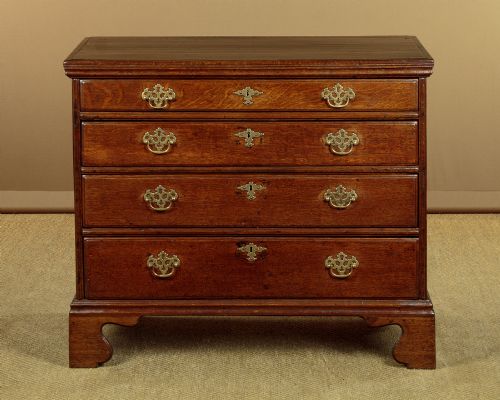
A mule chest combines the deep top-opening storage of a traditional coffer with one or more practical drawers positioned in the base. This evolution allowed owners to access frequently used items without lifting the heavy lid or disturbing objects stacked inside.
Cabinetmakers introduced this form during the late seventeenth and eighteenth centuries to improve everyday accessibility in country homes.