
English Coffer Chest
An English coffer chest provides sturdy timber storage with centuries of domestic history built into its joints.
English Coffer Chest
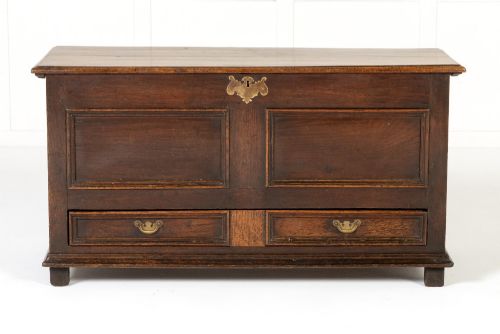
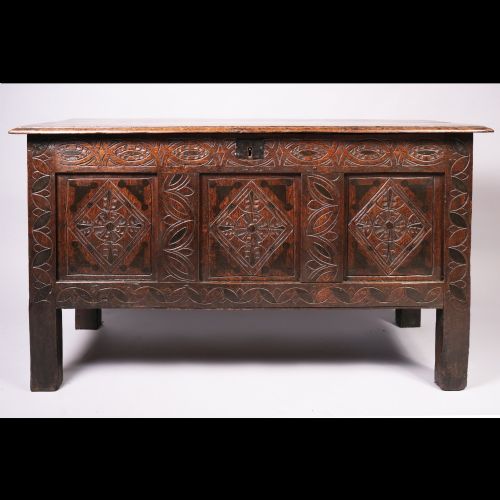
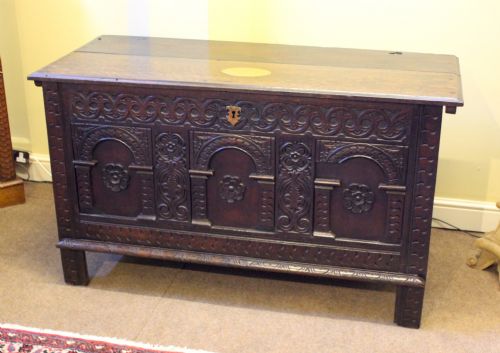
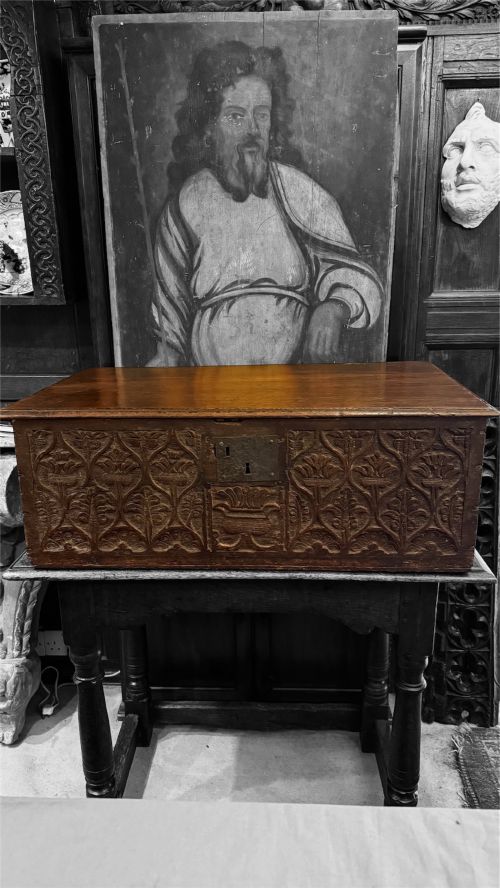
When searching for an english coffer chest, buyers encounter heavy storage furniture designed to hold textiles, valuables, and household goods across generations. The pieces available span from sixteenth-century boarded trunks to eighteenth-century panelled mule chests and Georgian blanket boxes.
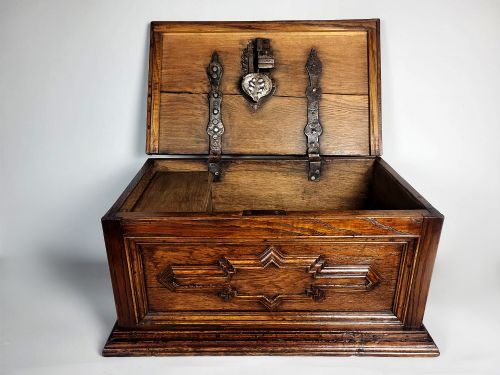
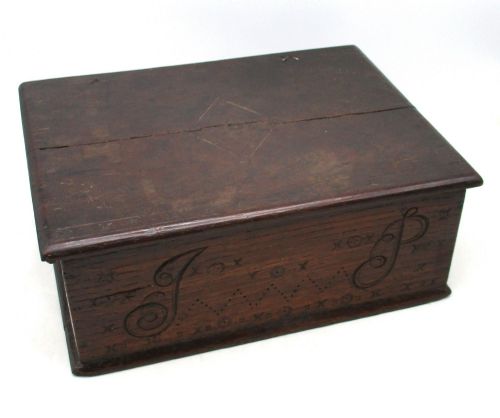
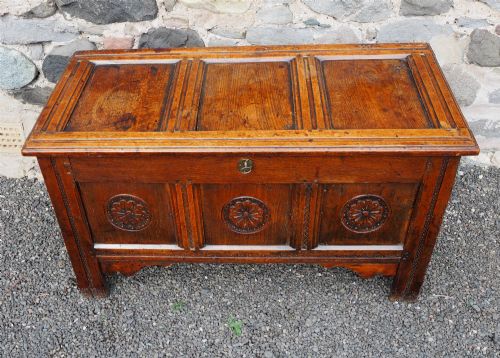
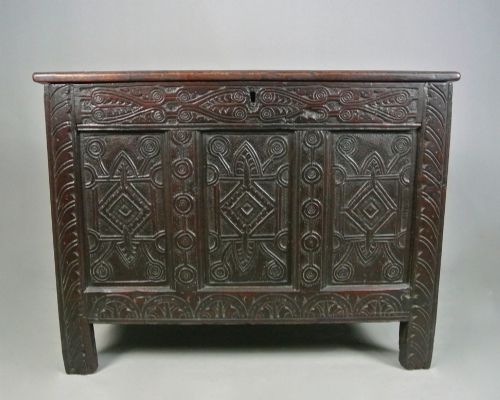
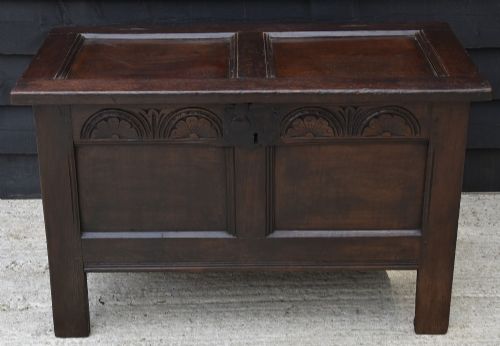
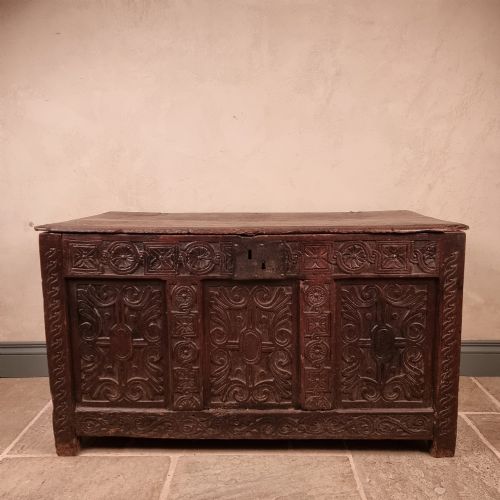
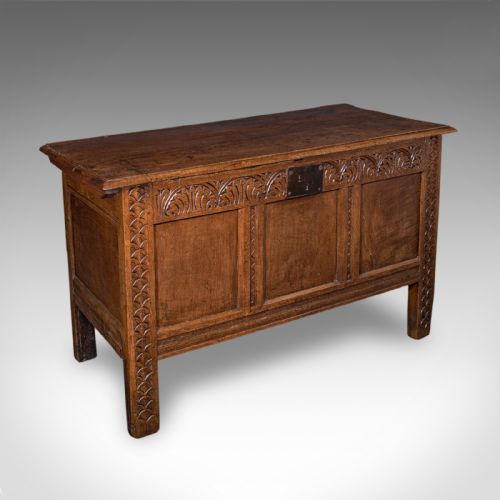
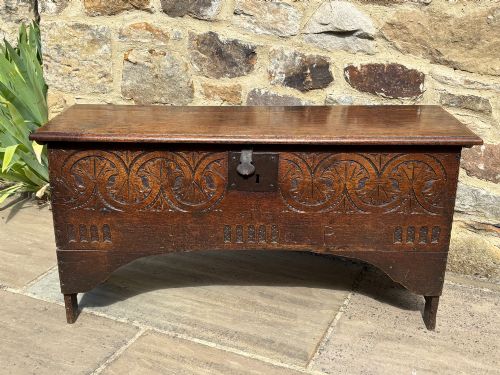
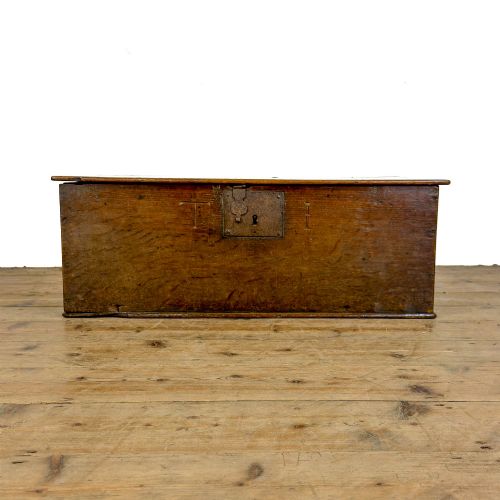
The most common examples met in these listings are seventeenth-century joined oak coffers featuring twin or triple panelled construction. These range from simple six-plank sword chests to heavily carved Jacobean and Charles II examples made for domestic utility.
How they were made
Cabinet makers constructed these pieces primarily from solid oak using frame-and-panel techniques designed to accommodate the natural seasonal movement of timber. Carpenters fastened joints with pegged mortise and tenon construction, while earlier examples utilised simple boarded planks joined with iron nails.
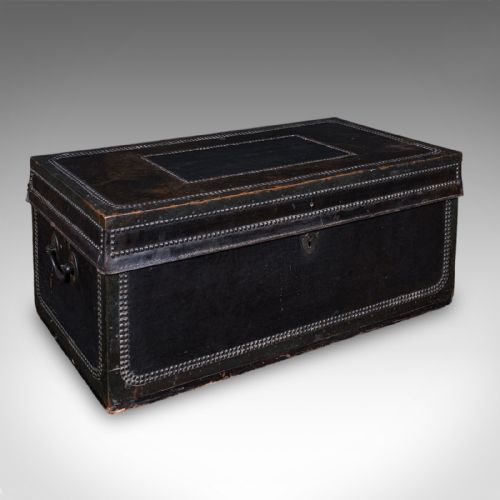
Iron, brass, and steel hardware provided essential security, visible in complex locks, strap hinges, and iron binding on shipping trunks. Secondary materials such as pine, elm, and camphorwood appear in later trunks and regional country pieces.
Listings feature solid oak construction spanning the sixteenth to nineteenth centuries, alongside regional variants in pine, elm, and camphorwood.
What varies in quality
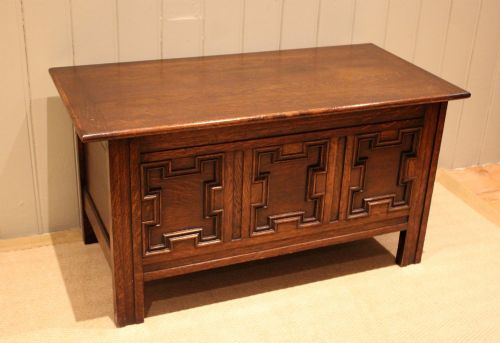
The degree of hand-carved ornamentation sets individual examples apart, moving from plain boarded surfaces to intricate arcaded panels and geometric mouldings. The retention of original ironwork, complex locks, and keys substantially elevates a piece's historical integrity.
Structural survival defines the upper tier, distinguishing items with undisturbed original timber from those burdened by extensive later replacements. Proportion and scale also dictate desirability, with smaller document boxes and compact proportions commanding particular attention.
The English Coffer Chest Glossary
- Coffer
- A heavy wooden chest utilised historically for storing valuables, linen, and documents. These sturdy containers often doubled as benches or tables within early homes.
- Mule chest
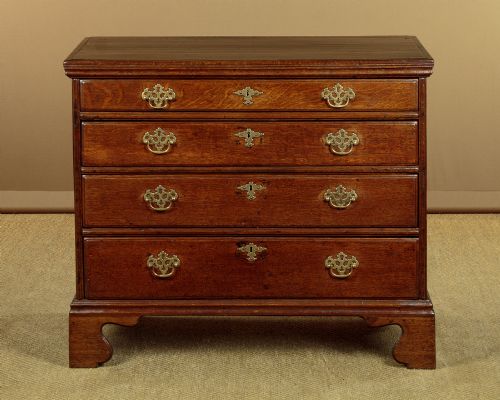
- An evolution of the traditional coffer featuring one or more drawers built into the base beneath the primary storage well. This form emerged during the eighteenth century to offer more accessible organisation.
- Boarded chest
- A primitive storage box constructed from thick planks fastened directly at the edges with nails or dovetails rather than a joined frame. Six-plank sword chests represent an early form of this construction.
- Joined chest
- A piece constructed using a frame of stiles and rails fitted with thinner floating panels to prevent splitting as the wood expands and contracts. This method replaced simpler boarded construction in domestic furniture.
- Arcaded
- A decorative carved motif depicting a series of arches supported by columns, frequently seen on seventeenth-century panels. This architectural detail helps date regional oak furniture.
English Coffer Chest: Frequently Asked Questions
What were coffer chests used for originally?
Early households relied on these heavy timber boxes to safeguard precious textiles, silver, vestments, and legal documents against theft and damp. Their flat lids also allowed them to serve as seating benches or temporary tables in great halls and chambers.
Over subsequent centuries their domestic role shifted toward storing household linens, blankets, and personal belongings in bedrooms. Sailors and merchants later utilised iron-bound variants as transport trunks for travel.
How do you date an old oak coffer?
Cabinet makers altered construction methods over time, shifting from thick sixteenth-century boarded planks to seventeenth-century joined frames with pegged mortise and tenon joints. Carving styles, such as Jacobean geometric patterns or Charles II arcading, provide further chronological markers.
Hardware styles like iron strap hinges and complex steel locks also help establish the period of manufacture. Tool marks left by pit saws and hand planes offer physical clues to the age of the timber.
What is the difference between a coffer and a mule chest?
A standard coffer opens only from the top via a lid, offering a single deep well for storage. This deep cavity suits bulky items like heavy blankets and woollen textiles.
A mule chest incorporates one or more drawers beneath the main storage compartment. This addition allowed owners to access smaller garments without disturbing items stored on top.
Where should you place a coffer chest at home?
These robust timber chests function effectively as window seats or hallway benches when topped with loose cushions. Their flat lids also provide a convenient surface at the foot of a bed for spare bedding.
Placed in living spaces, they serve as coffee tables while concealing interior storage for books or board games. Stable indoor humidity protects the historic oak from excessive drying.