


English Ceiling Light
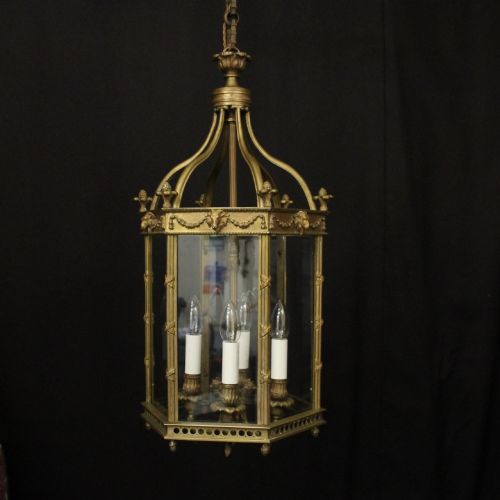
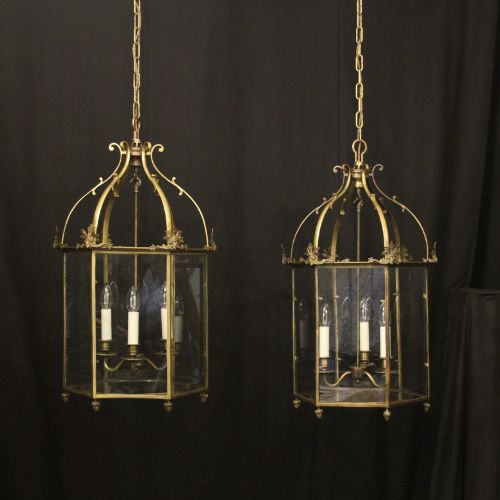
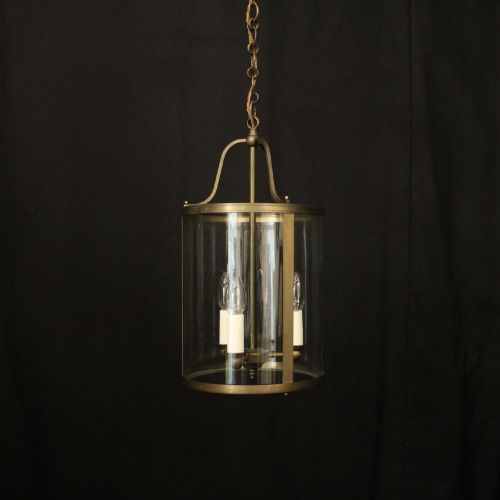
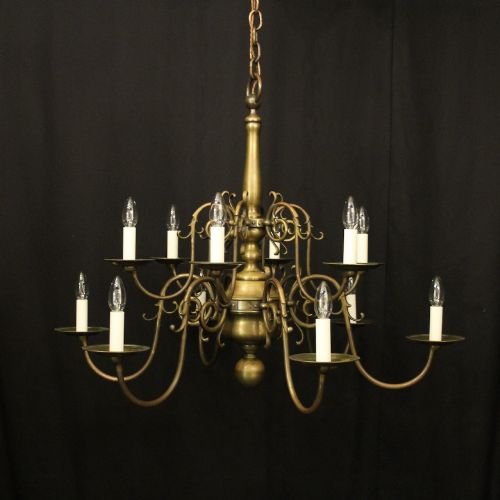
An English ceiling light brings genuine period character overhead, spanning grand brass chandeliers and modest glass hall lanterns.
English Ceiling Light
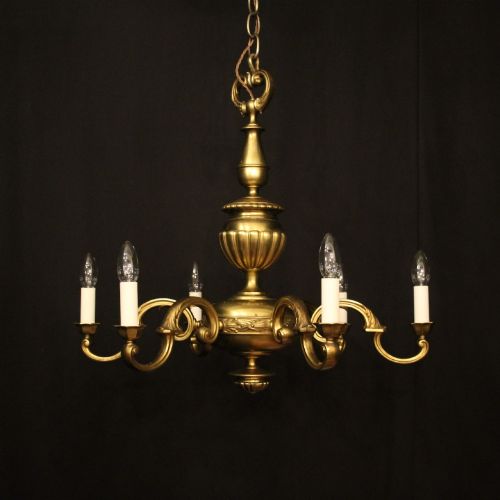
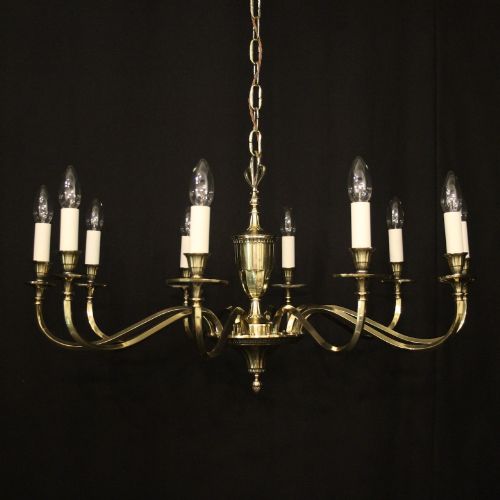
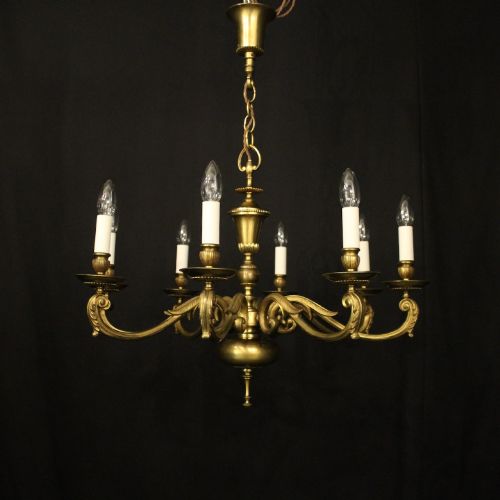
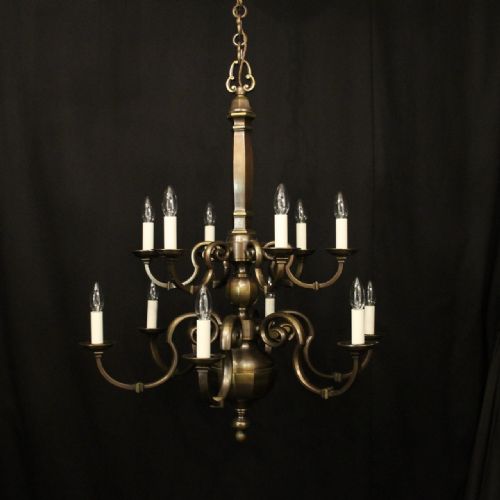
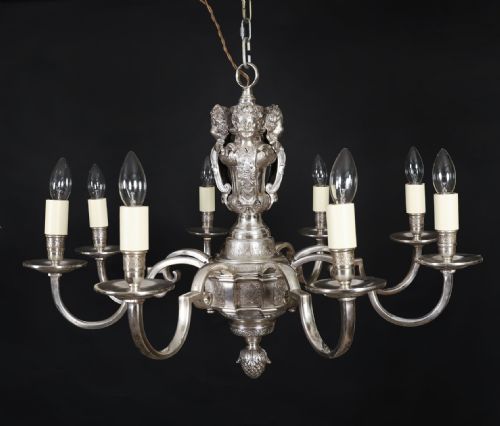
An English ceiling light encompasses a wide variety of hanging fixtures designed to illuminate interiors, ranging from multi-armed chandeliers to focused hall lanterns and simple pendant shades. When searching for an english ceiling light, buyers encounter pieces originating from the nineteenth century through the 1930s, reflecting shifts in taste from elaborate crystal designs to clean industrial forms.
Period production utilises traditional construction methods, often pairing heavy cast metal frames with hand-cut glass prisms or blown glass shades. These fixtures serve as the primary focal point of a room's overhead scheme, combining utility with decorative metalwork and glassware.
Materials and Construction
The manufacture of these fixtures relies heavily on structural metals such as brass, bronze, and silver-plated copper alloy to form the load-bearing frames, arms, and ceiling plates. Metal components are frequently cast, gilded, or finished by hand to create durable skeletons that support intricate glass arrangements.
Glass elements form the second pillar of construction, encompassing lead crystal, cut glass, mould-blown moonstone, and plain plate glass panels. Craftsmen combined these materials using pins, chains, and brass bands to suspend drops, waterfalls, and tent-and-bag structures securely beneath the ceiling.
English Ceiling Light Retail Price Guide 2026
Typical asking prices for english ceiling light among the pieces listed under this phrase on Sellingantiques today, from the lower quarter to the upper quarter. They describe what is for sale here now, not the wider market.
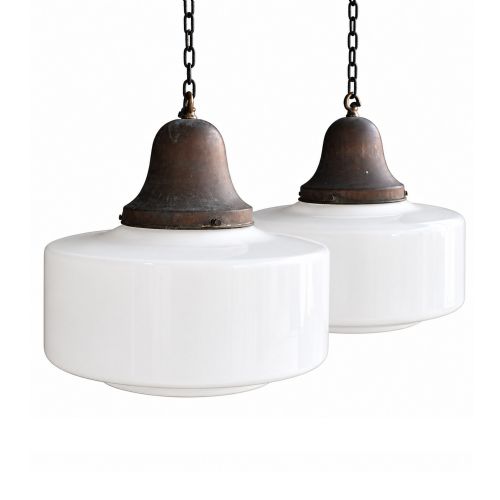
The inventory includes specialised forms like ballroom crystal chandeliers, factory pendant lights, and Gothic revival corona fixtures.
Assessing Quality
Quality in these pieces is dictated by the weight and finish of the metalwork, distinguishing heavy cast bronze or fire-gilded brass from lighter stamped alternatives. Superior examples display crisp chasing on metal mounts and substantial gauge brass that maintains structural integrity over decades of hanging.
The standard of the glass differentiates tiers of production, with high-end examples employing deep hand-cut lead crystal that refracts light cleanly through sharp facets. Simpler factory lights or utilitarian shades rely on thick, smooth glass designed for diffuse illumination rather than optical brilliance.
The English Ceiling Light Glossary
- Hall lantern
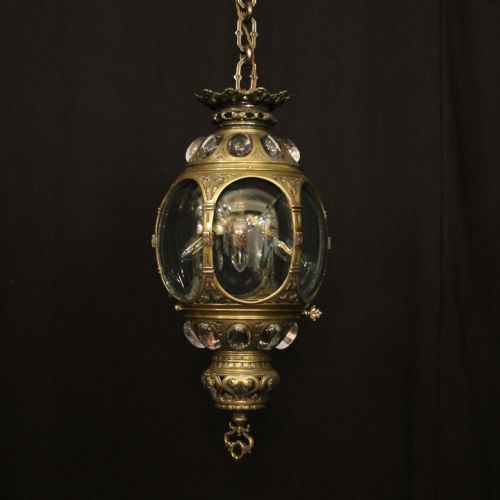
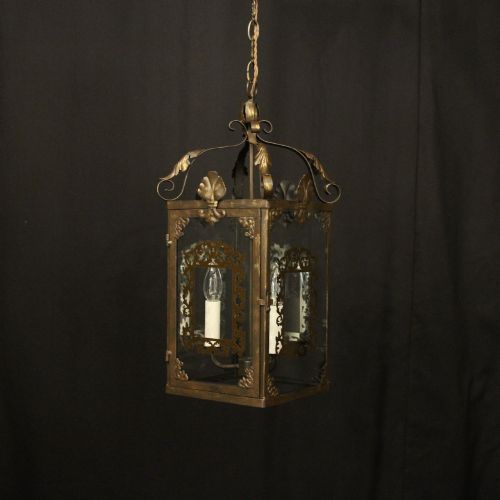
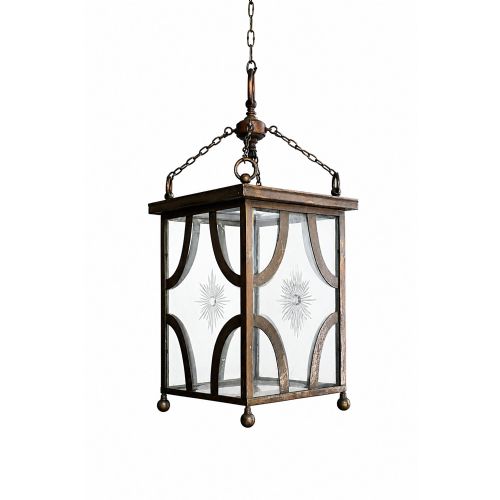
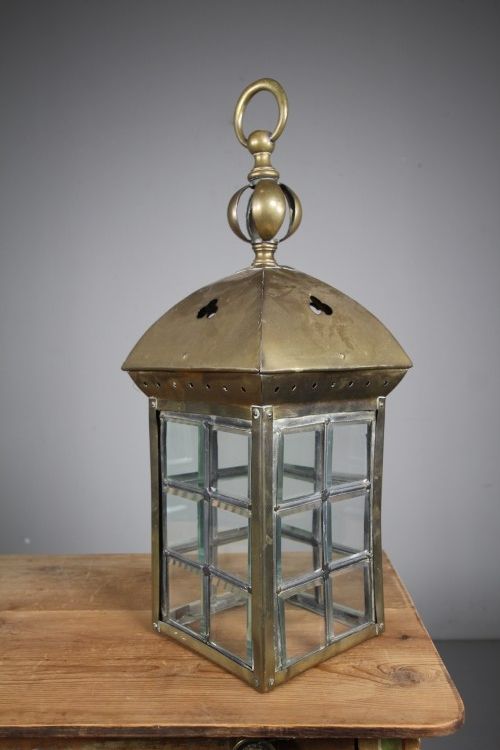
- An enclosed hanging light designed specifically for entryways and corridors, typically featuring glass panels set within a metal frame.
- Moonstone glass
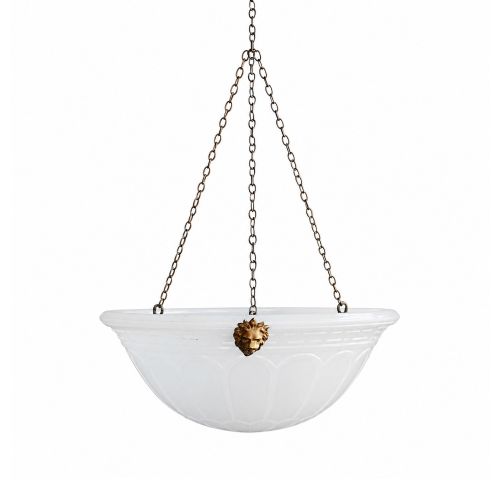
- An opaque, milky white glass popular in early twentieth-century lighting that produces a soft, diffused glow without glare.
- Tent and bag chandelier
- A lighting design where glass drops are arranged in an upper conical tent shape above a lower bag-like gathering of crystals.
- Gilded bronze
- Metalwork treated with a gold-coloured finish or gold leaf, providing a rich metallic sheen common in formal period chandeliers.
- Corona
- A circular crown-like metal fixture suspended horizontally from chains, often associated with ecclesiastical or Gothic revival interiors.
English Ceiling Light: Frequently Asked Questions
How do I hang a heavy antique chandelier?
Heavy period chandeliers require direct anchoring into ceiling joists using a rated structural hook capable of supporting the combined weight of metal and glass. Independent electrical wiring must be threaded through the suspension chain and connected by a qualified person.
Ceiling roses and mounting brackets should be inspected to ensure they match the drop weight of brass or bronze fixtures. Professional installation prevents strain on both the plaster and the antique hanging loop.
What rooms suit an antique hall lantern?
Hall lanterns provide focused vertical illumination suited to narrow entryways, corridors, and stairwells where clearance is restricted. Their enclosed glass sides protect internal candles or bulbs from drafts while casting clear light across walkways.
Pendant lanterns also function effectively in high-ceilinged landings or porches, anchoring transitional spaces with distinct period silhouette.
How do I clean cut glass drops?
Glass prisms and crystal drops are best cleaned while attached to the fixture using a dedicated spray solution and a soft cloth beneath to catch drips. Alternatively, individual drops can be unpinned, washed in warm soapy water, rinsed, and dried before rehanging.
Harsh chemical cleaners and abrasive cloths must be avoided to protect the surface polish of both the glass and the surrounding metal mountings.
Can these lights use modern bulbs?
Most antique fixtures accept standard modern lamp holders through rewiring, allowing the use of LED bulbs designed to match historic wattages. Low-heat LED alternatives are particularly beneficial for enclosed glass lanterns and delicate silk-shaded or crystal designs.
Rewiring should preserve the original aesthetic while ensuring compliance with contemporary electrical safety standards.