

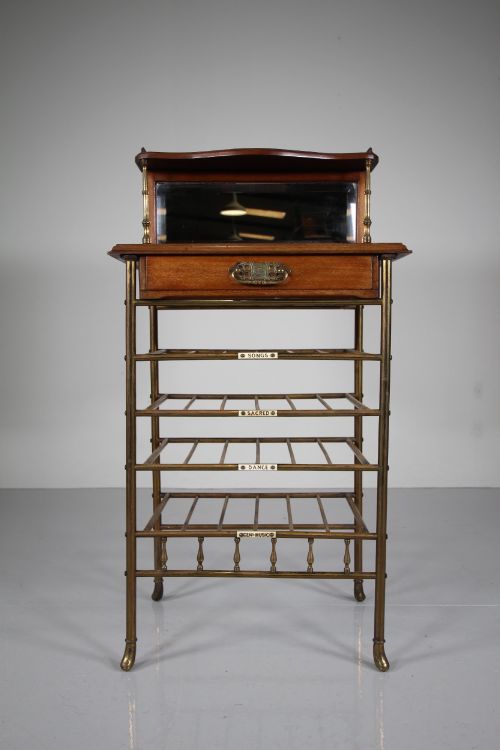
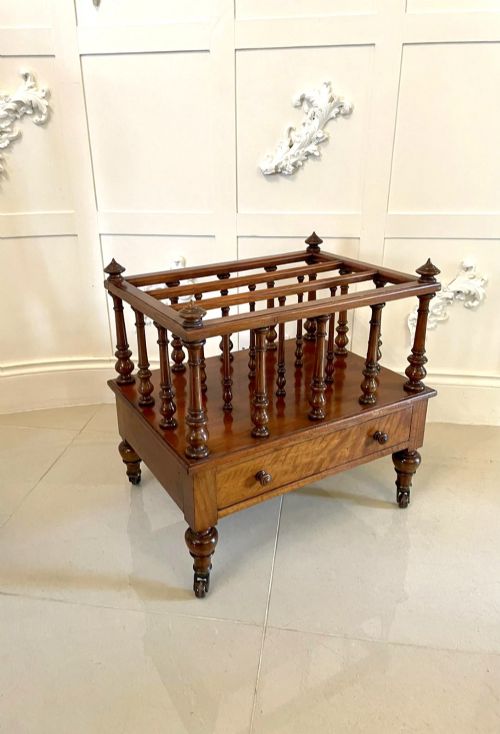
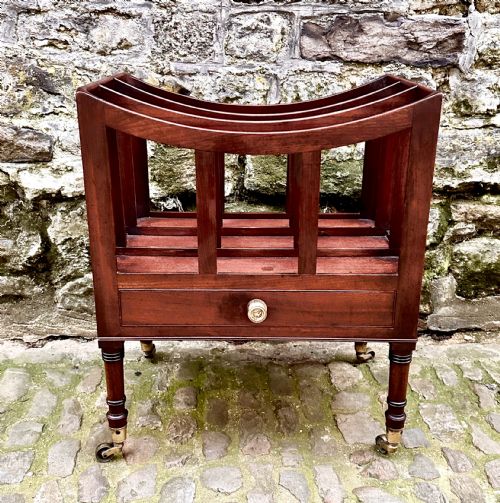
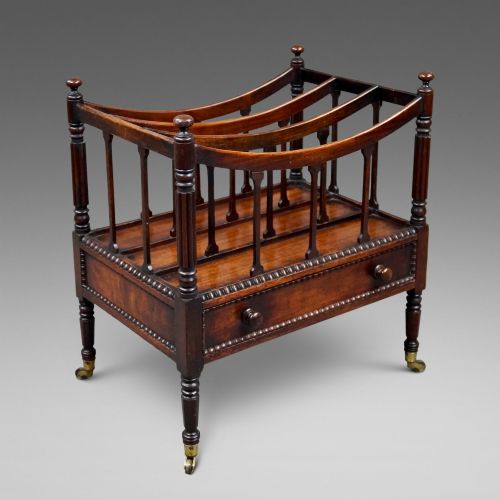




English Canterbury Stand
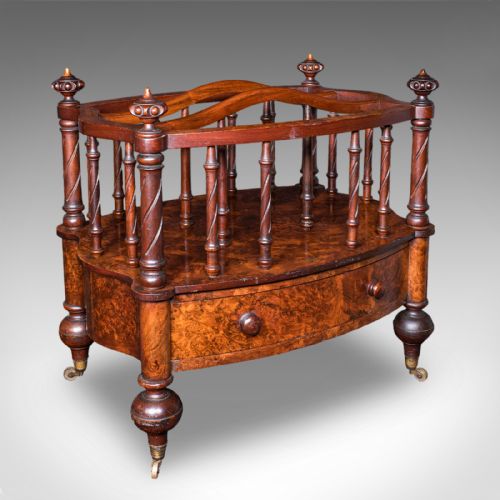
An English canterbury stand is a partitioned furniture piece for holding folios, newspapers, and sheet music, prized for both practical organisation and period elegance.
English Canterbury Stand
An English canterbury stand serves primarily to hold newspapers, magazines, and music sheets within domestic settings. When exploring this selection, buyers frequently encounter classic forms that include partitioned divisions for papers above a low drawer or shelf.
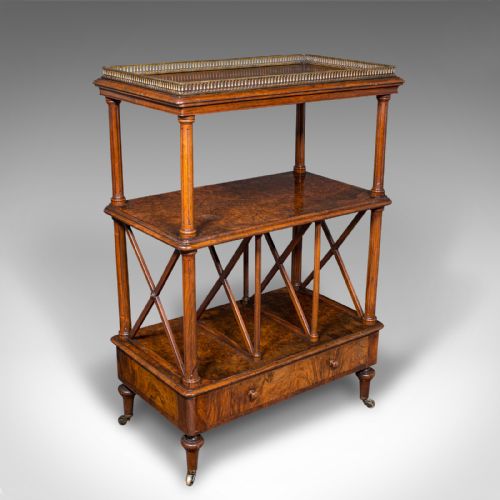
The objects span several distinct eras, appearing in Georgian, Regency, William IV, Victorian, and Edwardian guises. These pieces often function additionally as music cabinets, folio stands, or small bookcases depending on the internal configuration.
Originating as stands designed to keep reading material tidy beside a chair or desk, surviving examples range from simple four-division newspaper racks to grand scale folio stands and combination whatnots.
Evaluating craftsmanship and distinction
Quality rests upon the selection of timbers, where highly figured walnut or richly grained rosewood elevates a piece above standard mahogany alternatives. The crispness of turning on the upright supports and the subtlety of boxwood inlay distinguish finer workshops.
Proportion and scale dictate the desirability of an item, with double-size examples or grand scale folio stands representing the upper tier of the range. Structural integrity within the delicate slatted divisions remains essential for daily utility.
English Canterbury Stand Retail Price Guide 2026
Typical asking prices for english canterbury stand among the pieces listed under this phrase on Sellingantiques today, from the lower quarter to the upper quarter. They describe what is for sale here now, not the wider market.
The listings span the Georgian, Regency, William IV, Victorian, and Edwardian periods, constructed in mahogany, rosewood, walnut, and oak.
Gillows of Lancaster·J C Loudon·Liberty
The English Canterbury Stand Glossary
- Canterbury
- A low, stand-alone piece of furniture featuring vertical partitions, designed for holding books, sheet music, newspapers, or portfolios. The name derives from the Archbishop of Canterbury, who reportedly commissioned the first such rack.
- Folio Stand
- A large upright rack designed to hold oversized art prints, maps, or large manuscript books. These often feature adjustable folding frames.
- Etagere
- A set of open shelves for displaying small objects, sometimes combined with a canterbury base in multi-functional pieces. They provide tiered display space in principal rooms.
- Whatnot
- A piece of furniture consisting of a series of open shelves supported by slender pillars, used for displaying ornaments or holding books. They frequently incorporate canterbury sections below.
- Fall Front
- A hinged flap or door that drops down to form a writing surface or to grant access to internal cabinet compartments. This mechanism appears on select music cabinets.
English Canterbury Stand: Frequently Asked Questions
What is an English canterbury stand used for?
These stands were originally designed to hold sheet music, folios, and daily newspapers close to a seating area. They keep reading materials organised and upright.
Today, they function similarly in living spaces or studies as practical storage for modern magazines, journals, and art books.
Are all canterbury stands fitted with drawers?
Not all stands include a drawer beneath the slatted divisions. Many traditional forms consist solely of open partitions above castors or short legs.
When a drawer is present, it is typically shallow and intended for smaller items such as sheet music manuscripts, writing accessories, or periodicals.
What is the difference between a canterbury and a folio stand?
A standard canterbury is compact and built primarily for newspapers, magazines, and sheet music with multiple upright divisions. It usually sits low beside a chair.
A folio stand is constructed on a grander scale to hold oversized art books, architectural drawings, and large printed plates.