



English Cane Armchair
An English cane armchair brings practical seating and period character into a room, combining solid timber frames with woven panels.
English Cane Armchair
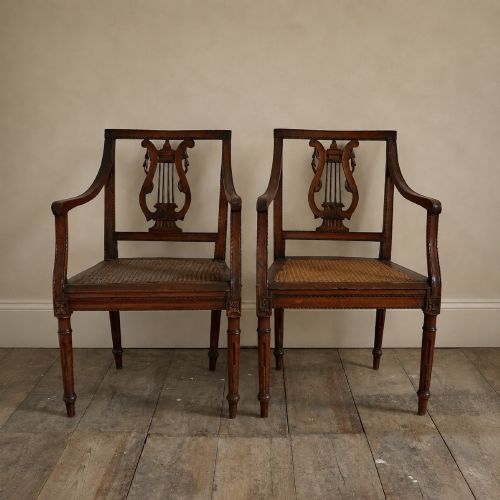
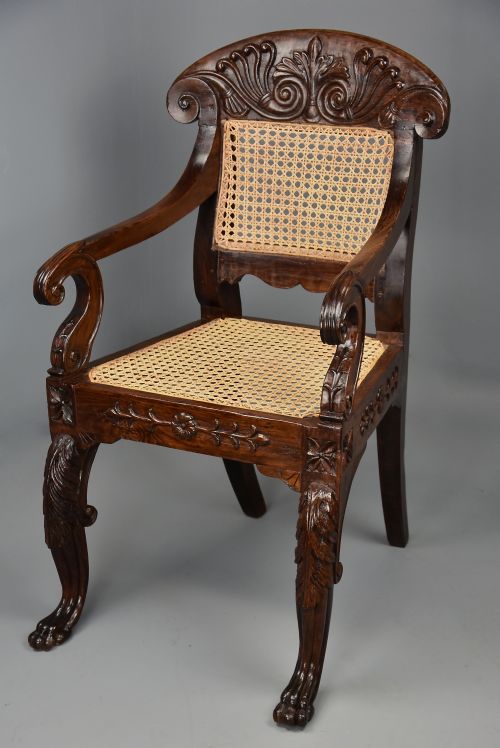
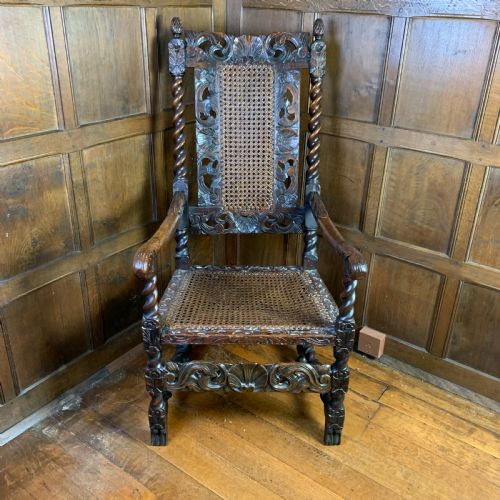
An english cane armchair combines a wooden framework with woven seating or back panels, appearing across periods from the seventeenth century through to the twentieth century. The forms range from library armchairs and metamorphic library steps to folding steamer chairs and low lounge seats.
The styles seen on this page span Regency, Carolean, Jacobean Revival, Arts and Crafts, and Chinoiserie. Makers and workshops utilised mahogany, walnut, oak, padouk, ebonised wood, and rosewood to build these seating pieces.
Buyers will encounter dining chairs, lounge chairs, and open armchairs featuring painted finishes, brass details, and leather elements. The woven panels provide a lightweight yet supportive surface suited for domestic use.
How they were made
Cabinetmakers constructed the frames using hardwoods such as mahogany, walnut, and oak, often shaping the timber with turning, carving, or ebonising techniques. Timber selection dictated the structural strength of the armchair before weaving began.
Cane panels were woven directly into or through holes drilled in the wooden framework using prepared plant fibres. Some examples incorporated additional materials like brass mounts, leather cushions, or hand-painted japanned decoration.
English Cane Armchair Retail Price Guide 2026
Typical asking prices for english cane armchair among the pieces listed under this phrase on Sellingantiques today, from the lower quarter to the upper quarter. They describe what is for sale here now, not the wider market.
The furniture spans multiple design movements, including Regency, Chinoiserie, Arts and Crafts, and Jacobean Revival.
What varies in quality
The finesse of the timber carving and the tightness of the cane weaving separate standard examples from finer work. Crisp turnings and well-joined frame corners indicate careful workshop production.
The preservation of original surface treatments, whether polished mahogany, painted finishes, or ebonised wood, influences the integrity of the piece. Matching elements within pairs or sets also affect the overall character.
Gillows·Dryad of Leicester
The English Cane Armchair Glossary
- Bergere
- An enclosed upholstered armchair with wooden framing and cane panels to the back and sides. These seats often accommodate loose cushions.
- Cane
- Woven material made from the outer peel of rattan palms. It provides a resilient and breathable surface for seats and backs.
- Japanned
- European imitation of East Asian lacquerwork using layered varnishes and painted decoration. This finish appears on specialised decorative frames.
- Metamorphic
- Furniture designed to transform from one object into another, such as an armchair converting into library steps. This mechanical ingenuity suited domestic libraries.
- Padouk
- A dense tropical hardwood with reddish tones utilised in furniture making. It provides durability for carved framework details.
English Cane Armchair: Frequently Asked Questions
How do I care for cane seats?
Keep woven cane panels hydrated by wiping them occasionally with a damp sponge to prevent brittleness. Avoid placing the armchair near direct heat sources.
Support the woven areas with suitable cushions rather than applying excessive point weight. Regular dusting helps maintain the natural fibres over time.
Were these chairs used in libraries?
Library armchairs were designed for reading rooms, often featuring specialised forms like metamorphic steps or enclosed bergere frames. The sturdy timber construction suited daily scholarly use.
Authors and readers utilised these comfortable seats for extended periods of study. The combination of wood and woven cane offered both support and ventilation.
What is a campaign steamer chair?
Folding steamer chairs were built for travel and leisure, utilising folding mechanisms and woven panels for portability. Victorian travellers and holidaymakers used them outdoors.
These lounge seats combined practical folding frames with lightweight cane or bergere construction. They offered portable comfort during transit.
How do I distinguish seventeenth-century styles?
Seventeenth-century armchairs, such as Carolean or Jacobean examples, feature turned walnut or oak framing with distinct structural joinery. Carved details reflect the craftsmanship of the period.
Later revival pieces from the twentieth century adopted similar turning and joinery techniques. Examining the timber ageing and construction methods helps clarify the date.