



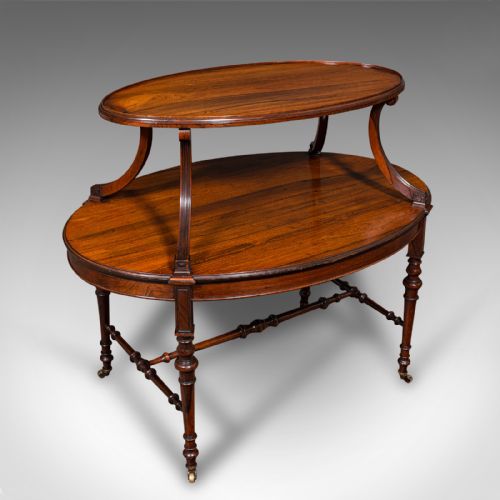


English Butler Table
These English butler table pieces are portable serving trays resting on folding stands, bringing historical practicality and rich mahogany timber to modern living spaces.
English Butler Table
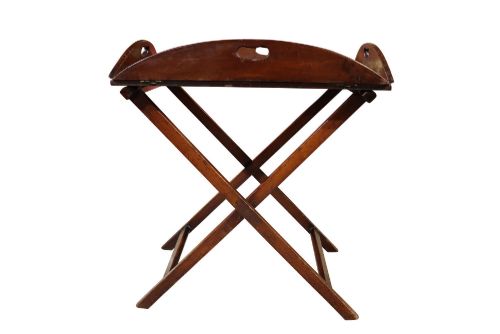
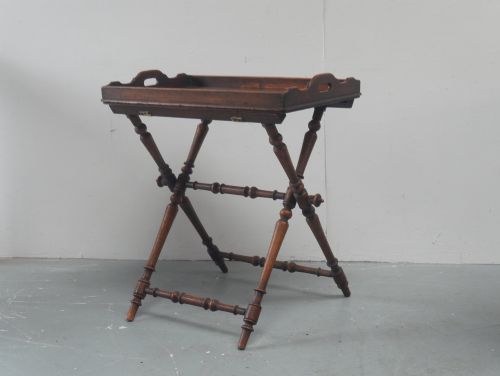
When you search for an English butler table, you are looking at versatile serving furniture designed for portability and function. The form typically combines a detachable rectangular tray with a collapsible X-frame folding stand, allowing the entire piece to be cleared away when not in use.
You are most likely to meet Edwardian and Victorian versions on this page, alongside earlier Georgian iterations and revival pieces. They appear variously as tray tables, serving stands, and coffee tables, often retaining their original folding wooden bases.
The objects span centuries of domestic service history, evolving from utilitarian kitchen and dining room equipment into decorative side tables. Their defining characteristic remains the raised gallery edge with cut-out carrying handles, which once kept tableware secure during transit.
What varies in quality
Quality rests primarily on the integrity of the timber and the precision of the joinery on both the tray and the folding stand. Finer examples display well-figured mahogany grain, hand-cut dovetail joints, and robust brass hardware that operates smoothly without excessive play.
The standard of surface ornamentation creates a further distinction between utilitarian pieces and high-status examples. Finely executed hand-painted Chinoiserie, crisp papier-mâché moulding, and intact original gold leaf separate standard domestic furniture from superior decorative commissions.
English Butler Table Retail Price Guide 2026
Typical asking prices for english butler table among the pieces listed under this phrase on Sellingantiques today, from the lower quarter to the upper quarter. They describe what is for sale here now, not the wider market.
Some tables double as European cartographer maps, proving that Victorian servants enjoyed geography lessons between courses.
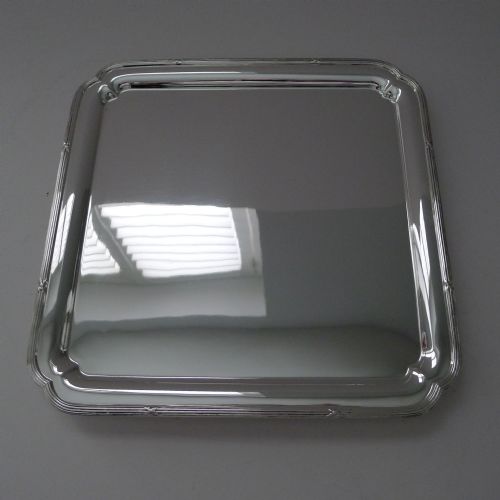
Elkington & Co
The English Butler Table Glossary
- Drop-flap
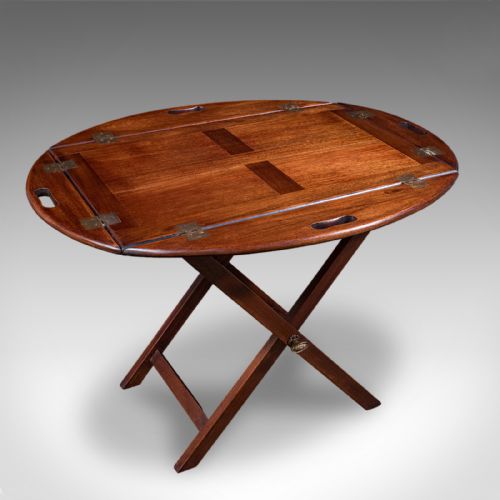
- A hinged table leaf that lowers or raises to alter the surface area of the tray. This feature allowed Victorian and Edwardian servants to expand or contract the serving space as needed.
- X-frame folding stand
- A collapsible wooden support structure operating on a scissor mechanism. It permits the tray to be removed and stored flat when not in use.
- Gallery edge
- A raised border surrounding the perimeter of the tray top. It prevents glassware, decanters, and silverware from sliding off during movement.
- Papier-mâché
- A composite material made from paper pulp, bound with glue or resin, and pressed into moulds. When cured and ebonised, it provided a smooth base for elaborate painted decoration.
- Chinoiserie
- European theatrical interpretation of Chinese artistic traditions, popular in decorative arts. It involves intricate motifs rendered in gold and coloured pigments against a dark background.
English Butler Table: Frequently Asked Questions
What is an English butler table?
An English butler table is a portable serving tray paired with a folding wooden stand. The design originated to allow staff to transport food and drink easily between rooms.
Over time, these practical items transitioned into static household furniture, functioning as side or coffee tables in contemporary rooms.
How do I care for mahogany wood?
Mahogany requires minimal maintenance, benefiting from occasional dusting with a soft, dry cloth. Avoid placing the timber in direct sunlight or near heat sources to prevent the wood from drying out.
Applying a traditional beeswax polish helps nourish the grain and maintain a natural sheen without building up heavy residue.
Are the trays removable?
Yes, traditional butler trays simply lift off their folding stands. This original design feature allowed servants to carry the tray independently while leaving the stand collapsed in storage.
When living with the piece today, this makes the table easy to rearrange, clean, or repurpose as a standalone serving platter.
How do I date a butler table?
Dating relies on examining timber species, hardware construction, and decorative styles like Victorian ebonising or Georgian cabinetwork. Hand-cut joinery and brass fastenings typically indicate earlier nineteenth-century or eighteenth-century origins.
Later Edwardian and revival iterations often display lighter construction methods and different proportions compared to their heavy Georgian predecessors.