




English Brass Clockwork Clock
An English brass clockwork clock measures time through mechanical gear trains housed in polished metal cases.
English Brass Clockwork Clock
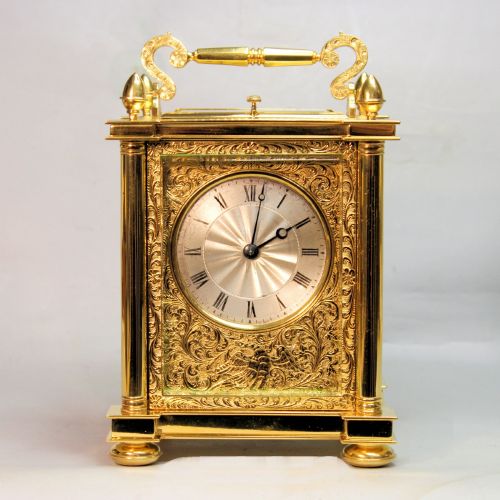
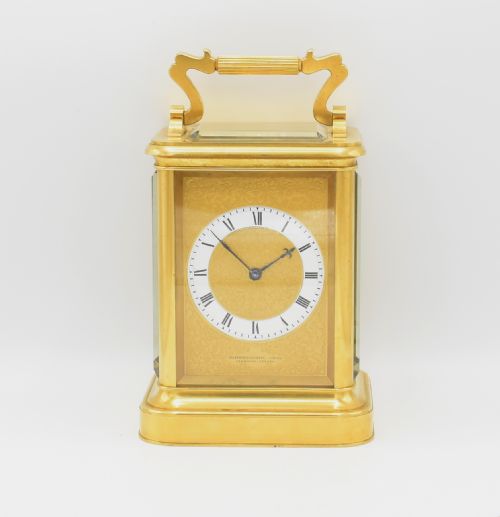
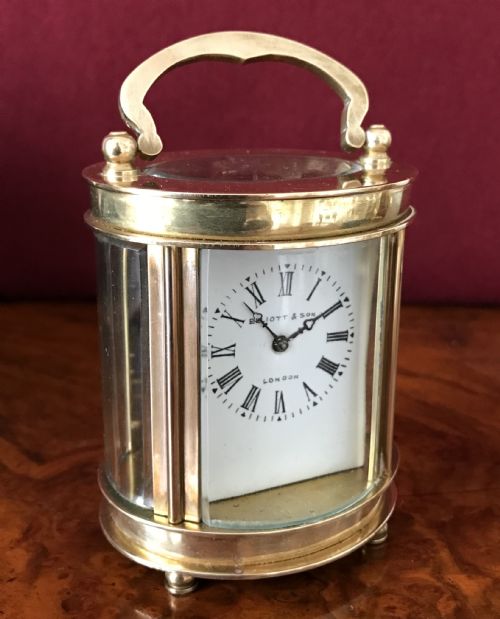
When you search for an english brass clockwork clock, you encounter timepieces spanning the nineteenth century alongside later twentieth-century examples, taking forms such as mantel clocks, wall clocks, and miniature carriage models.
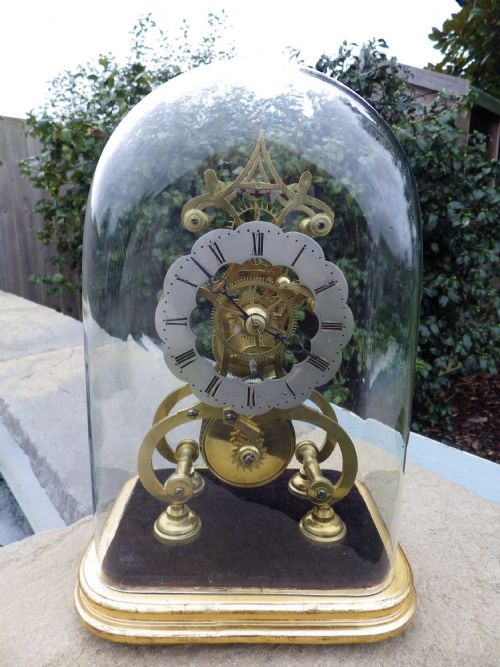
The pieces on this page include skeleton clocks with exposed mechanisms, fusee wall dials, and bracket clocks framed in mahogany or marble.
Victorian Gothic styles and standard Victorian designs appear frequently across the selection, originating from makers based in London and regional towns.
Construction and Materials
These timepieces rely heavily on brass for their plates, wheels, and dials, often combined with gilt brass or iron components.
Many examples incorporate glass domes to protect the exposed gear trains, while wall and bracket versions utilise timber cases made from mahogany.
Enamel dials feature on numerous models, paired with single fusee movements or eight-day gear systems.
Listings span the nineteenth century, Victorian Gothic styles, and Art Deco periods, utilising brass, glass, mahogany, and marble.
Quality and Craftsmanship
The sophistication of the wheel work and the presence of quarter striking or fusee mechanisms elevate certain examples above standard timepieces.
Substantial proportions and original protective glass domes contribute to the desirability of specific skeleton and carriage clocks.
Cousens & Whiteside·Goldsmiths Alliance Ltd·Thwaites of London·Piggin Norwich·E White Of Manchester
The English Brass Clockwork Clock Glossary
- Fusee
- A conical pulley used in mechanical clocks to maintain an even pull as the mainspring unwinds. This device helps the clock keep more accurate time.
- Skeleton clock
- A timepiece designed with open metal plates that expose the gear train and movement to view. These pieces sit beneath glass domes.
- Bracket clock
- A portable household clock originally designed to sit on a wall bracket or table. They frequently feature wooden cases.
- Drop dial
- A wall clock featuring a circular dial face above a short wooden trunk that drops down to enclose the pendulum. This form became common in public and domestic spaces.
English Brass Clockwork Clock: Frequently Asked Questions
What is an English brass clockwork clock?
These timepieces are mechanical clocks driven by springs or weights and constructed primarily from brass. They encompass wall dials, skeleton clocks, and carriage designs.
Production spans the Victorian era into the twentieth century, featuring movements housed in metal, wood, and glass.
How do fusee movements work?
A fusee movement uses a conical pulley connected to the mainspring by a chain or cord. As the spring loses tension, the chain moves to a wider part of the cone to maintain consistent power.
This mechanism ensures the clock maintains steady timekeeping as the power winds down.
Where were these clocks displayed?
Wall clocks with drop dials hung in domestic halls, offices, and public rooms for easy visibility. Mantel and bracket versions sat upon tables, shelves, and fireplace surrounds.
Skeleton clocks rested under glass domes on prominent surfaces as decorative functional objects.
How do I identify a skeleton clock?
Skeleton clocks feature openwork brass frames that strip away the traditional solid wooden case to reveal the gear wheels and escapement. They are typically displayed beneath a fitted glass dome.
Examples from the nineteenth century often showcase intricate wheel work and Gothic architectural details.