





English Brass Barometer
An English brass barometer measures atmospheric pressure through delicate mechanisms housed in sturdy metal and timber cases.
English Brass Barometer
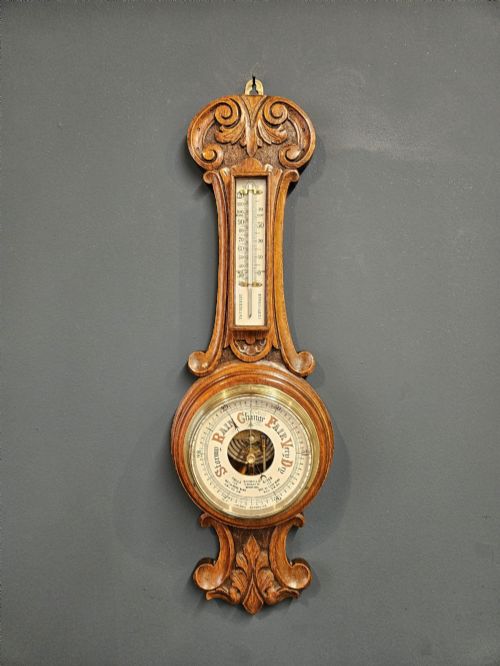
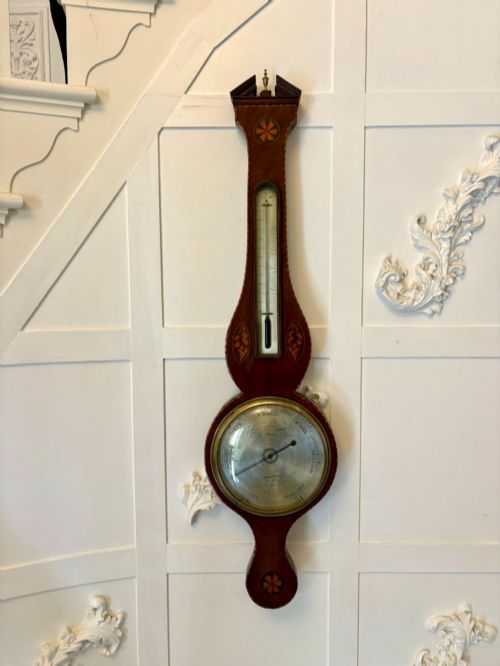
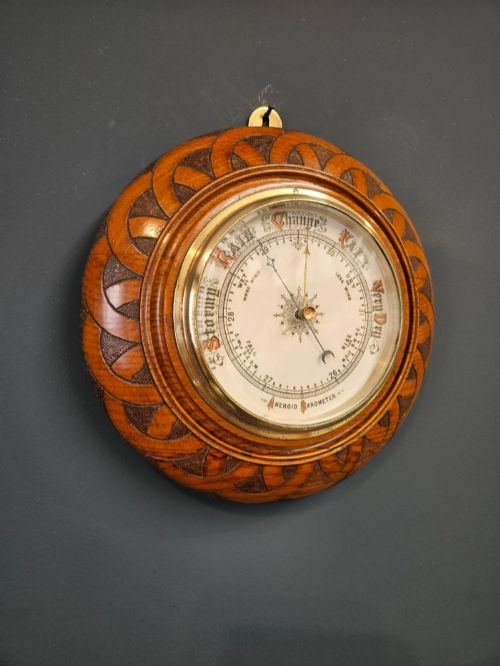
An English brass barometer brings together domestic utility and scientific measurement from periods spanning the eighteenth century through to the interwar period. These instruments record weather changes for daily use while functioning as decorative fixtures on parlour and library walls.
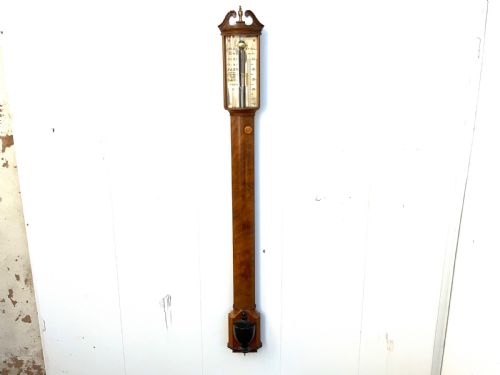
The selections encountered here range from Georgian stick barometers to Victorian wheel models and Edwardian barographs. Walnut, mahogany, oak and satinwood provide the primary housings, while brass components frame dials and secure mechanisms.
Makers stamp their names onto silvered metal dials and engraved plates, identifying workshops from London to regional towns across the country.
Materials and construction
Cabinetmakers constructed the main housings from dense hardwoods such as mahogany, oak, walnut and satinwood, frequently employing shell inlay or turned mouldings to shape the timber cases. Glass protects the delicate dials, thermometer tubes and revolving paper chart drums.
Metalworkers utilised brass for bezels, cistern covers, gimbals and skeletonised frames, pairing the alloy with silvered metal scales for readability. Steel springs and levers inside aneroid and barograph movements respond to microscopic shifts in barometric pressure.
Specialised instrument makers fitted these brass and steel components within the wooden chassis, calibrating mercury tubes and aneroid capsules to register local weather accurately.
English Brass Barometer Retail Price Guide 2026
Typical asking prices for english brass barometer among the pieces listed under this phrase on Sellingantiques today, from the lower quarter to the upper quarter. They describe what is for sale here now, not the wider market.
Listings feature brass, glass, mahogany, oak, satinwood, steel, silvered metal and walnut across Georgian, Victorian and Edwardian periods.
Assessing craftsmanship and condition
Superior examples display crisp engraving on silvered metal dials and precise calibration within the mechanical linkages of the movement. Master makers invested time in hand-finishing the brass bezels and ensuring the timber veneers matched seamlessly across the case.
Finer barometers retain their original mercury tubes, glass covers and maker signatures, whereas altered pieces often feature replacement parts or obscured inscriptions. The integration of auxiliary instruments, such as thermometers or chart drawers with bevelled glass, distinguishes advanced scientific models from standard domestic wall barometers.
B. Besozzi of Weymouth·Short & Mason London·Bramwell & Harbron·Blake & Son·Negretti & Zambra·George Dollond·Casella London
The English Brass Barometer Glossary
- Aneroid barometer
- An instrument that measures atmospheric pressure without liquids by using a flexible metal capsule. Changes in pressure cause the capsule to expand or contract, moving a pointer across the dial.
- Barograph
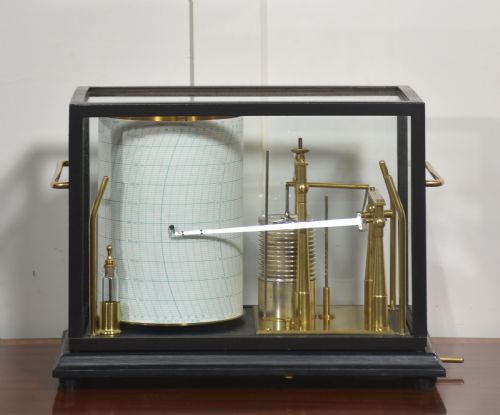
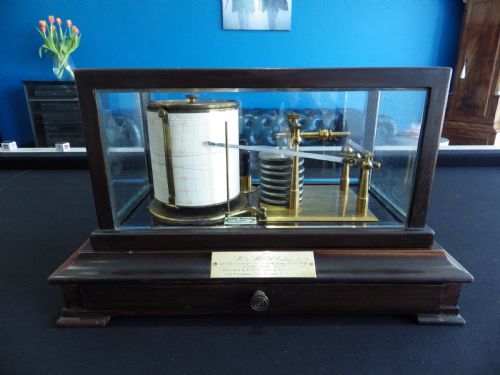
- A recording barometer that traces pressure changes over a week onto a rotating paper chart. These devices sit in wood and glass cases, often equipped with a chart drawer.
- Stick barometer
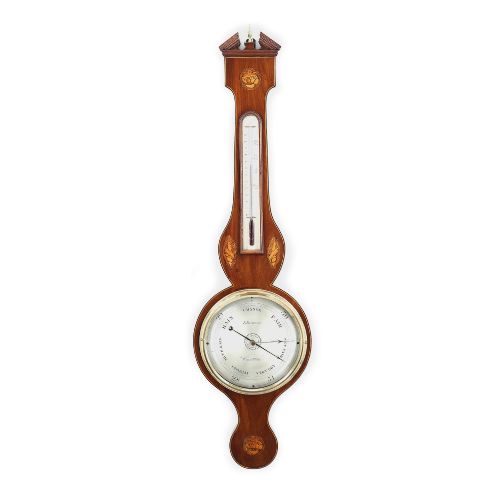
- A tall, narrow wall instrument containing a vertical glass tube filled with mercury. This form shows direct barometric readings against a graduated scale.
- Wheel barometer
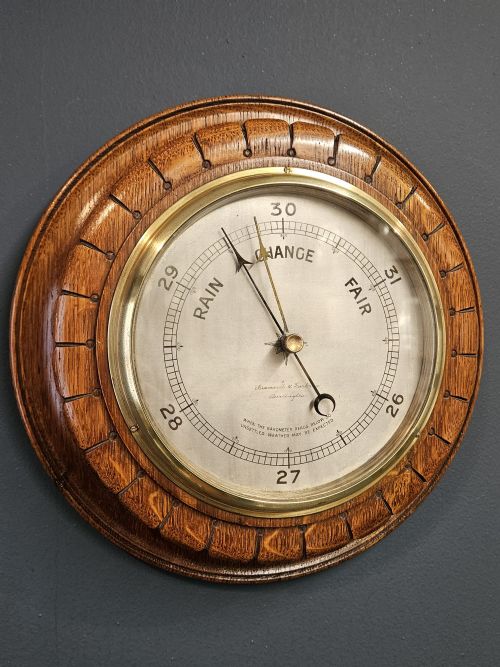
- A round wall instrument where a float on the mercury column connects to a pulley and pointer. This design displays pressure on a wide circular dial.
- Skeletonised movement
- A design that exposes the internal wheels, levers and plates of the mechanism to view. These movements appear behind glass dials or open frames.
- Silvered metal
- A brass or copper dial surface treated with a silver coating and engraved with numbers and lettering. This finish provides high contrast for reading measurements.
English Brass Barometer: Frequently Asked Questions
What is an aneroid barometer?
An aneroid barometer measures atmospheric pressure using a sealed metal capsule rather than liquid mercury. The internal capsule expands or contracts with weather shifts, moving a mechanical linkage attached to the dial pointer.
This design allowed makers to produce compact, portable wall instruments that did not require vertical mounting or careful handling of liquid columns.
How do stick and wheel barometers differ?
A stick barometer displays pressure vertically through a long mercury tube mounted on a wooden trunk. A wheel barometer translates that vertical movement into a circular motion using a pulley system, showing the reading on a wide dial.
Wheel variants often include auxiliary thermometers and hygrometers, while stick models focus purely on the column height.
Where should I hang a wall barometer?
Hang your barometer on an interior wall away from direct sunlight, heating vents and damp areas. Temperature fluctuations near radiators or windows affect the internal metal components and alter the pressure readings.
Secure the case firmly to a wall stud or use appropriate fixings, particularly for heavier mahogany and oak models.
How do I read a barograph chart?
A barograph records continuous pressure changes onto a paper chart wrapped around a clockwork drum. The pen moves upward as pressure rises and downward as weather systems approach.
By checking the trace line across the week, you can observe the rate at which pressure changes, indicating incoming storms or stable periods.