

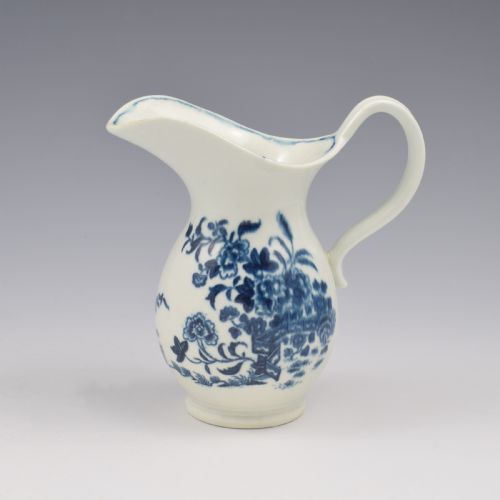


English Blue White Jug
An english blue white jug brings historic pottery into daily service, combining durable earthenware with hand-applied cobalt decoration.
English Blue White Jug
An english blue white jug encompasses domestic pitchers, milk jugs, and large water vessels produced across the eighteenth and nineteenth centuries. These vessels range from delicate porcelain milk jugs to substantial earthenware pitchers designed for daily use.
The most common examples encountered on this page date from the Georgian and Victorian periods, featuring transfer-printed topographical scenes or classical patterns. Collectors also find eighteenth-century porcelain forms alongside nineteenth-century ironstone and delftware.
Alongside ceramic vessels, related pieces such as sauce boats, vases, and even twentieth-century watercolour paintings depicting jugs occasionally appear in the selection. The core focus remains firmly on functional ceramic pouring vessels decorated in blue and white.
Materials and Techniques
Potters shaped these vessels using earthenware, ironstone, soft-paste porcelain, and bisque porcelain, applying cobalt glaze to create deep blue decoration beneath or over the fired surface. Transfer printing allowed complex pictorial designs, such as historical views and botanical motifs, to be applied efficiently to curved bodies.
Earlier eighteenth-century pieces often relied on hand-painted cobalt decoration on soft-paste porcelain or tin-glazed delftware bodies. By the nineteenth century, factories utilised transfer printing on pottery and ironstone to produce detailed patterns like the Boston State House series.
English Blue White Jug Retail Price Guide 2026
Typical asking prices for english blue white jug among the pieces listed under this phrase on Sellingantiques today, from the lower quarter to the upper quarter. They describe what is for sale here now, not the wider market.
Listings feature earthenware, soft-paste porcelain, ironstone, and bisque porcelain spanning the eighteenth, nineteenth, and twentieth centuries.
Assessing Quality and Execution
Quality rests in the crispness of the cobalt transfer print and the balance of the form, whether dealing with an eighteenth-century porcelain sparrow beak jug or a large Victorian ironstone pitcher. Finer pieces display clear, well-aligned patterns without blurring in the blue glaze.
The sophistication of the modelling distinguishes standard production from superior work, particularly in moulded mask heads, hydra handles, and applied spout details. Material choice also influences refinement, setting delicate porcelain milk jugs apart from heavy earthenware water vessels.
Dr Wall Worcester·John Rogers and Son·John Meir and Son·Mason·Spode
The English Blue White Jug Glossary
- Transfer printing
- A method of applying complex decorative patterns to ceramic ware by engraving a design on a copper plate, printing it on tissue paper, and transferring it onto the unfired or biscuit surface.
- Soft-paste porcelain
- An artificial porcelain compound developed in Europe during the eighteenth century, composed of white clay and glass frit, fired at lower temperatures than true hard-paste porcelain.
- Ironstone
- A heavy, durable type of earthenware patented in the nineteenth century, designed to resist chipping and mimic Chinese porcelain.
- Mask head
- A sculptural spout or handle terminal moulded in the likeness of a human or mythical face, frequently found on eighteenth-century jugs.
- Delftware
- Tin-glazed earthenware produced in England from the sixteenth through the eighteenth centuries, known for its opaque white surface and painted cobalt decoration.
English Blue White Jug: Frequently Asked Questions
What is a sparrow beak jug?
A sparrow beak jug is a small eighteenth-century porcelain milk or cream jug characterised by a distinctive pinched spout resembling a bird's beak.
These compact vessels were standard additions to tea service sets during the Georgian period.
How do I date a blue and white transfer jug?
Dating relies on examining the ceramic body, the shade of the cobalt glaze, and any factory marks stamped or painted on the base. Transfer-printed historical views often correspond to specific nineteenth-century commemorative events.
Stylistic cues such as handle shape and potting weight also help separate Georgian earthenware from Victorian ironstone.
Were these jugs used for water or milk?
Functions varied by scale, with small vessels serving as milk jugs or creamers for tea sets, and large pitchers holding water or beer for the table.
Footbath jugs and one-gallon pitchers fulfilled heavier domestic tasks in larger nineteenth-century households.
Can I use an antique jug for serving drinks?
Most antique ceramic jugs are suitable for holding liquids, though delicate porcelain and porous delftware require careful handling and hand washing.
Buyers often display them as decorative objects or utilise sturdy ironstone and earthenware pitchers for serving water.