





English Bachelors Chest
An English bachelors chest is a compact, multipurpose piece built for writing and storage that brings understated Georgian utility to a modern interior.
English Bachelors Chest
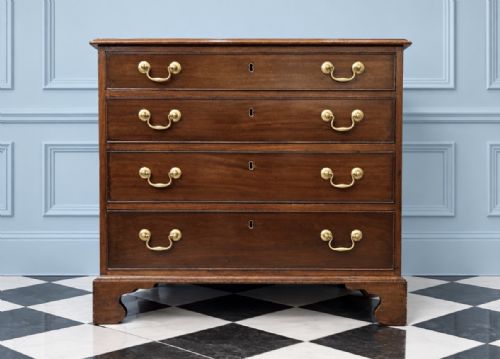
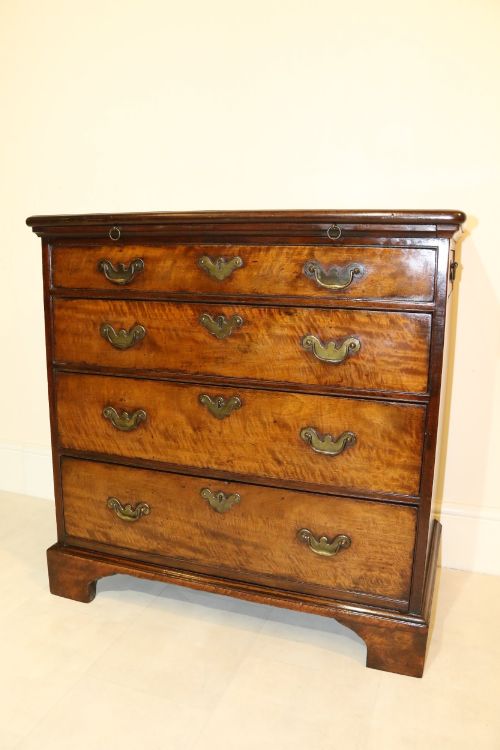
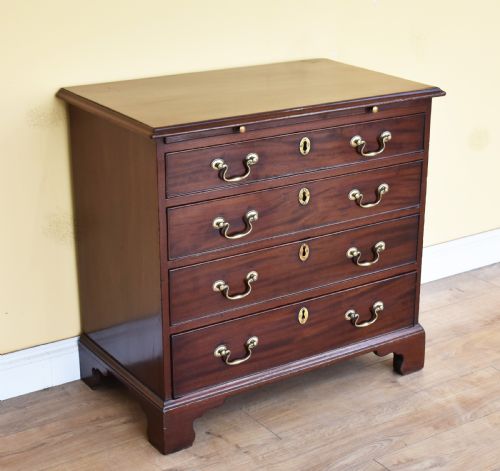
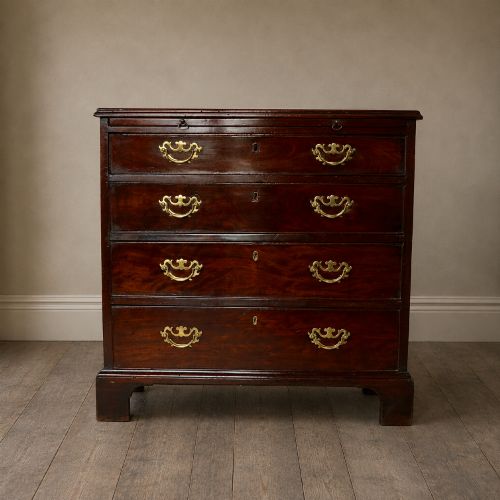
An English bachelors chest combines a traditional drawer configuration with a dedicated writing surface, designed to serve multiple functions in a compact footprint. The examples found here span the Georgian and Victorian eras, taking the form of both dedicated folding-top writing chests and related mahogany or oak chests of drawers.
The version most frequently met on this page is the Georgian mahogany or oak chest, often featuring cross-banding and swan neck handles, alongside later Victorian interpretations. These pieces originate primarily from the eighteenth and nineteenth centuries, reflecting the domestic habits and cabinet-making standards of those periods.
Buyers seeking an English bachelors chest will encounter variations in proportion and timber, from small serpentine forms to robust country oak pieces. The selection demonstrates the enduring appeal of compact bedroom furniture that prioritises both storage and writing facilities.
Materials and construction
Cabinet-makers relied primarily on figured timbers such as mahogany, flame mahogany, walnut, and yew wood, frequently complemented by secondary woods like oak. Surfaces often display decorative cross-banding to frame the drawer fronts and top edges.
Hardware typically consists of brass drop handles or swan neck pulls, secured to drawer structures built with traditional joining methods. The structural integrity relies on the density of the chosen hardwood and the precision of the timber selection.
English Bachelors Chest Retail Price Guide 2026
Typical asking prices for english bachelors chest among the pieces listed under this phrase on Sellingantiques today, from the lower quarter to the upper quarter. They describe what is for sale here now, not the wider market.
The listings show pieces spanning the Georgian, 18th century, and Victorian periods, constructed from mahogany, oak, walnut, yew wood, and flame mahogany.
Variations in quality
Quality in these chests rests upon the choice of timber and the restraint of its decoration, where rich flame mahogany or carefully figured yew wood elevates the piece. Superior examples exhibit harmonious proportions and consistent secondary woods throughout their internal construction.
The refinement of the brass hardware and the crispness of the cross-banding distinguish standard provincial work from higher-grade London or regional craftsmanship. A successful piece maintains structural balance without relying on excessive ornamentation.
The English Bachelors Chest Glossary
- Cross-banding
- A border of veneer laid with the grain running perpendicular to the surrounding surface. This technique frames drawer fronts and top boards on finer pieces.
- Flame mahogany
- A veneer cut from timber where the grain creates a distinctive undulating, flame-like pattern. It was favoured by eighteenth-century cabinet-makers for primary visual surfaces.
- Swan neck handle
- A brass drawer pull shaped like a double curve resembling a swan's neck, fastened to backplates. These are typical of mid-to-late eighteenth-century furniture.
- Serpentine
- A curved line that undulates outward in the centre and inward at the sides. This contour requires skilled woodworking to shape the drawer fronts and carcase.
English Bachelors Chest: Frequently Asked Questions
What is a bachelors chest?
A bachelors chest is a compact form of chest of drawers that incorporates a fold-over writing flap or a sliding board. It was designed to provide a small writing surface alongside traditional drawer storage for a single room.
The form bridges the gap between a bureau and a standard chest of drawers, making it particularly useful where floor space is limited. Surviving examples date principally from the Georgian and Victorian periods.
How were these chests used?
These pieces served as private storage and correspondence desks for individuals living in modest quarters or chambers. The folding top opened to reveal a baize-lined or polished wood surface for writing letters and managing personal accounts.
Beneath the writing surface, drawers held linen, clothing, and papers. They functioned as essential bedroom furniture before dedicated dressing tables and writing desks became common in every room.
How do I date an English bachelors chest?
Dating relies on examining the timber species, handle styles, construction methods, and secondary woods used inside the drawers. Georgian pieces often display flame mahogany veneers and oak drawer linings, while Victorian examples show distinct shifts in proportion and hardware.
Secondary characteristics like the presence of cross-banding or serpentine fronts help narrow the period of manufacture. Cabinet-making conventions changed steadily across the eighteenth and nineteenth centuries.
Where should I place one in a home?
A bachelors chest fits well in a bedroom, study, or hallway where a full-sized desk would overwhelm the room. Its shallow depth allows it to sit comfortably against walls in narrow spaces while offering practical surface area.
The combination of drawers and a writing surface makes it practical for modern living areas as an accent piece. Proper placement protects the timber from direct sunlight and dramatic humidity changes.