

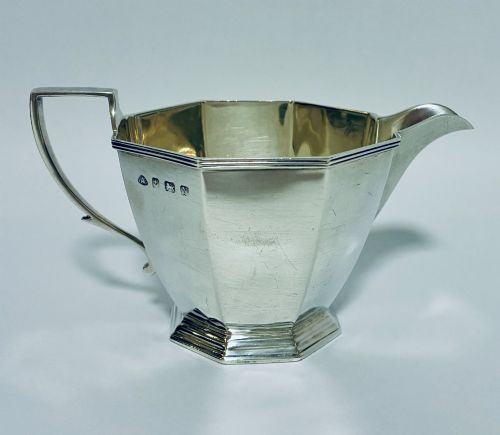

English Art Deco Silver
English art deco silver brings geometric discipline and modernist utility to tableware, smoking accessories and desk objects from the interwar decades.
English Art Deco Silver
English art deco silver encompasses functional objects produced during the 1920s, 1930s and 1940s, embodying the geometric forms and stylised motifs typical of the period. Pieces originate from major manufacturing centres such as Birmingham, Sheffield and London, reflecting the industrial design developments of the interwar era.
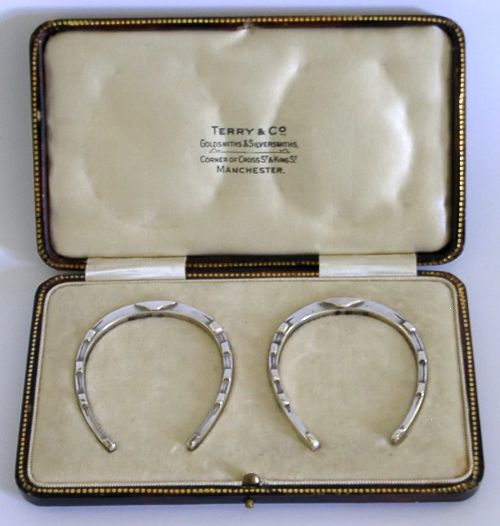
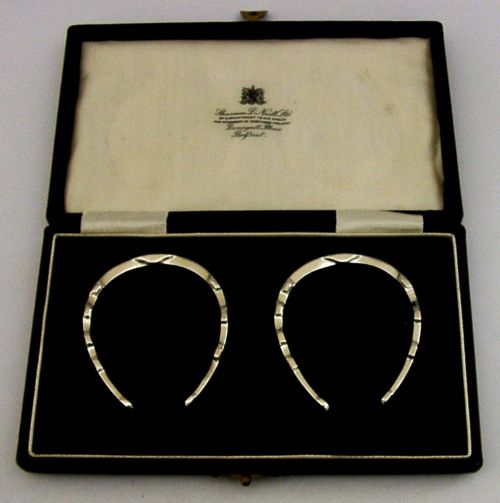
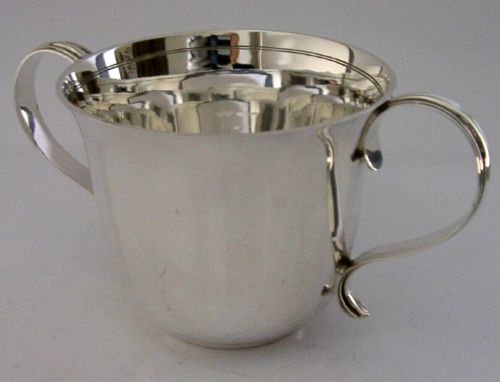
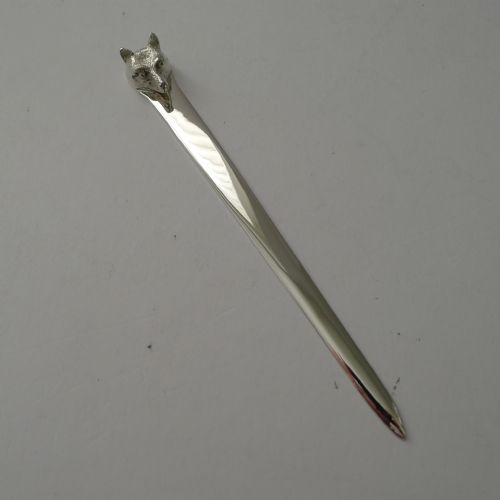
The objects most frequently encountered on this page include cocktail shakers, napkin rings, letter openers, photograph frames, cigarette cases and dressing table accessories. These items bridge domestic utility with distinct modernist styling, often combining sterling silver or silver plate with contrasting materials.
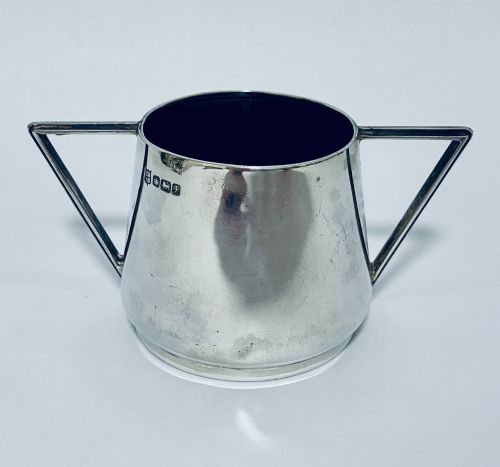
Makers ranged from large silversmithing firms to specialist silversmiths producing cruet sets, tea caddies, desk clocks and barware. The survival of hallmarks on these items provides clear evidence of assay offices in cities like Birmingham and Chester, dating production precisely across the George V and George VI reigns.
Materials and construction
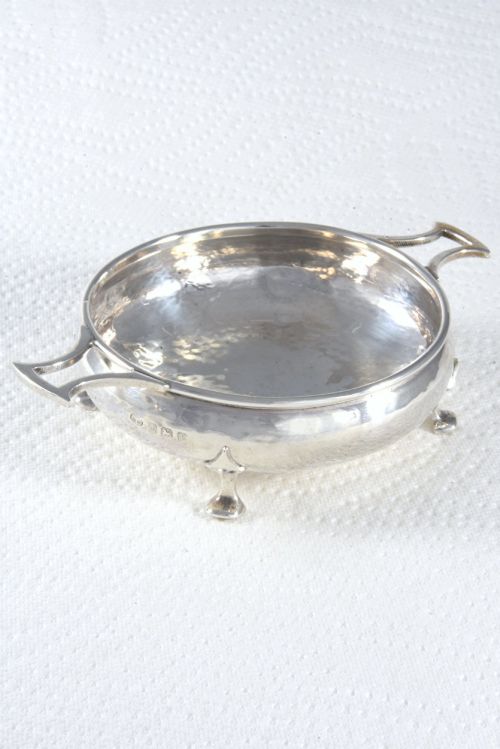
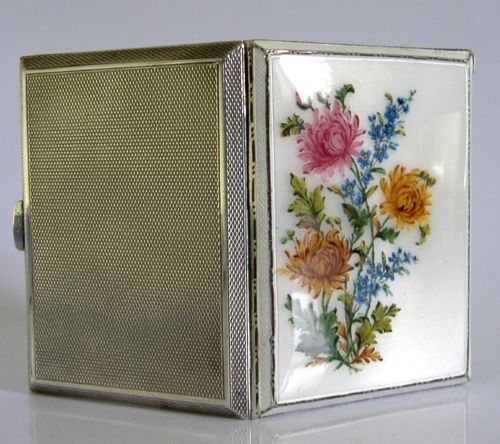
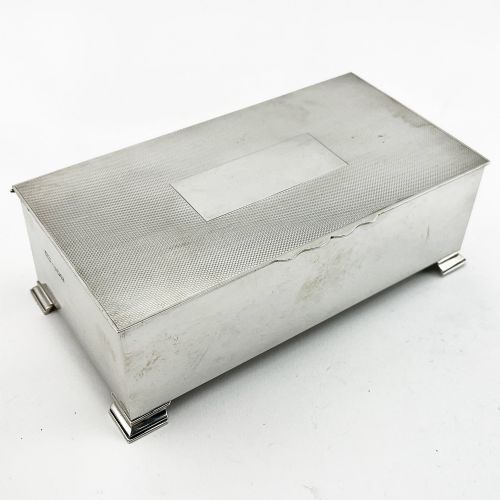
Sterling silver and silver plate form the primary structural medium for these pieces, often worked through stamping, spinning and hand-hammering to achieve crisp geometric angles. Engine-turning machines applied precise linear patterns across cigarette cases and photograph frames, creating uniform surface decoration.
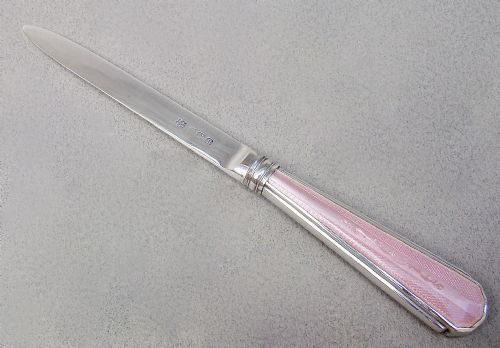
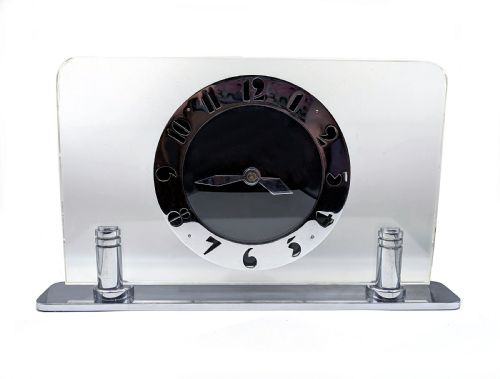
Makers frequently combined silver with glass, enamel and chrome to achieve the clean contrasts demanded by modernist design. Guilloché enamel panels added translucent colour beneath geometric engine-turned patterns, while cut glass and crystal provided weight and transparency to scent bottles, decanters and inkwells.
English Art Deco Silver Retail Price Guide 2026
Typical asking prices for english art deco silver among the pieces listed under this phrase on Sellingantiques today, from the lower quarter to the upper quarter. They describe what is for sale here now, not the wider market.
The listings span the 1910s to the 1940s, capturing the transition from late George V designs into clean modernist styles.
Quality factors
Quality rests upon the crispness of the stamping, the precision of the engine-turning and the structural integrity of hinges and mounts on boxes and flasks. Well-executed pieces display sharp geometric lines and securely fitted enamel or glass components without adhesive residue.
The reputation of the maker and the clarity of the full set of hallmarks significantly influence the standing of an object. Pieces bearing marks from established firms demonstrate superior weight of metal and careful finishing of interior gilt surfaces.
Walker & Hall·Mappin & Webb·Richard Comyns·Asprey·Adie Brothers Ltd·Wilmot Manufacturing Co
The English Art Deco Silver Glossary
- Hallmark
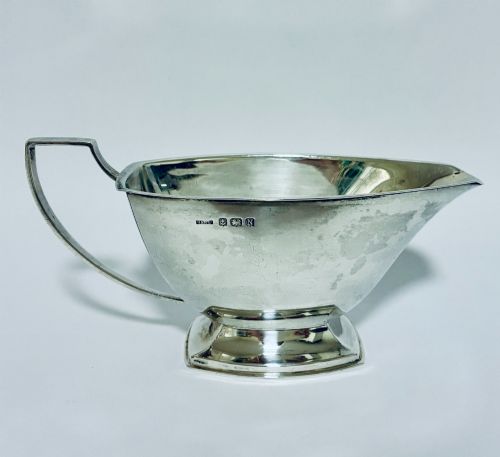
- Official stamps struck into precious metals to guarantee purity, origin city and year of production. British sterling silver typically carries a leopard head or anchor, a lion passant, and a date letter.
- Guilloché
- A decorative technique where a precise mechanical pattern is engraved into metal beneath translucent enamel. This method was widely used on compacts, cigarette cases and letter openers.
- Engine-turning
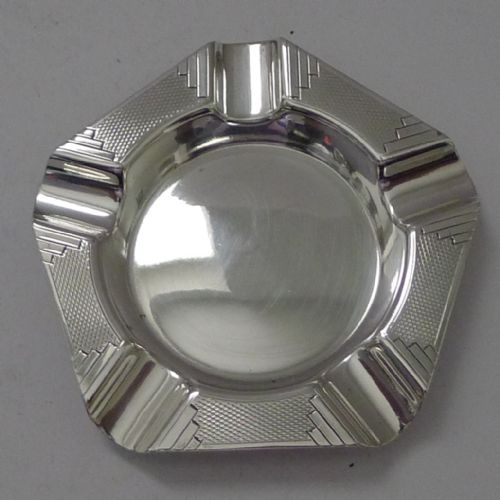
- A process of machine engraving geometric patterns into metal surfaces using a rose engine lathe. It provides durable texture that resists fingerprints on frequently handled items.
- Vesta case
- A small portable box designed to hold matches, typically fitted with a striking surface on the base. These cases often match the geometric motifs found on contemporaneous cigarette boxes.
English Art Deco Silver: Frequently Asked Questions
How do I date english art deco silver?
Dating relies primarily on the assay office hallmarks and date letters stamped directly onto the metal surface. These official marks record the exact year and city of testing.
Interwar pieces frequently carry date letters spanning the 1920s and 1930s, aligning with the reigns of George V and George VI.
What is the difference between sterling silver and silver plate?
Sterling silver contains a guaranteed minimum proportion of pure silver alloyed with other metals for durability, marked by specific statutory symbols. Silver plate consists of a base metal coated with a thin layer of silver.
Solid silver pieces retain intrinsic material value and carry full hallmarking, whereas plated items display maker marks denoting deposition methods.
How should I clean enamelled silver pieces?
Enamelled silver requires gentle cleaning with warm soapy water and a soft cloth to protect the glass-like vitreous surface. Standard abrasive silver dips must be avoided.
Harsh chemical cleaners can erode the enamel or seep beneath guilloché panels, causing permanent discolouration.
Were these items used daily or kept for display?
Most items served practical domestic functions, from mixing cocktails and lighting cigarettes to opening correspondence and reading time. Their robust construction suited frequent handling in contemporary homes.
Over time, many objects transitioned from functional utility to decorative display pieces within modern interiors.