






Enamelled Vanity Jar
An enamelled vanity jar brings colour and polished metal to a dressing table, combining glass and silver with bright surface work.
Enamelled Vanity Jar
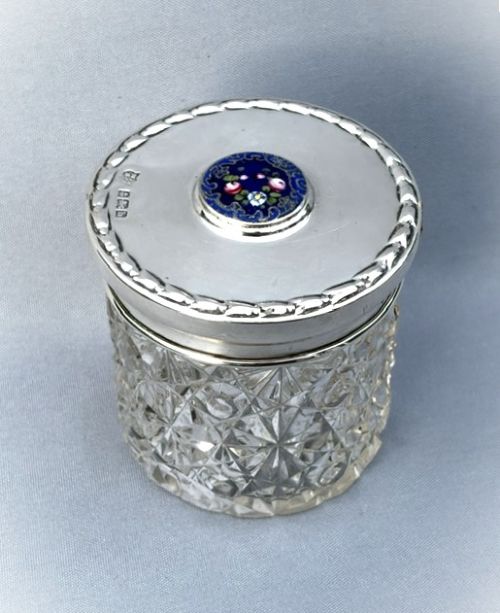
An enamelled vanity jar serves as a dressing table container for cosmetics, pins or trinkets, combining a glass or porcelain body with a fitted metal lid. Most pieces encountered here stem from the twentieth century, particularly the Art Deco and Edwardian periods, alongside nineteenth century French and Victorian examples.
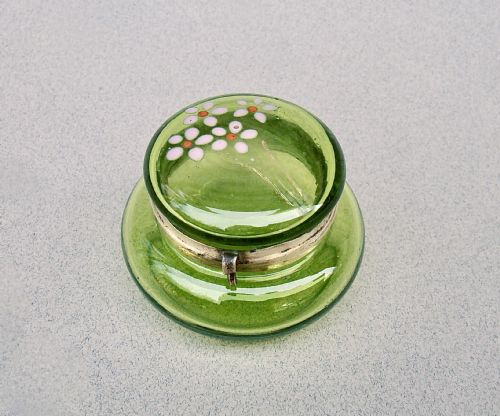
The body typically takes the form of cut glass, plain glass, or coloured glass such as cranberry and Bristol blue, topped with sterling silver mounts and coloured enamel work. Surviving items range from small trinket boxes and lidded bowls to tall scent bottles and dressing table sets.
Earlier nineteenth century specimens lean towards French and Victorian origins using enamelled green glass or porcelain, whereas later pieces often adopt the geometric styling of the 1920s and 1930s with guilloche patterns.
Judging Quality
Quality rests upon the crispness of the glass cutting, the weight of the sterling silver mount, and the intricacy of the enamel work. Finer examples display precise engine-turned guilloche patterns beneath unbroken translucent enamel free from chips or heavy scratching.
The thickness of the glass and the sturdiness of the silver hinge or fitting dictate durability and tactile presence, separating standard dressing table items from high-grade workshop productions.
Enamelled Vanity Jar Retail Price Guide 2026
Typical asking prices for enamelled vanity jar among the pieces listed under this phrase on Sellingantiques today, from the lower quarter to the upper quarter. They describe what is for sale here now, not the wider market.
Listings feature items spanning the Victorian era through the Edwardian period and the 1920s Art Deco movement.
Henry Clifford Davis·Henry Perkins·Goldsmith's and Silversmith's Co.
The Enamelled Vanity Jar Glossary
- Guilloche Enamel
- A decorative technique where metal is mechanically engraved with intricate geometric patterns before translucent enamel is applied over the top. This allows light to reflect through the coloured surface.
- Sterling Silver
- An alloy of silver containing 92.5% pure silver and 7.5% other metals, usually copper, used extensively for the lids and mounts of these jars.
- Bristol Blue
- A deep, vibrant blue glass traditionally produced in Bristol during the eighteenth and nineteenth centuries, frequently utilised for dressing table bottles and boxes.
- Assay Office
- A body charged with testing the purity of precious metals and stamping them with official hallmarks, such as the anchor for Birmingham or the leopard's head for London.
Enamelled Vanity Jar: Frequently Asked Questions
What were enamelled vanity jars used for?
These jars held cosmetics, pins, jewellery, or perfumes on nineteenth and twentieth century dressing tables. They kept small personal items organised while adding a decorative flash of colour to the room.
Their lidded designs protected contents from dust, making them both practical accessories and ornamental display pieces for bedrooms and boudoirs.
How do I date an enamelled vanity jar?
Dating relies heavily on silver hallmarks stamped onto the metal mounts, which indicate the assay office and year of production. Stylistic clues such as geometric Art Deco patterns or Victorian glass colours also help narrow down the decade.
Examining the construction methods and the thickness of the glass provides further context for whether a piece originates from the nineteenth century or the Edwardian era.
Are the lids removable?
Most lids lift off freely or feature a hinged mechanism attached to a silver collar fitted around the glass neck. Scent bottles usually incorporate a stopper beneath a decorative outer cap.
Checking the fit of the mount ensures the lid secures the contents properly without damaging the glass rim beneath.
How should I clean glass and enamel jars?
Cleaning requires gentle care, using a soft cloth and mild soapy water for the glass body while avoiding harsh abrasives that could scratch the enamel surface. Silver dips should be kept away from enamelled areas to prevent chemical damage.
Careful handling protects both the delicate guilloche patterns and the vintage silver mounts from unnecessary wear.