





Enamelled Silver Pill Box
An enamelled silver pill box is a small, hinged container combining precious metal and vitreous colour, prized for its pocket-sized decoration and fine craftsmanship.
Enamelled Silver Pill Box
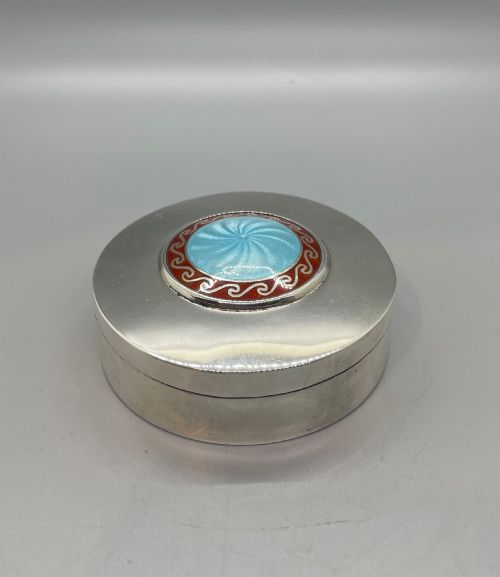
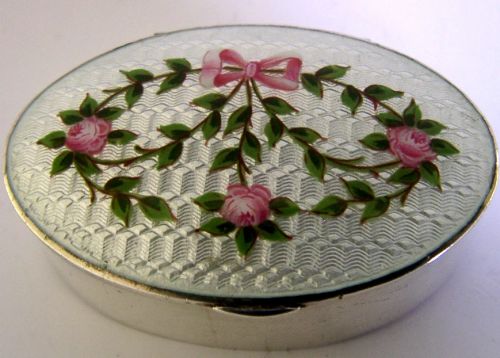
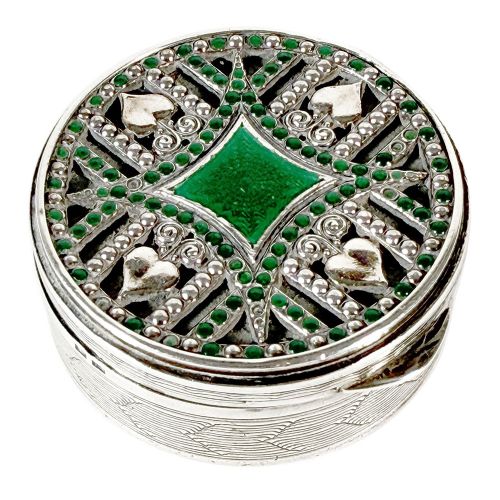
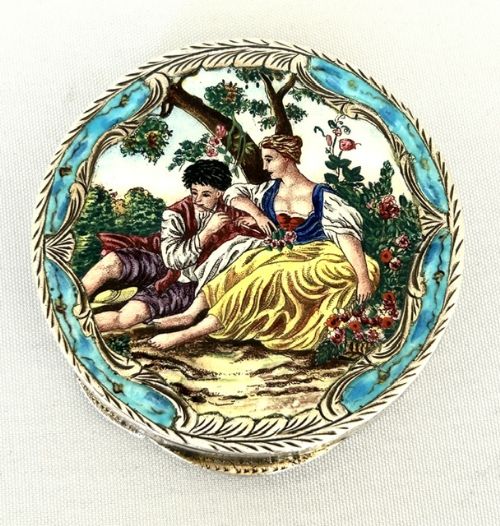
An enamelled silver pill box is a small receptacle designed for carrying medications or small personal items in a waistcoat pocket or handbag. When exploring this selection, buyers encounter pieces originating from the Edwardian era, the 1900s, 1910s, 1920s, and 1930s, alongside nineteenth-century examples. The forms include oval snuff boxes, round rouge pots, small trinket boxes, and compacts.
The styles represented across these listings draw heavily from recognizable aesthetic movements, incorporating Edwardian elegance, Art Deco geometry, Arts and Crafts simplicity, Art Nouveau curves, Rococo Revival ornamentation, and Russian Revival designs. Many items hail from British Assay offices in London and Birmingham, while others originate in Austria, Italy, France, and Russia.
Materials and construction techniques
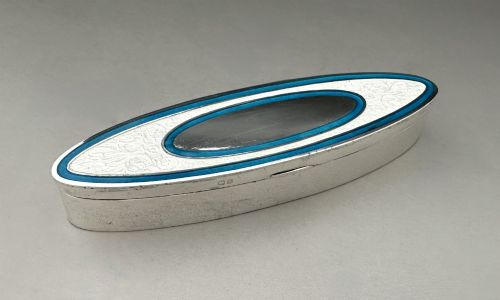
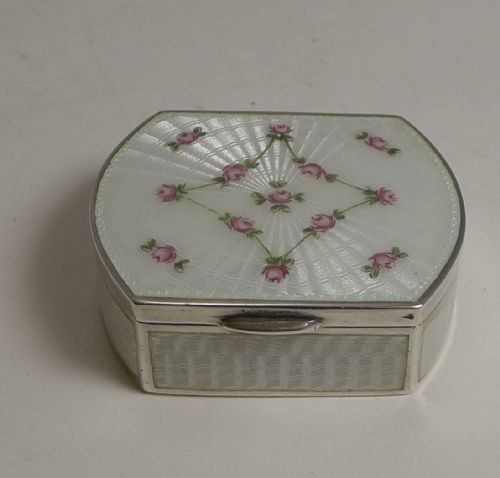
The foundation of every piece relies on sterling silver, silver-gilt, or darkened metal, shaped into functional boxes and cases with hinged lids. Artisans fused powdered glass to the metal surface through high-temperature firing, creating durable vitreous enamel finishes that range from opaque layers to translucent guilloche patterns over engine-turned metal.
Certain examples incorporate porcelain enamel panels or detailed cloisonné and shaded enamel work requiring precise wire-framing of the design cells. Gilding and bi-colour treatments appear frequently, accentuating the metallic borders and enhancing the visual depth of the coloured glass surfaces.
Enamelled Silver Pill Box Retail Price Guide 2026
Typical asking prices for enamelled silver pill box among the pieces listed under this phrase on Sellingantiques today, from the lower quarter to the upper quarter. They describe what is for sale here now, not the wider market.
Listings feature items from the Edwardian period, the 1900s, 1910s, 1920s, and 1930s, alongside nineteenth-century works.
Evaluating craftsmanship and detail
The distinction between standard items and superior examples lies in the precision of the metalwork and the complexity of the enamelling technique. Engine-turned guilloche patterns that display crisp, uniform geometric engraving beneath translucent enamel demonstrate a higher level of workshop skill than plain or uneven surfaces.
The intricacy of the decorative subject matter also dictates the tier of the piece, particularly where hand-painted scenic panels, shaded cloisonné cells, or fine silver-gilt mounts are employed. Maker attribution, such as work associated with known designers or specific European assay marks, further influences the standing of an individual box.
Fleetwood Varley·George Adam Scheid·Khlebnikov·Liberty
The Enamelled Silver Pill Box Glossary
- Guilloche
- An ornamental engraving technique that etches precise, intricate geometric patterns into metal before a translucent enamel layer is applied over the top. This allows the underlying pattern to shine through with shimmering depth.
- Vitreous enamel
- A material made by fusing powdered glass to a substrate by firing, usually between seven hundred and nine hundred degrees Celsius. The powder melts, flows, and hardens to a smooth, durable glass coating.
- Silver-gilt
- Sterling silver that has been coated with a thin layer of gold on its surface. This technique provides the rich appearance of solid gold while utilising silver as the underlying structural metal.
- Cloisonné
- An ancient technique for decorating metalwork objects, in which thin metal wire is soldered to the metal base to form compartments that are subsequently filled with enamel paste before firing.
- Rouge pot
- A small, shallow container originally intended for holding cheek or lip cosmetic paint. These items often share identical dimensions and hinged formats with standard pill boxes.
Enamelled Silver Pill Box: Frequently Asked Questions
What were enamelled silver pill boxes used for?
These small vessels served a practical purpose in the nineteenth and early twentieth centuries by holding medicinal pills, lozenges, or saccharin tablets for daily use.
Their compact size allowed them to be slipped easily into a pocket or handbag, making them both a utilitarian item and a portable personal accessory.
How do I date an antique pill box?
Dating typically relies on examining the hallmarks stamped into the silver, which indicate the assay office, the standard of purity, and the specific year of production.
Stylistic indicators such as Art Deco geometric lines or Edwardian floral motifs also provide strong clues to the decade in which the piece was manufactured.
Are these boxes made of solid silver?
The listings include pieces struck from sterling silver and standard silver, alongside examples finished with silver-gilt where a gold wash covers the metal.
Maker marks and metal stamps on the inner rims or bases generally confirm the exact silver standard used for the body and lid.
How should I care for an enamelled box?
Enamel is essentially glass, so it requires gentle handling to prevent chipping or scratching against harder metals and stones during storage.
Cleaning should be restricted to a soft, dry cloth, avoiding harsh silver dips that might seep into hinges or damage vulnerable enamel surfaces.