



Enamelled Silver Matchbox
An enamelled silver matchbox is a pocket accessory combining precious metal with painted vitreous enamel, offering miniature artistry for daily use.
Enamelled Silver Matchbox
When you search for an enamelled silver matchbox, you are looking at pocket cases designed to hold matches safely while displaying miniature paintings, crests, or subject matter. These pieces span the Victorian, Edwardian, and George V periods, originating from English assay offices during the late nineteenth and early twentieth centuries.
The version you are most likely to meet on this page is the vesta case, frequently termed a matchbox in everyday cataloguing. They take the form of small sterling silver containers featuring hinged lids, striker bases, and decorative panels of coloured vitreous enamel.
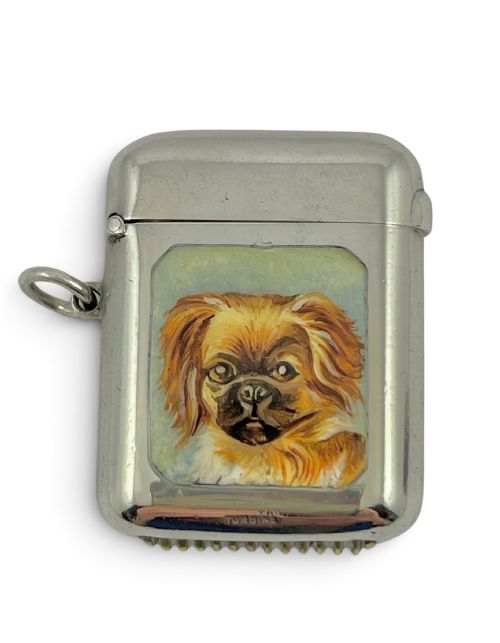
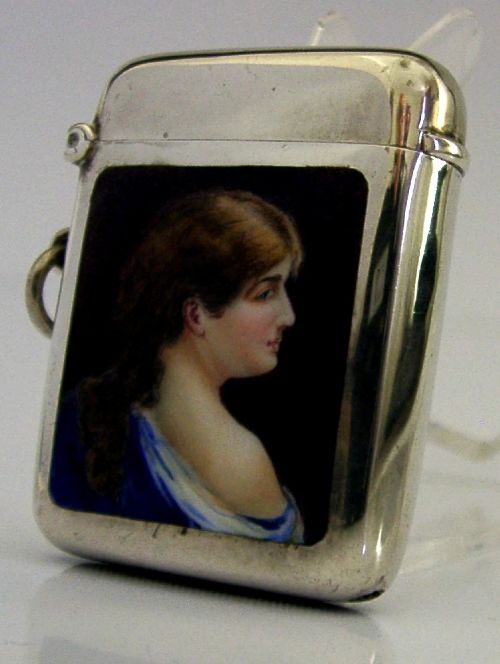
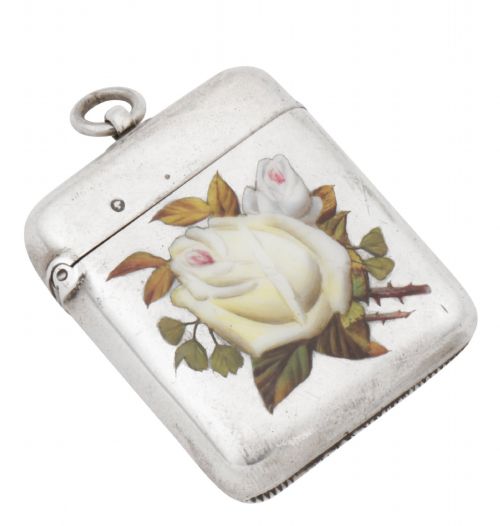
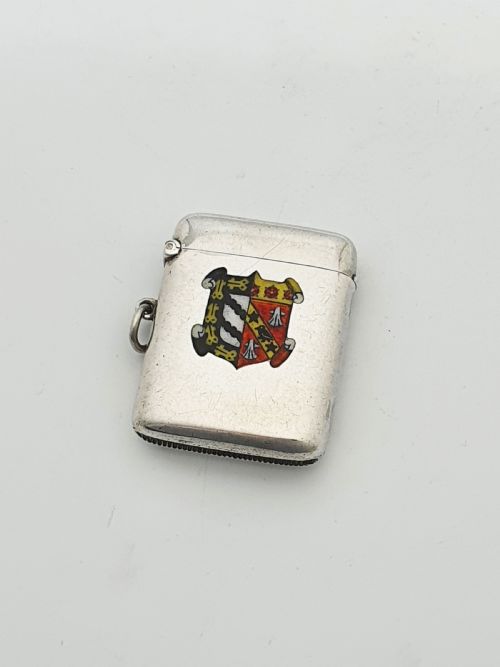
The decorative subjects range from floral motifs and heraldic crests to animal portraits and figurative scenes such as sentry boxes or sporting subjects. Each piece reflects the portable luxury of its era, combining practical utility with detailed craftsmanship.
Materials and construction
These pieces are constructed from sterling silver housings fitted with vitreous enamel panels. Artisans applied powdered glass pastes to recessed silver surfaces before firing them at high temperatures to fuse the coloured enamel to the metal.
Many examples incorporate hand-painted details beneath or upon the enamel layer, depicting subjects like dogs, roses, or jockey figures in detailed miniature. The structural silver mounts often bear hallmarks indicating the maker, assay office, and year of manufacture.
Listings feature sterling silver and vitreous enamel across Victorian and Edwardian periods.
Judging quality and execution
The distinction between standard production and exceptional work lies in the execution of the enamel miniature and the crispness of the silver casting. Finely painted animal subjects, botanical studies, or figurative scenes demand high technical skill from the artisan.
Condition of the vitreous enamel surface remains central to the evaluation, as the absence of chips, hairline cracks, or extensive restoration preserves the integrity of the miniature artwork. The precision of the hinged lid and the retention of the original gilt interior further distinguish superior examples.
William Neale·Sampson Mordan·Edward I. Farmer
The Enamelled Silver Matchbox Glossary
- Vesta case
- A small pocket container designed to hold safety matches, featuring a roughened strike strip on the base for ignition.
- Vitreous enamel
- A glass-like substance fused to the surface of metal through high-temperature firing to provide durable colour and decoration.
- Sterling silver
- A silver alloy containing 92.5 percent pure silver by mass, standard for British plate and matchbox production.
- Hallmark
- A series of official marks stamped on precious metals, indicating the assay office, standard of purity, and year of manufacture.
- Sentry box
- A figurative form of vesta case modelled to resemble a sentry shelter, often opening to reveal enamelled decoration inside.
Enamelled Silver Matchbox: Frequently Asked Questions
What is an enamelled silver matchbox?
An enamelled silver matchbox is a small pocket container, commonly called a vesta case, designed to hold matches safely. These items feature sterling silver construction combined with decorative vitreous enamel panels.
They date primarily from the Victorian and Edwardian eras, serving as both practical daily accessories and canvases for miniature artwork.
How do I date an enamelled silver matchbox?
Dating these pieces relies upon reading the hallmarks stamped onto the silver body, which indicate the specific assay office and year of production. Style markers, such as Victorian floral motifs or Edwardian heraldic crests, also help determine the period.
Reference to maker marks provides further historical context regarding the workshop of origin.
What subjects appear on the enamel panels?
The enamel panels display a wide variety of hand-painted subjects, including botanical studies like roses, portrait miniatures of animals such as pug dogs, and sporting themes.
Other examples feature heraldic crests, military sentry box designs, or figurative depictions associated with specific historical figures and colours.
How were these matchboxes used originally?
Owners carried these cases in pockets or attached them to watch chains to keep matches dry and prevent accidental ignition. The integrated striker base allowed the user to light a match immediately upon retrieving it from the case.
They functioned as essential personal items for gentlemen and ladies during the nineteenth and early twentieth centuries.