



Enamelled Glass Box
An enamelled glass box brings together coloured vessels and detailed surface work, serving as a functional container for small trinkets and dressing table items.
Enamelled Glass Box
When you search for an enamelled glass box, you encounter items designed for vanity tables, including dressing table jars, trinket pots, and small lidded vessels. These containers range from Georgian patch boxes to Victorian and Edwardian examples.
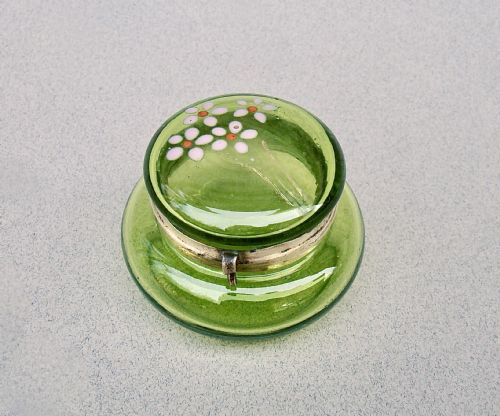
The selection includes pieces originating from British makers alongside 19th century French productions in coloured glass like Bristol blue, cranberry, green, and amber.
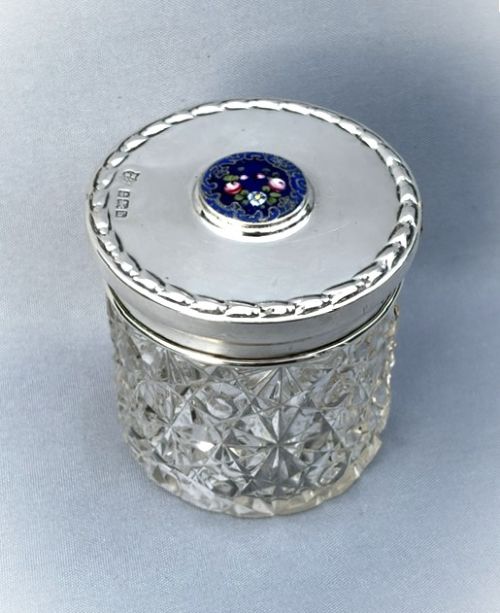
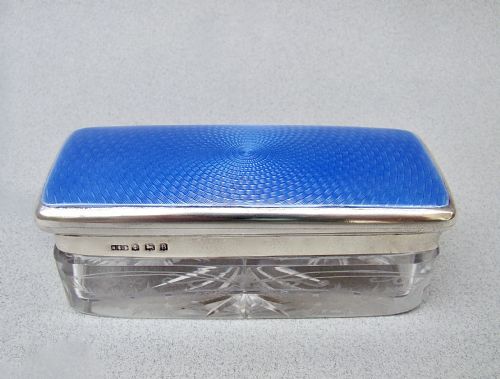
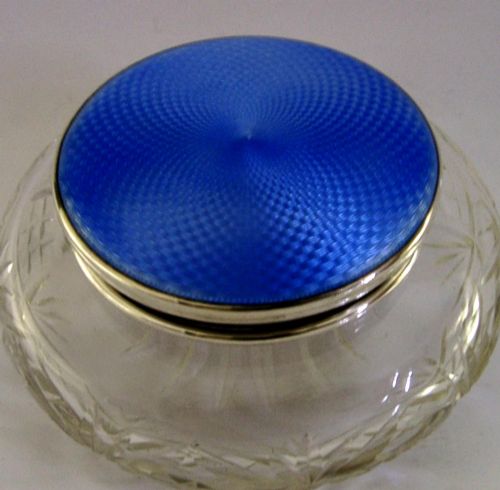
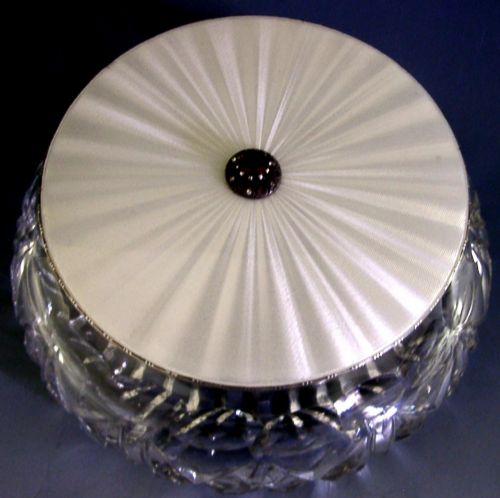
Makers also produced Art Deco designs featuring sterling silver mounts and guilloché enamel lids during the 1920s and 1930s.
How They Were Made
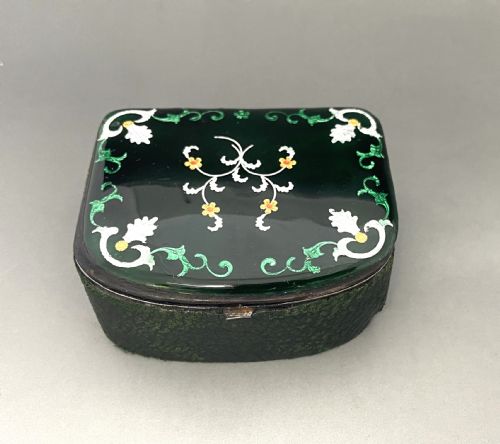
Craftsmen utilised various glass techniques, combining blown or cut glass vessels with applied enamel decoration, sometimes incorporating opaline or uranium glass bodies.
Many items pair glass containers with metal elements, utilising sterling silver, brass, or gilt mounts fitted as hinged or lift-off lids.
Twentieth-century examples often apply engine-turned guilloché enamel over sterling silver collars and covers, produced by silversmiths in Birmingham and London.
Certain Victorian variants utilise uranium glass, causing the vessel to glow under ultraviolet light while storing everyday trinkets.
What Varies in Quality
Quality differences emerge in the precision of the metal mounts and the crispness of the glass cutting or moulding, alongside the complexity of the hand-painted enamel decoration.
The integration between the glass body and the fitted silver or metal collar demonstrates the standard of workshop assembly.
In guilloché pieces, the depth and regularity of the engine-turned pattern beneath translucent enamel distinguish standard production from finer work.
Henry Clifford Davis·Goldsmith's and Silversmith's Co.·S Theeman·Moser·Victor Saglier
The Enamelled Glass Box Glossary
- Guilloche Enamel
- Enamel applied over a metal surface that has been mechanically engraved with a repetitive geometric pattern. This technique allows light to reflect through the translucent colour.
- Bristol Blue
- A deep, vivid blue glass produced in England during the 18th and 19th centuries. It frequently serves as the body for gilt and enamelled dressing table boxes.
- Patch Box
- A small container originally used to hold cosmetic patches made of silk or velvet during the 18th century. Georgian examples often feature hinged enamel lids.
- Trinket Pot
- A small lidded vessel intended for storing personal jewellery or small accessories on a dressing table. These appear in glass paired with silver or metal mounts.
- Opaline Glass
- An opaque or semi-translucent glass popular in the 19th century, produced in shades of blue, green, and white. It provides a smooth surface for hand-painted enamel motifs.
Enamelled Glass Box: Frequently Asked Questions
What is an enamelled glass box used for?
These pieces function as containers for small personal items such as rings, pins, and dressing table accessories. Historically, they sat upon vanity surfaces as both decorative objects and practical receptacles.
Over time, collectors have utilised them to display cabinet collections of coloured glassware and silver-mounted accessories.
How do I identify a 19th century piece?
Nineteenth-century examples frequently manifest as French production in coloured glass varieties such as cranberry, amber, and Bristol blue. They often feature hand-painted floral enamel motifs directly on the glass body.
Matching the stylistic markers of the period helps distinguish these earlier vessels from later 20th-century silver-mounted jars.
What distinguishes Art Deco boxes?
Art Deco pieces typically date from the 1920s and 1930s, featuring geometric sterling silver mounts and engine-turned guilloché enamel lids. Makers in Birmingham and London produced these with clean lines and translucent coloured enamel over metal.
Cut glass bodies frequently accompany these silver collars, marking a shift from earlier hand-painted styles.
How should I clean my box?
Maintenance requires gentle dusting with a soft cloth to protect delicate enamel surfaces and metal mounts. Moisture should remain away from the interior linings and joined metal sections.
Avoiding harsh chemical cleaners preserves the painted decoration on both glass and silver elements.