





Enamelled Coffee Spoons
These enamelled coffee spoons are small, brightly coloured implements of silver and vitreous enamel that bring miniature craftsmanship to the table.
Enamelled Coffee Spoons
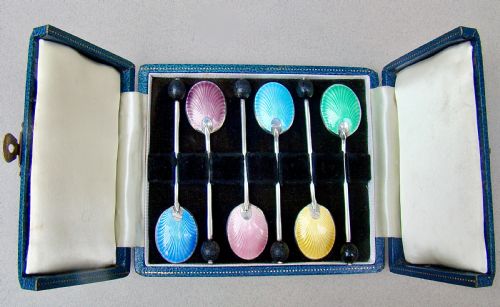
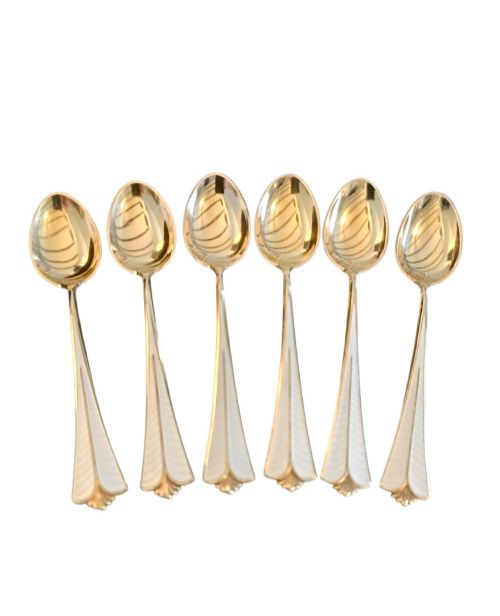
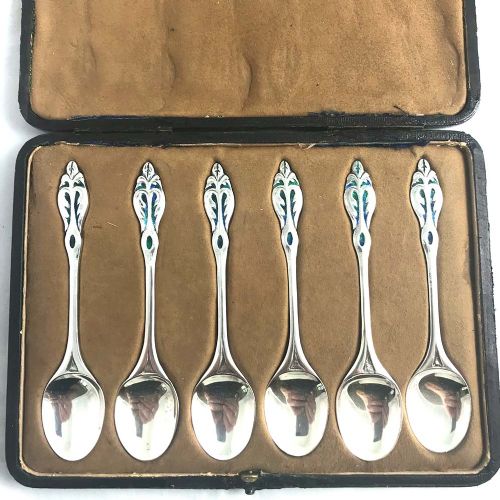
When you search for enamelled coffee spoons, you are looking at small sets of flatware typically fashioned in silver or silver gilt, applied with colourful vitreous enamel. These pieces mostly date from the early twentieth century, spanning periods from the nineteen-hundreds through to the nineteen-sixties.
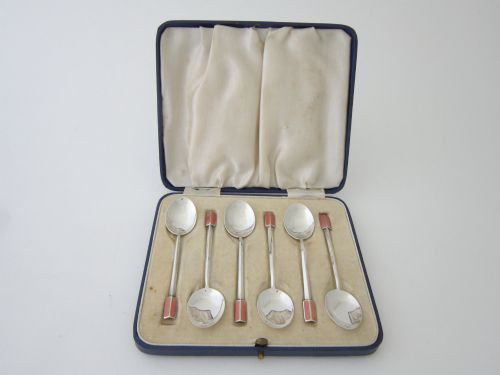
The version you are most likely to meet on this page is an Art Deco set housed in a fitted presentation case, often originating from British makers or Scandinavian workshops. They appear as complete sets of six, sometimes accompanied by matching saucers and coffee cans.
Forms range from simple geometric bowls to novelty designs like card suits or sailing club insignia, showing how makers adapted this small canvas for decorative expression.
Materials and construction
These pieces rely on sterling silver or silver gilt as a structural base, providing a bright metallic foundation for the decoration. Vitreous enamel is fused to the metal surface through intense heat, creating a smooth and glossy coloured finish.
Makers utilised specialised techniques to apply the enamel within metal partitions or across textured backgrounds, achieving rich tones that contrast with the polished silver stems and bowls.
Enamelled Coffee Spoons Retail Price Guide 2026
Typical asking prices for enamelled coffee spoons among the pieces listed under this phrase on Sellingantiques today, from the lower quarter to the upper quarter. They describe what is for sale here now, not the wider market.
Card suits and sailing clubs occasionally provided the inspiration for spoon designs, turning a simple coffee break into a game or a regatta.
Judging the work
Quality in these sets rests upon the crispness of the metalwork and the precision of the enamel application. Superior examples show even colour distribution across the bowl backs and handles without pitting or shrinkage in the vitreous material.
The presence of an intact, original presentation case from known retailers or designers elevates a set, as does the survival of the original gilding on the silver surfaces.
David Andersen·Harrods London·Liberty and Co
The Enamelled Coffee Spoons Glossary
- Vitreous enamel
- Glass powder melted onto a metal substrate at high temperature. This process creates a durable and vibrantly coloured decorative coating.
- Silver gilt
- Sterling silver that has been coated with a thin layer of gold. It adds a warm yellow lustre to the interior of the spoon bowls.
- Sterling silver
- An alloy consisting of silver and other metals to increase durability. It serves as the primary structural metal for these utensils.
- Flatware
- A term for dining utensils used for eating and serving. These small spoons form a specific category within that broader grouping.
- Art Deco
- A design style characterised by sleek geometric shapes and stylised motifs. It heavily influences the appearance of many pieces from the nineteen-twenties and thirties.
Enamelled Coffee Spoons: Frequently Asked Questions
What were enamelled coffee spoons used for?
These small spoons were designed for stirring sugar into after-dinner coffee. Their diminutive size suited small demitasse cups.
They were frequently presented as wedding or birthday gifts, which accounts for why many survive today in fitted velvet-lined boxes.
How should I store cased spoon sets?
Keep the sets in their original fitted boxes away from direct sunlight and damp conditions. This protects the delicate enamel and the fabric linings.
Avoid stacking the spoons loosely together, as metal contact can chip the vitreous enamel surfaces.
How do I date these spoons?
Birmingham hallmarks and assay office marks stamped on the silver provide specific year letters for British pieces. Stylistic cues like geometric patterns also point to the Art Deco era.
Scandinavian sets often rely on maker marks and period styling rather than full date stamps to indicate their decade of origin.
Can I use them for daily dining?
While they remain functional, the delicate nature of historical enamel and thin silver gilt suggests gentle handling. Hand washing is essential rather than machine cleaning.
Many collectors prefer to keep them for display or occasional use to preserve the coloured glass finish.