



Enamelled Brass Box
An enamelled brass box brings together metalwork and colour, offering a small vessel for keepsakes that rewards close inspection.
Enamelled Brass Box
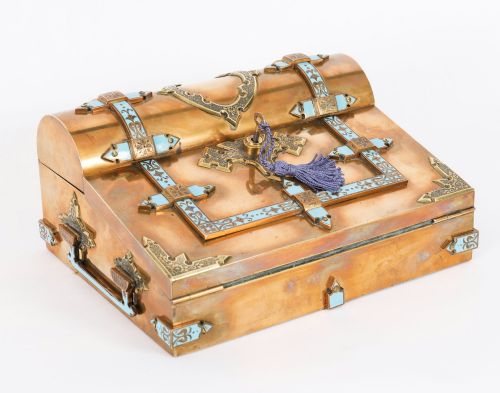
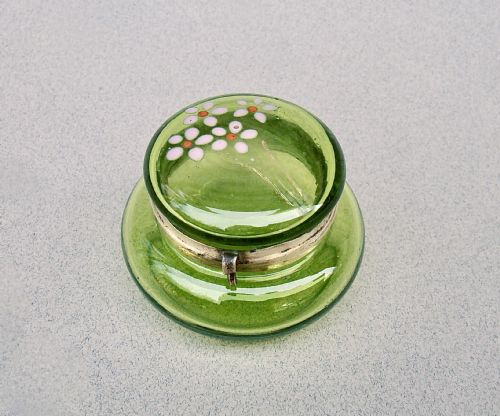
When you search for an enamelled brass box, you encounter small decorative containers and personal accessories dating from the eighteenth century through the Edwardian period and the Art Deco years. The selection includes trinket boxes, patch boxes, snuff boxes, and writing slopes, alongside related items in glass and porcelain.
Victorian and nineteenth-century examples appear frequently alongside Georgian pieces and Japanese Meiji and Edo period lidded pots. French makers also contributed gilt bronze and ormolu carriage clocks and decorative jars to the repertoire.
How they were made
These pieces combine brass, gilt brass, and ormolu with enamel, glass, and copper, utilising metalcasting alongside vitreous enamel decoration. Makers fused powdered glass onto metal surfaces under high heat to create smooth, colourful panels.
More specialised techniques include cloisonne, where thin metal wires create compartments for coloured enamel pastes before firing. Structural elements often involve hinged brass frames fitted with glass, leather, or porcelain panels.
Enamelled Brass Box Retail Price Guide 2026
Typical asking prices for enamelled brass box among the pieces listed under this phrase on Sellingantiques today, from the lower quarter to the upper quarter. They describe what is for sale here now, not the wider market.
What varies in quality
The standard of an enamelled brass box rests upon the precision of the metal casting and the fineness of the enamel work. Crisp hinges, tight lids, and well-executed decorative motifs distinguish superior examples from simpler production.
The clarity of the enamel colours and the absence of firing flaws separate master workshops from standard makers. The integration of materials such as ormolu, gilt bronze, and bevelled glass further defines the grade of the piece.
The Enamelled Brass Box Glossary
- Ormolu
- Gilt bronze mounted on decorative objects. This technique creates a rich gold-coloured finish on brass and bronze items.
- Cloisonne
- An enamelling technique using wire compartments. Thin metal strips are soldered to a metal base to hold coloured pastes before firing.
- Patch box
- A small container for cosmetic patches. Georgian examples often featured hinged enamel lids and were carried in pockets.
- Bilston enamel
- Eighteenth-century enamels from Staffordshire. These small containers and lids are noted for painted pastoral or floral scenes.
Enamelled Brass Box: Frequently Asked Questions
What is an enamelled brass box used for?
These small containers held personal items such as trinkets, snuff, and cosmetic patches in the eighteenth and nineteenth centuries.
Today they serve as decorative desk accessories or repositories for modern keepsakes and jewellery.
How do I date an enamelled brass box?
Dating relies on stylistic clues, metal types, and manufacturing techniques characteristic of Georgian, Victorian, or Edwardian periods.
Changes in hinge construction and enamel compositions also help narrow the decade of production.
How should I clean an enamelled brass box?
Dust surfaces gently with a soft, dry cloth to protect fragile enamel and metal finishes.
Avoid chemical polishes and abrasive cleaners that can damage the glaze or strip the original gilding from the brass.
Are Japanese pieces different from European ones?
Meiji and Edo period Japanese examples often utilise intricate cloisonne wirework on copper or brass cores with distinct floral and fauna motifs.
European pieces from the same era frequently favour painted enamel plaques set into gilt brass or ormolu frames.