


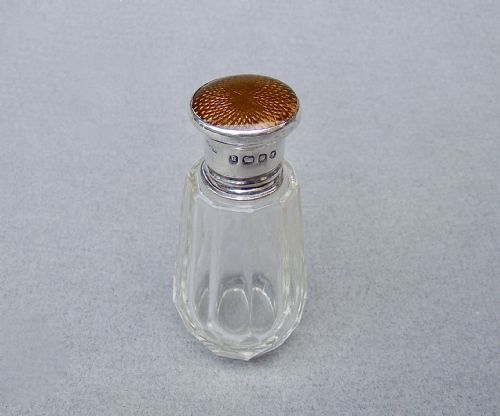
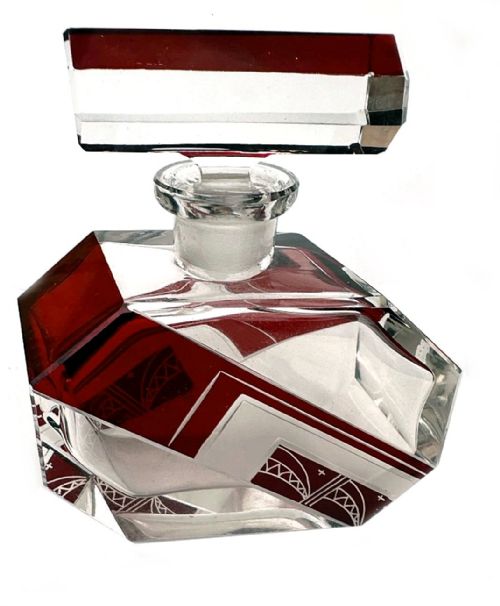


Enameled Scent Bottle
An enameled scent bottle holds personal fragrance in a pocket or dressing table while showing the maker's skill in glass and metal.
Enameled Scent Bottle
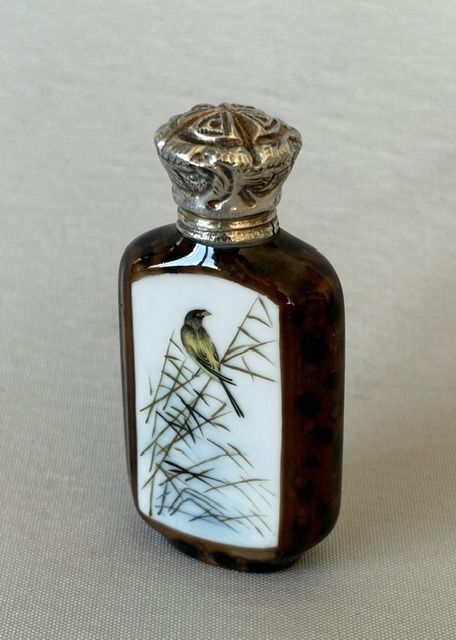
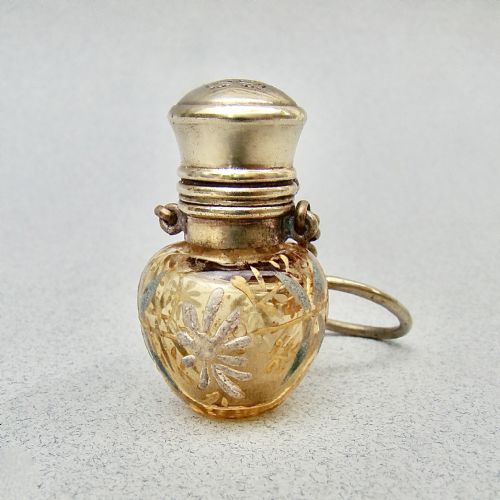
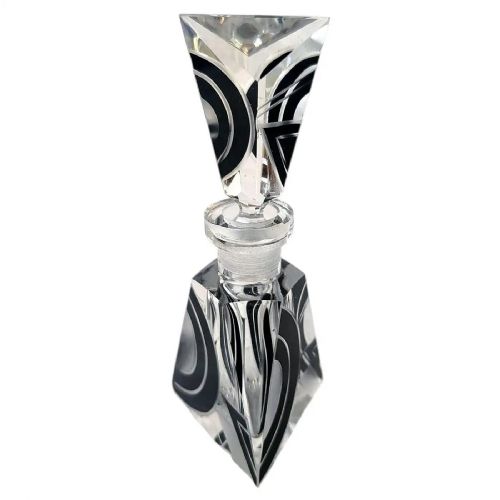
An enameled scent bottle appears in various forms across several centuries, ranging from pocket flasks to dressing table atomisers. The pieces on this page span the Georgian era, the nineteenth century, and the Art Deco period of the nineteen-thirties.
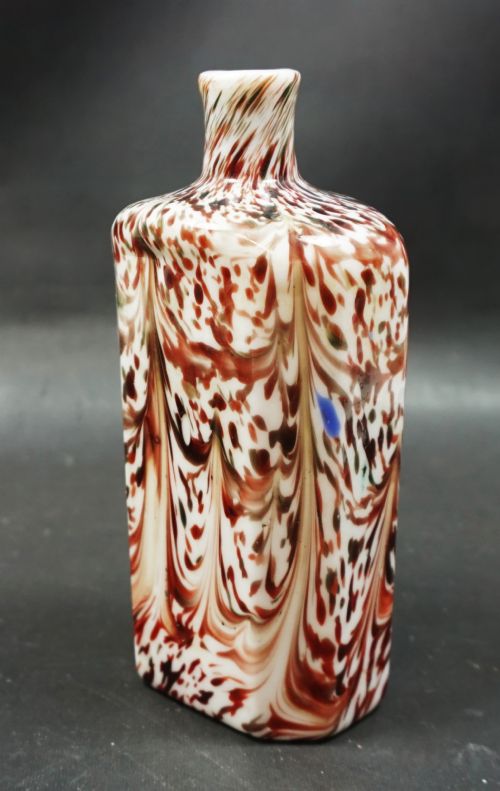
Buyers frequently encounter Czech glass vessels, French chatelaine pieces, and English silver-mounted designs. Chinese snuff bottles and Swiss milk glass flasks also appear alongside nineteenth-century porcelain and Moser glass.
Makers from different traditions applied enamel to glass, silver, and porcelain. These vessels served both practical vanity uses and decorative display functions in domestic interiors.
Materials and technique
Artisans combined glass, porcelain, and metalwork, mounting cut crystal or satin glass in sterling silver, ormolu, and chrome. Guilds and factories utilised guilloche enamel and hand-painted scenes to decorate the exterior surfaces.
Techniques varied from Czech geometric cutting and milk glass manufacture to Chinese famille rose porcelain painting and French enamel application. Silversmiths fitted screw caps, atomiser pumps, and hinged lids to secure the contents.
Enameled Scent Bottle Retail Price Guide 2026
Typical asking prices for enameled scent bottle among the pieces listed under this phrase on Sellingantiques today, from the lower quarter to the upper quarter. They describe what is for sale here now, not the wider market.
Ladies once tucked tiny scent flasks into chatelaine belts to ward off unappealing street smells while strolling through Victorian cities.
Craftsmanship and design
The standard of an enameled scent bottle rests on the precision of the metal mounts and the clarity of the glass or porcelain body. Hand-painted scenes and guilloche patterns show distinct levels of artistic control by the decorator.
Signed works by known designers carry specific stylistic traits that separate standard commercial production from master workshops. The weight of the silver mounts and the crispness of geometric cutting determine the overall refinement of the piece.
Karl Palda·Henry Perkins·René Lalique·Mappin & Webb
The Enameled Scent Bottle Glossary
- Guilloche enamel
- A decorative technique where a metal surface is mechanically engraved with intricate repetitive patterns beneath a translucent enamel layer. This creates a shimmering, light-reflective finish seen on twentieth-century vanity items.
- Chatelaine scent bottle
- A small vessel suspended from a waist hook by a chain, designed for portable use during the Victorian era. Ladies carried salts or perfume within easy reach.
- Ormolu
- Gilded bronze mounted onto glass or porcelain bodies to provide decorative highlights and structural support. French makers utilised this material extensively in nineteenth-century luxury goods.
- Famille rose
- A palette of opaque enamel colours dominated by pink, used on Chinese porcelain and snuff bottles. The style developed during the Qing dynasty and depicts figurative or botanical scenes.
Enameled Scent Bottle: Frequently Asked Questions
How do I date an enameled scent bottle?
Examine the hallmarks on the silver mounts, the manufacturing style of the glass, and the decorative motifs used by the maker. Art Deco pieces display geometric lines from the nineteen-thirties, while Victorian examples often feature ornate chatelaine fittings or Mary Gregory styles.
Maker signatures and regional marks also help establish the decade of production. Comparing the primary material, such as cut crystal versus milk glass, narrows down the historical period.
What is the difference between a scent bottle and an atomizer?
A scent bottle relies on a stopper or screw cap to seal the fragrance inside the vessel. Users dab or pour the liquid directly onto the skin during application.
An atomizer incorporates a bulb pump mechanism and internal metal tube to spray the perfume as a fine mist. These devices became popular during the twentieth century for dressing table use.
Were these bottles meant to be carried or displayed?
Many nineteenth-century examples were designed for portability, featuring short chains or loops to attach to a chatelaine belt. Pocket-sized flasks and small silver-mounted vessels suited travel and daily personal use.
Larger Art Deco perfume bottles and atomizers were intended for permanent display on dressing tables. Their decorative glass and enamel finishes complemented contemporary interior decor.
How should I clean an antique scent bottle?
Dust glass and silver surfaces gently with a soft, dry cloth to preserve delicate enamel and metalwork. Avoid submerging pieces with antique cork stoppers or paper labels in water.
Professional care is recommended if the interior requires cleaning or if the metal mounts are tarnished. Harsh chemical cleaners can damage fragile guilloche patterns and painted scenes.