

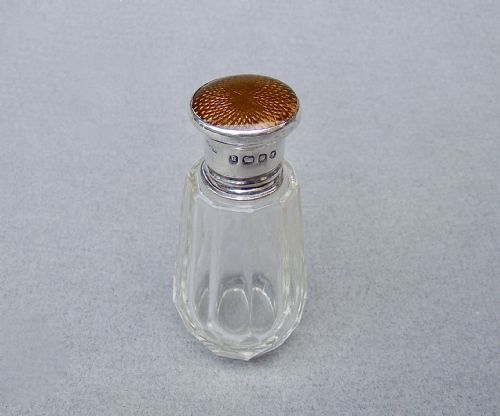


Enamel Top Bottle
An enamel top bottle brings vibrant colour and meticulous metalwork to a vanity table or pocket.
Enamel Top Bottle
An enamel top bottle encompasses scent bottles, perfume bottles, vanity jars, and hip flasks equipped with decorated lids. These pieces span the eighteenth century to the Art Deco, Edwardian, and French Belle Epoque periods.
The most common examples on this page pair clear, cut, or decorated glass bodies with sterling silver mounts and coloured or guilloche enamel work. Makers ranged from London silversmiths to German folk artisans.
Forms vary from tall perfume vessels to small pocket flasks and lidded jars. Each piece reflects the aesthetic of its decade, from Georgian Continental polychrome pieces to geometric 1930s designs.
How they were made
Glass bodies were blown, moulded, or cut to shape, occasionally featuring Mary Gregory style decoration or clear finishes. Pewter and sterling silver formed the collars, caps, and mounts.
Enamel work applied to silver tops involved fusing powdered glass to metal under high heat. Guilloche enamel utilised engine-turned metal underneath translucent coloured layers to create geometric patterns.
Enamel Top Bottle Retail Price Guide 2026
Typical asking prices for enamel top bottle among the pieces listed under this phrase on Sellingantiques today, from the lower quarter to the upper quarter. They describe what is for sale here now, not the wider market.
Listings on this page span the 18th Century, Edwardian era, and Art Deco period, combining glass, sterling silver, and enamel.
What varies in quality
The fineness of the guilloche engine-turning and the clarity of the enamel distinguish superior pieces from standard work. Crisp metal hallmarks and precise fitting between the silver collar and the glass body indicate higher craftsmanship.
The depth and clarity of glass cutting, alongside the preservation of polychrome or fired enamel details, mark the difference between standard production and exceptional examples.
Henry Perkins
The Enamel Top Bottle Glossary
- Guilloche Enamel
- A decorative technique where a metal surface is mechanically engraved with intricate repetitive patterns beneath a translucent enamel layer.
- Sterling Silver
- An alloy of silver containing 92.5% silver and 7.5% other metals, commonly used for the collars and lids of these bottles.
- Mary Gregory Glass
- Glass decorated with white enamel silhouettes, typically depicting Victorian children in pastoral settings.
- Polychrome
- The practice of decorating architectural elements, pottery, or glass in a variety of colours.
Enamel Top Bottle: Frequently Asked Questions
What periods do these bottles come from?
The pieces span the eighteenth century up through the Edwardian era and the Art Deco period of the 1930s.
Earlier examples often feature Continental polychrome work, while later pieces showcase geometric guilloche patterns.
What materials are used in these bottles?
Common materials include blown or cut glass paired with sterling silver and pewter mounts.
Enamel is applied to the metal caps, sometimes over engine-turned guilloche backgrounds.
How were these bottles originally used?
They served as portable scent or perfume bottles, vanity jars for dressing tables, and pocket-sized liquor or schnapps flasks.
The secure lids prevented evaporation of fragrances or spills of spirits.
How do I distinguish Art Deco from Edwardian examples?
Art Deco pieces from the 1930s typically display clean geometric lines and precise guilloche enamel patterns.
Edwardian and Belle Epoque items from the 1910s often lean toward softer floral or ornate silver mounts.