



Enamel Insect Brooch
An enamel insect brooch brings vibrant wing colour and metallic detail together in wearable miniature sculpture.
Enamel Insect Brooch
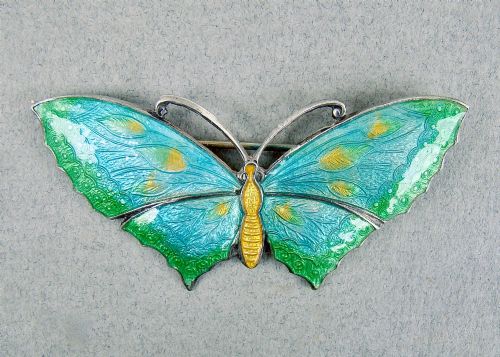
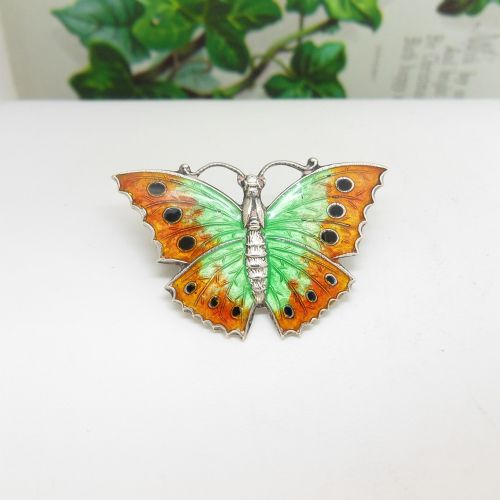
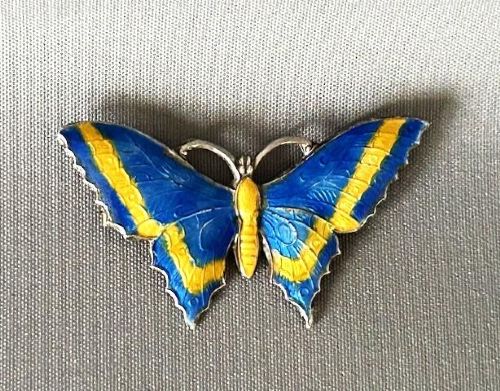
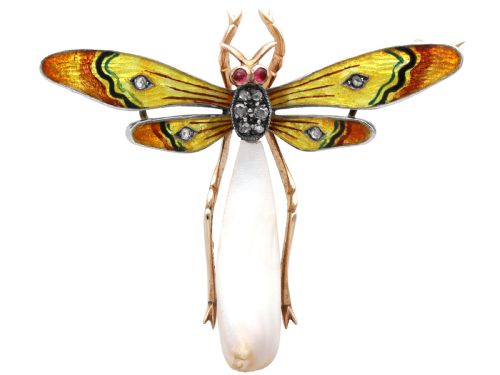
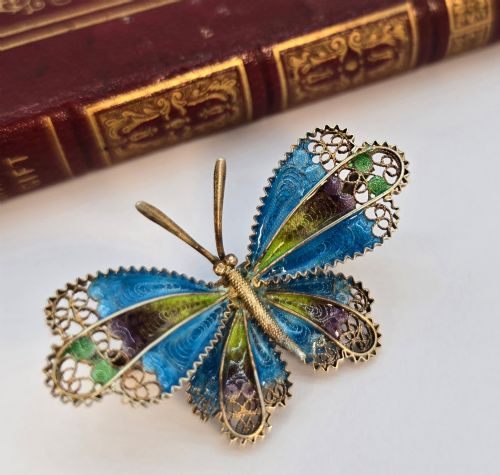
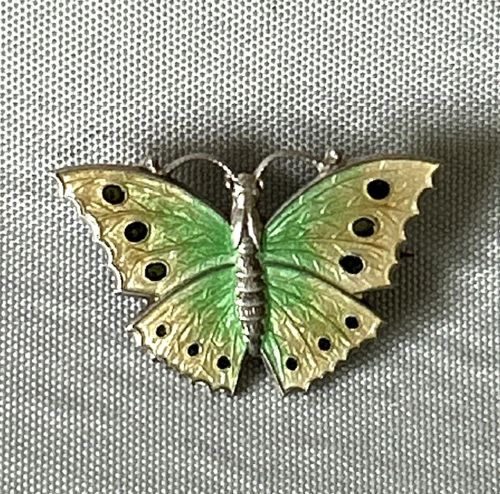
When you search for an enamel insect brooch, you are looking at small wearable ornaments fashioned primarily as butterflies and dragonflies. These pieces span the 1920s, 1930s, and 1950s, capturing the aesthetic interests of those decades.
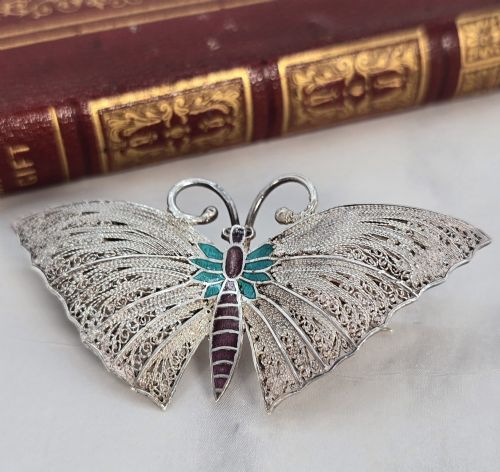
The version you are most likely to meet on this page is the butterfly brooch rendered in silver or silver gilt. These range from petite continental silver filigree examples to larger Chinese export pieces and mid-century Scandinavian designs.
Makers and designers from Norway and China contributed distinct regional styles to this category. Pieces vary from simple guilloche work to detailed filigree frames holding rich red or purple enamel.
How they were made
Makers built these brooches using sterling silver, silver gilt, and gold vermeil as the structural base for the metalwork. Filigree wire and solid silver settings provide the framework that holds the vitreous glass enamels and butterfly wing elements in place.
Techniques relied on careful firing of enamel into metal cells, or applying guilloche patterns beneath translucent coloured glazes to create depth. Continental workshops also utilised delicate silver filigree twisting to outline wings and bodies.
Enamel Insect Brooch Retail Price Guide 2026
Typical asking prices for enamel insect brooch among the pieces listed under this phrase on Sellingantiques today, from the lower quarter to the upper quarter. They describe what is for sale here now, not the wider market.
Some industrious insects arrived via China and Norway, bringing international charm to your lapel.
What varies in quality
Quality separates through the crispness of the metal filigree and the evenness of the vitreous enamel application across the wings. Superior examples maintain smooth, glossy surfaces without cracking or thinning in the coloured sections.
Design sophistication also distinguishes finer pieces, particularly where Norwegian designers or Chinese export workshops achieved realistic insect proportions and layered wing details rather than flat, heavy stampings.
Hroar Prydz
The Enamel Insect Brooch Glossary
- Guilloche enamel
- Glass enamel applied over a background that has been machined with an engraved geometric pattern. This technique allows light to reflect through the translucent colour.
- Silver gilt
- Silver that has been coated with a thin layer of gold. It offers the rich tone of gold while utilising silver as the underlying structural metal.
- Filigree
- Delicate ornamental work made from twisted fine silver wire soldered together. It creates open, lace-like patterns within the insect wings.
- Butterfly wing
- Iridescent wing material sealed beneath a protective glass dome. It was utilised in early twentieth-century jewellery to capture natural shimmer.
Enamel Insect Brooch: Frequently Asked Questions
What periods do these brooches come from?
The pieces listed originate predominantly from the 1920s, 1930s, and 1950s. These decades encompass Art Deco designs and mid-century Scandinavian output.
Art Nouveau styles also appear alongside Chinese export pieces from the interwar period. Each era brought distinct metalwork techniques to the insect form.
What metals were used for the bodies?
Makers constructed these brooches using sterling silver, silver gilt, and gold vermeil. Continental and Chinese workshops frequently employed fine silver filigree for the structural framework.
Silver gilt provides a warm golden finish over the silver base. This combination supports the colourful glass enamels and butterfly wing inserts.
How do Norwegian pieces differ?
Norwegian examples from the mid-century period often feature guilloche enamel in bright tones like red. Designers such as Hroar Prydz focused on clean, elegant butterfly silhouettes.
These pieces contrast with the intricate silver filigree work seen in Chinese export items from the 1930s. Both represent distinct regional approaches to the same insect motif.
How were these brooches worn?
These pieces functioned as decorative dress ornaments pinned to lapels, collars, or hats. Their compact size made them versatile accessories for day and evening wear.
The inclusion of secure pin backs allowed them to fasten firmly to various fabrics while displaying the coloured wings.