

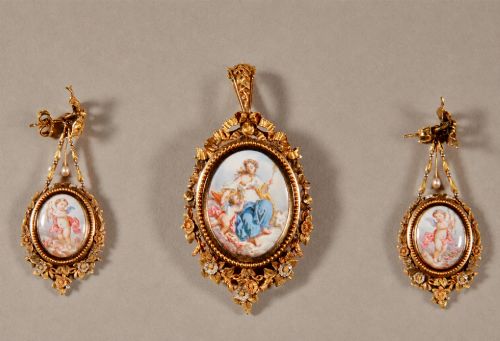
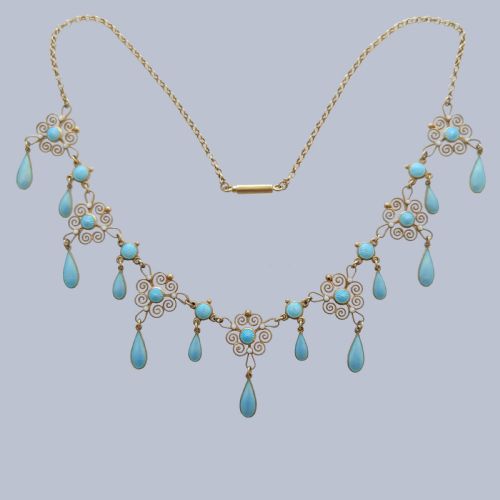
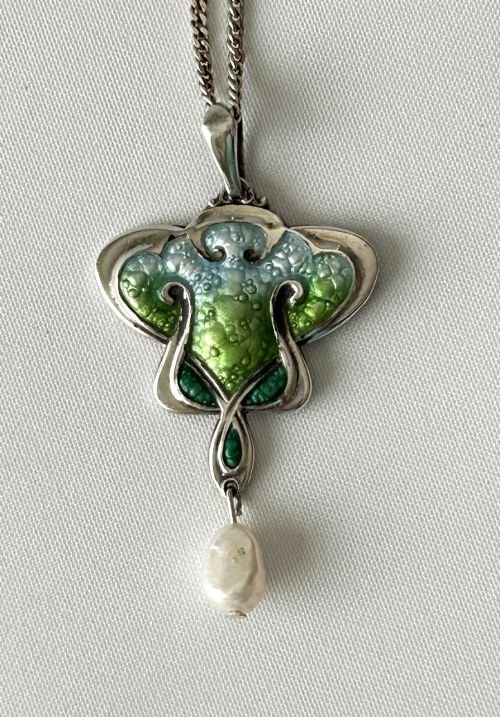
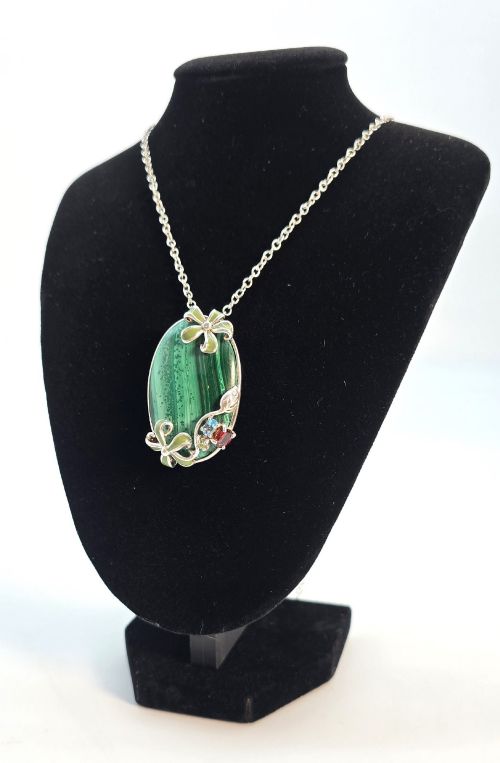
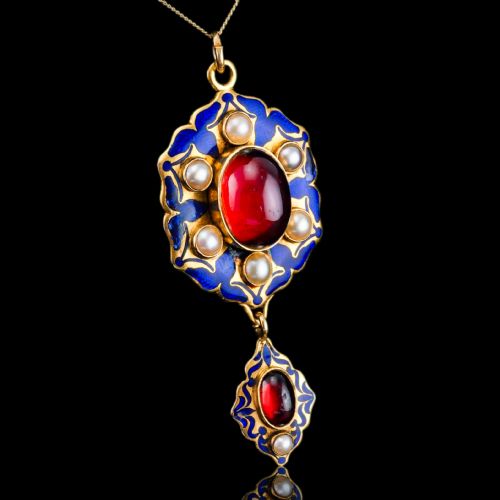


Enamel Drop Pendant
These enamel drop pendants bring together rich coloured glass and precious metals, offering a distinct focal point that collectors prize for its decorative impact.
Enamel Drop Pendant
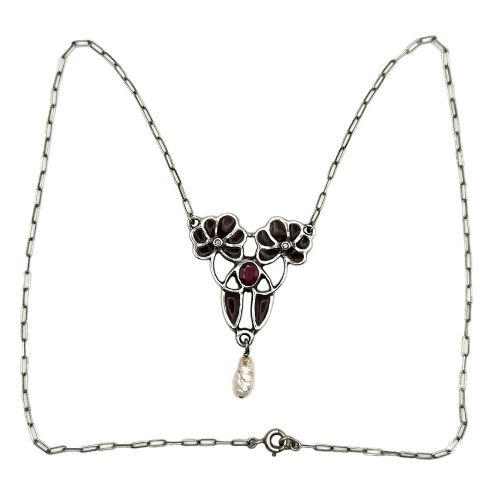
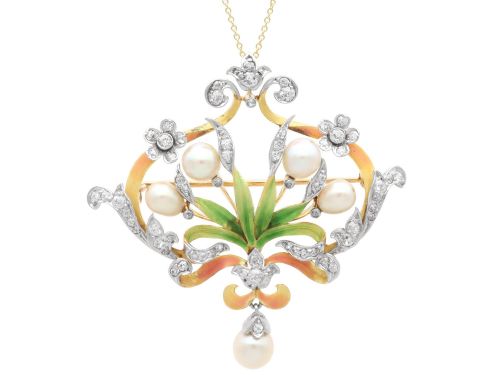
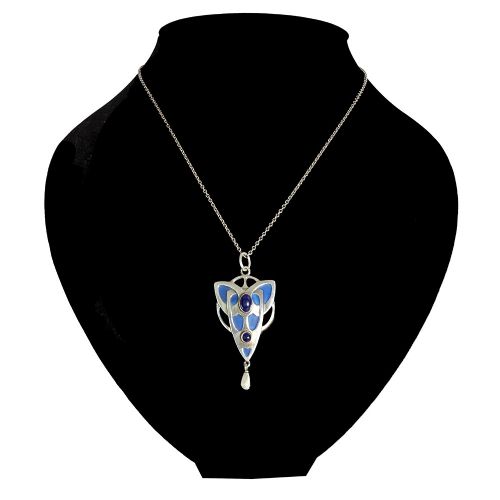
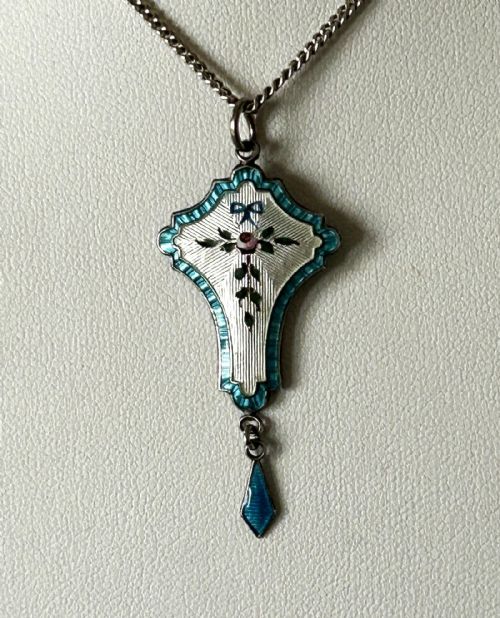
An enamel drop pendant is a suspended piece of jewellery featuring vitreous glass fused to metal, often paired with pearls or gemstones. These items range from simple drops to complex floral motifs.
You are most likely to meet examples from the nineteenth century, the Edwardian era, and the nineteen-hundreds on this page. Art Nouveau and Arts and Crafts styles dominate the selection available.
Silver and gold serve as the primary settings for these drops. Makers frequently integrated chalcedony, amethyst, and seed pearls alongside the central enamel work.
How they were made
Goldsmiths and silversmiths shaped base mounts from sterling silver, silver gilt, and yellow gold, such as fifteen-carat and eighteen-carat varieties. These frames support the suspended drop elements.
Vitreous enamel and plique-a-jour enamel provide the vibrant coloured surfaces, fused to the metal through intense heat. Plique-a-jour creates a stained-glass effect without a backing, letting light pass directly through the coloured glass.
Enamel Drop Pendant Retail Price Guide 2026
Typical asking prices for enamel drop pendant among the pieces listed under this phrase on Sellingantiques today, from the lower quarter to the upper quarter. They describe what is for sale here now, not the wider market.
Materials span sterling silver, silver gilt, and gold, paired with pearls, amethysts, chalcedony, and coloured enamel.
What varies in quality
The precision of the metalwork and the complexity of the enamel techniques dictate the standing of a piece. Delicate plique-a-jour and detailed hand-painting require advanced skill compared to flat, opaque fillings.
The choice of accompanying stones alters the character of the drop. Natural pearls, amethysts, and chrysoprase elevate the composition beyond standard glass or base metal alternatives.
Archibald Knox·Liberty & Co·Murrle Bennett·Wilhelm Fuhner·Levinger & Bissinger·Otto Prutscher·Charles Horner·Eduard Loss·Ludwig Knupfer·Theodor Fahrner·Meyle & Meyer
The Enamel Drop Pendant Glossary
- Plique a jour
- An enamelling technique where enamel is applied within a cellular framework without a backing, resembling miniature stained glass. This method allows light to shine through the transparent colours.
- Guilloche
- A decorative mechanical engraving technique covered with translucent enamel. It produces repeating geometric patterns beneath the glossy coloured surface.
- Vitreous enamel
- A material made by fusing powdered glass to a metallic substrate at high temperatures. The resulting smooth compound resists tarnishing and holds its colour.
- Silver gilt
- Silver that has been coated with a thin layer of gold. This treatment provides the warmth of gold while utilising a silver foundation.
Enamel Drop Pendant: Frequently Asked Questions
How do I date an enamel drop pendant?
Stylistic markers offer the clearest indication of age. Art Nouveau curves and plique-a-jour enamel typically point to the nineteen-hundreds.
Heavier gold mounts with garnets and pearls often suggest Victorian origins. Hallmarks on the metalwork can provide specific assay office dates.
What is the difference between vitreous and plique a jour enamel?
Vitreous enamel sits upon a solid metal backing plate, making the colour opaque or uniformly reflective. The metal base supports the glass paste throughout the firing process.
Plique a jour lacks this backing, leaving open cells of translucent glass. This lets light pass straight through the coloured sections like a tiny window.
Are these pendants fragile to wear?
Enamel is essentially glass, meaning sharp impacts can chip or crack the surface. Care is required when storing or wearing these pieces to prevent damage.
Gold and silver settings provide structural support, but delicate drop elements require mindful handling during daily use.
What metals were used for these pendants?
Sterling silver is common, particularly in Arts and Crafts and Art Nouveau examples. Silver gilt also appears, giving a warm golden finish over silver.
Victorian and Edwardian versions frequently utilise fifteen-carat or eighteen-carat yellow gold. These heavier metals support intricate gemstones alongside the enamel.