



Empire Writing Cabinet
An empire writing cabinet offers a disciplined architectural form and a hidden drop-down writing surface, prized for its severe dignity and clever interior compartments.
Empire Writing Cabinet
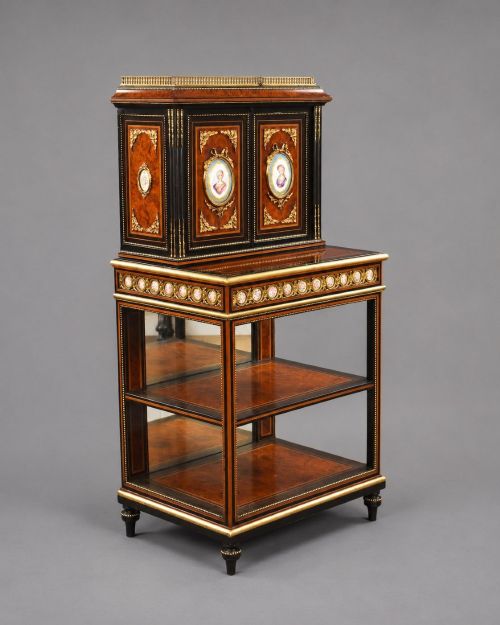
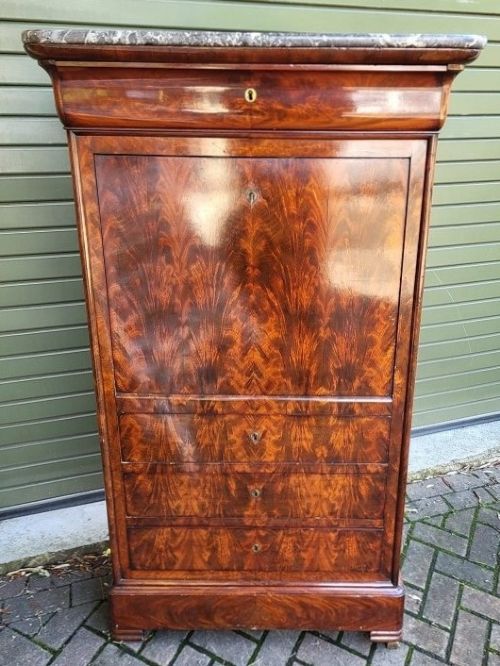
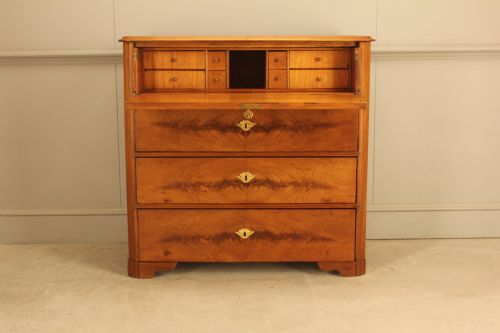
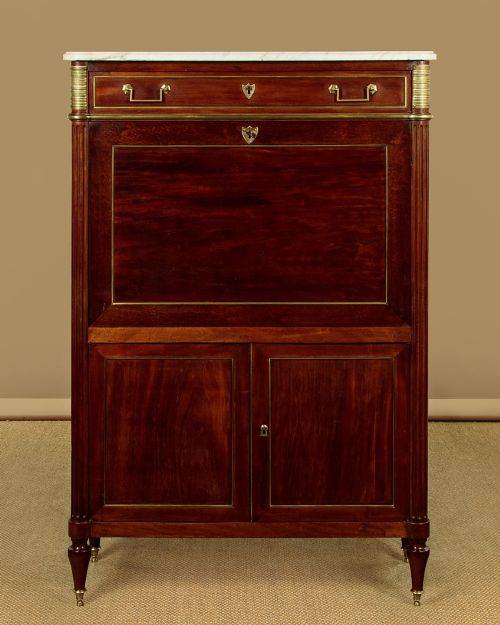
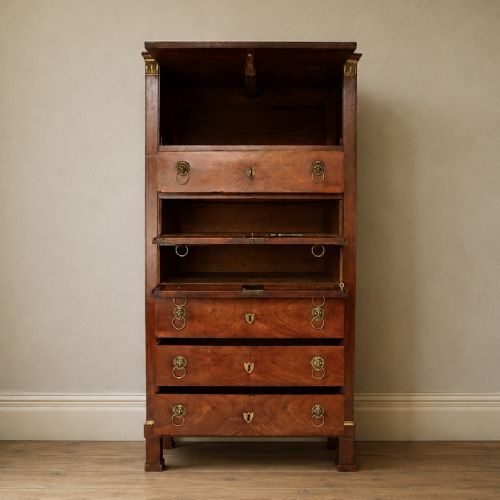
An empire writing cabinet is an imposing case piece designed for correspondence and storage, combining a tall chest of drawers or a commode base with a hinged writing flap that conceals inner drawers and pigeonholes. When you search for an empire writing cabinet, you encounter tall upright forms like the secretaire abattant alongside lower commode variants and flat-topped escritoires.
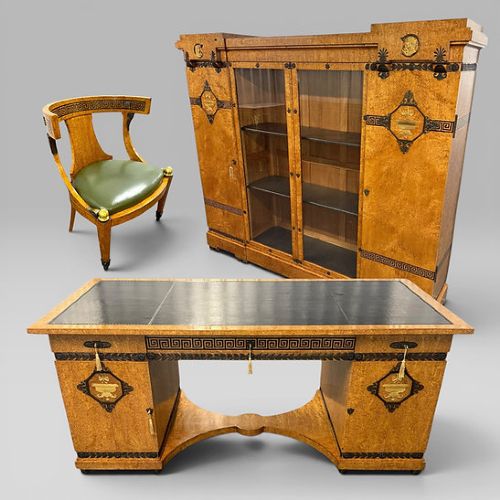
The pieces on this page span the eighteenth and nineteenth centuries, taking in French Empire, French Restoration, Dutch Empire, and Swedish Biedermeier styles. Makers utilised dense timbers such as mahogany, walnut, and birch, frequently accentuating the architectural facades with contrasting veneers and column supports.
Most examples hail from continental workshops, reflecting a shared neoclassical vocabulary across France, Holland, Sweden, and Germany. The interior compartments often feature secret drawers and small pigeonholes designed to secure private correspondence and valuables.
What varies in quality
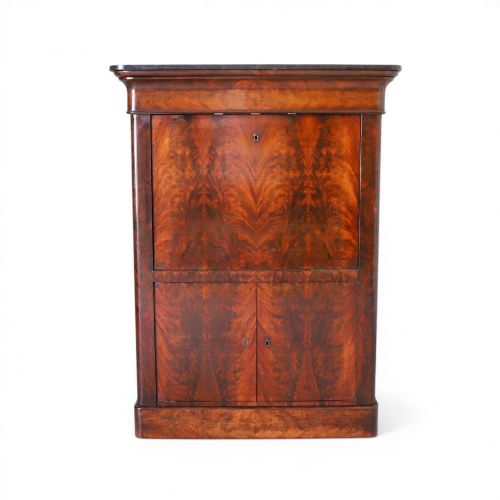
The selection of timber veneer dictates much of the visual hierarchy, with continuous flame mahogany or figured walnut marking out superior examples from plain stock. Book-matched grain arrangements across drawer fronts and fall-front panels demonstrate deliberate planning by the maker.
The crispness of ormolu mounts and the weight of cast brass hardware separate standard workshop production from finer pieces commissioned for affluent interiors. Finely chased details on metal mounts retain sharp relief rather than looking soft or muddy.
Structural integrity rests on the stability of the fall-front hinge mechanism and the precise alignment of internal secret drawers. High-grade construction ensures the heavy drop-down writing flap remains level and secure under daily use.
Empire Writing Cabinet Retail Price Guide 2026
Typical asking prices for empire writing cabinet among the pieces listed under this phrase on Sellingantiques today, from the lower quarter to the upper quarter. They describe what is for sale here now, not the wider market.
Listings feature woods including mahogany, walnut, satinwood, oak, and birch, paired with marble tops and brass or ormolu mounts.
Mercier Freres
The Empire Writing Cabinet Glossary
- Secretaire abattant
- A tall upright cabinet featuring a hinged vertical writing flap that drops down to form a desk surface. This form conceals an interior arrangement of small drawers and pigeonholes.
- Escritoire
- A writing desk or cabinet designed specifically for correspondence. The term encompasses both tall upright cabinets and smaller slant-front desk forms.
- Ormolu
- Gilded bronze used extensively for decorative mounts and hardware on neoclassical furniture. It provides bright metallic contrast against dark woods like mahogany and walnut.
- Biedermeier
- A central European style spanning the nineteenth century characterised by utilitarian comfort and clean lines. These pieces rely on the natural grain of birch and walnut rather than heavy metal mounts.
- Marquetry
- The art of applying pieces of veneer to a structure to form decorative patterns and pictures. Dutch examples frequently employ floral and architectural motifs in contrasting woods.
Empire Writing Cabinet: Frequently Asked Questions
What is a secretaire abattant?
A secretaire abattant is a tall upright cabinet with a fall-front door that pulls down to create a writing surface. This design keeps paperwork concealed behind a formal architectural facade when not in use.
Inside, the drop-down panel reveals an array of small drawers and pigeonholes for stationery and documents, often accompanied by hidden compartments for valuables.
How do I use an empire writing cabinet today?
These cabinets function effectively as compact laptop desks or dedicated stationery stations in a study or living room. The fall-front provides a sturdy writing surface while the lower drawers store household items.
Leaving the flap down occasionally displays the fitted interior drawers, though closing the cabinet restores the clean neoclassical lines of the room.
How do French and Biedermeier cabinets differ?
French Empire pieces rely heavily on rich mahogany, marble tops, and cast ormolu mounts to project imperial grandeur and strict symmetry. They emphasise architectural columns and gilded hardware.
Swedish and German Biedermeier cabinets strip away the metal mounts in favour of warm blonde birch or walnut, focusing purely on clean geometric forms and unadorned wood grain.
Where were these cabinets placed in a home?
In nineteenth-century interiors, empire writing cabinets stood in reception rooms, private libraries, or bedrooms for managing personal correspondence and household accounts. Their tall, narrow footprint made them efficient for upright storage against primary walls.
Specialised variants like the pharmacy secretaire served institutional purposes, but domestic versions prioritised formal elegance alongside private utility.