



Empire Wall Sconces
Empire wall sconces bring classical symmetry and warm candle or electric light to a room, cast in bronze, brass and ormolu.
Empire Wall Sconces
Empire wall sconces are lighting fixtures designed to mount directly onto vertical surfaces, drawing upon classical motifs and proportions. When searching for empire wall sconces, buyers encounter variations shaped by French Empire, Neoclassical and Regency design influences.
The pieces appearing on this page span the nineteenth century into the twentieth century, including Edwardian, 1900, 1910, 1920 and 1930 examples. Most listings present matching pairs or larger sets intended for balanced placement across a mantelpiece, hallway or drawing room.
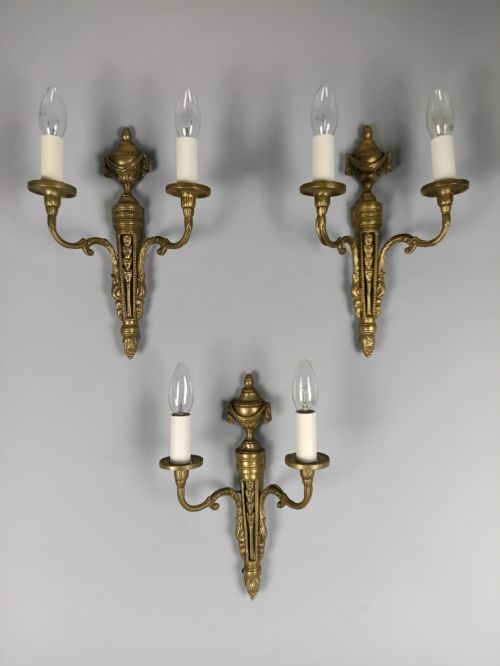
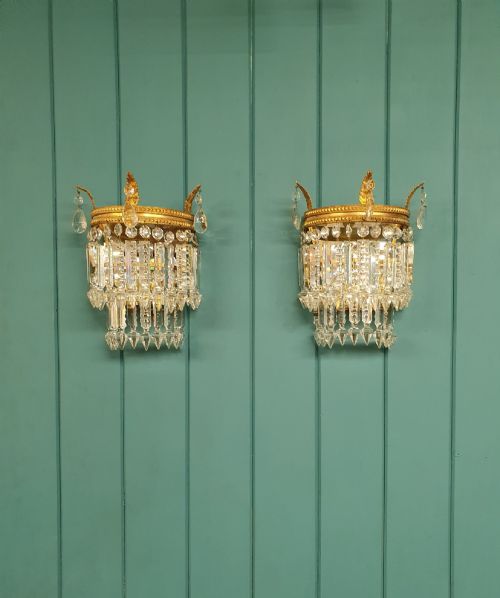
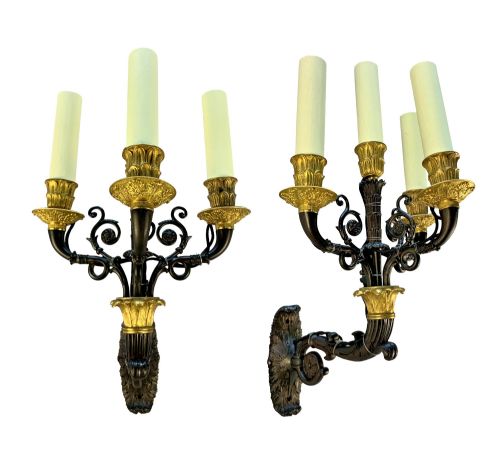
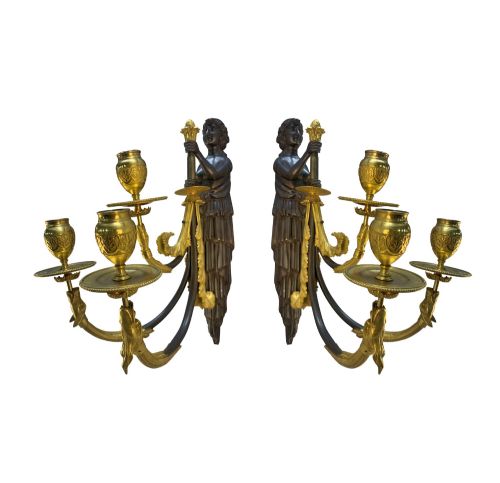
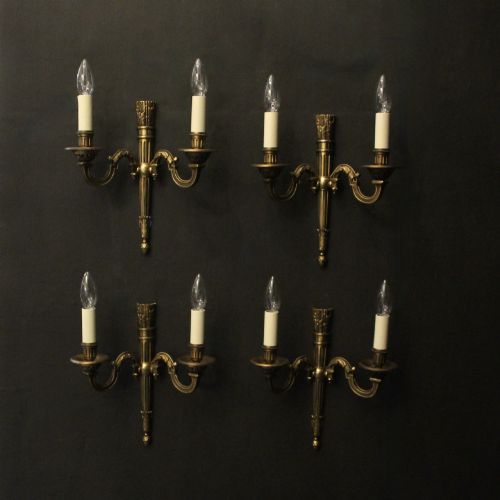
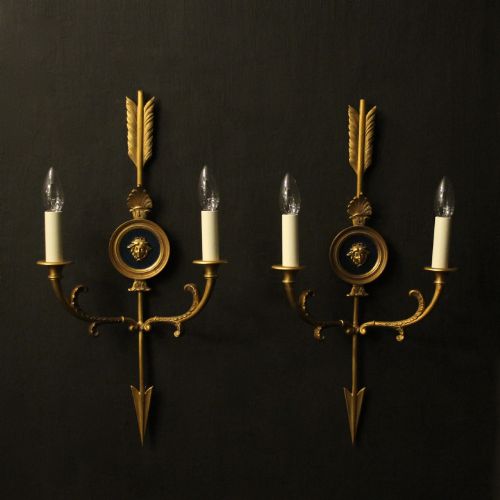
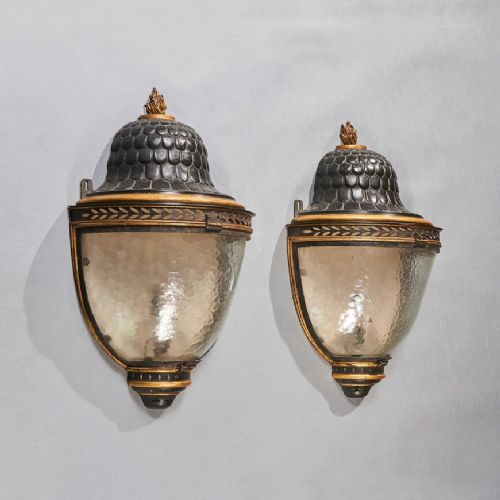
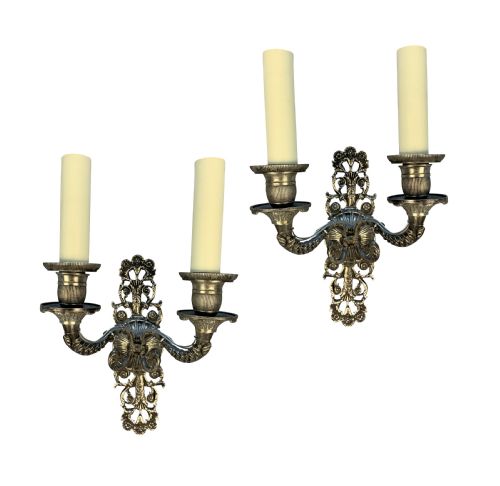
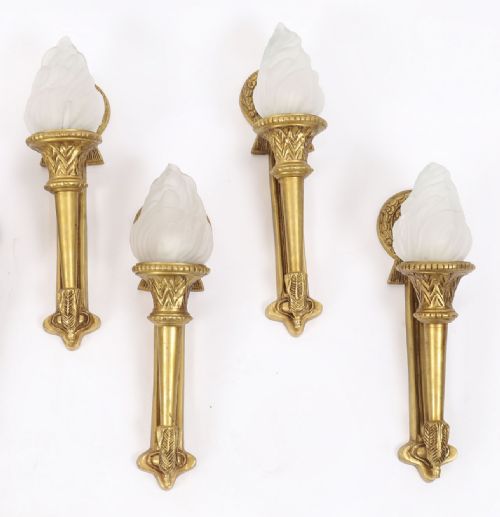
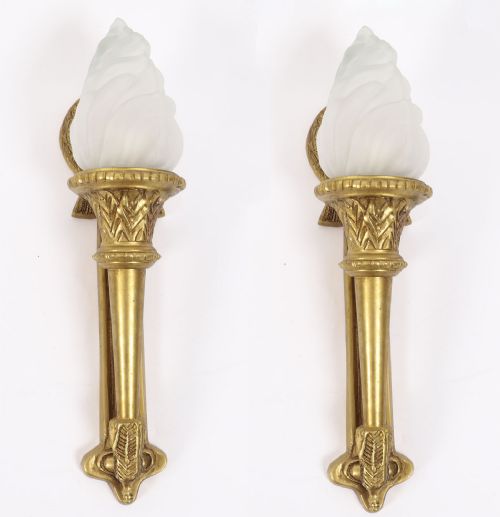
Forms include twin-arm wall lights, multi-branch candelabra, girandoles, wall lanterns and torch-style fixtures. Materials range from traditional gilt bronze and ormolu to patinated bronze, brass, wood, porcelain and toleware.
How they were made
Metalworking techniques form the foundation of these pieces, utilising cast bronze, brass and ormolu with hand-finishing and mercury or galvanic gilding. Artisans combined patinated metal surfaces with bright gilded highlights to create contrast and depth.
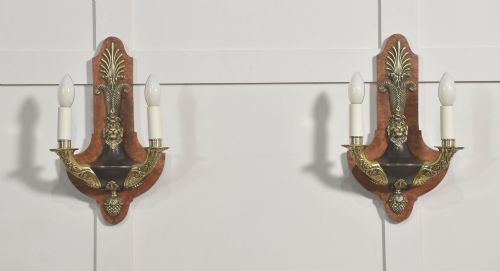
Glass, crystal and porcelain components integrate with the metal frameworks, seen in flaming torch designs, bag wall lights and Sevres porcelain mounts. Wood elements such as burr walnut and ebonised or giltwood appear alongside painted metal toleware and carriage light constructions.
Empire Wall Sconces Retail Price Guide 2026
Typical asking prices for empire wall sconces among the pieces listed under this phrase on Sellingantiques today, from the lower quarter to the upper quarter. They describe what is for sale here now, not the wider market.
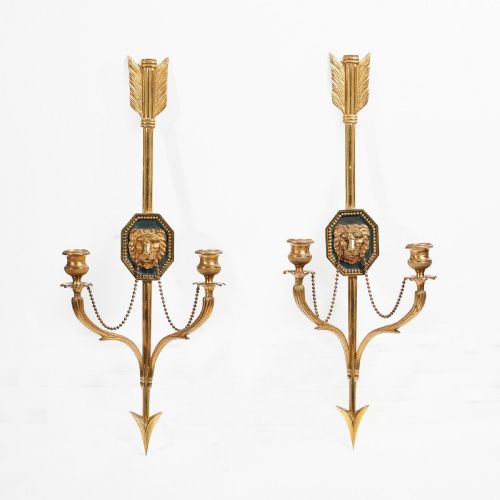
Several heavy fixtures feature fierce lion heads keeping a permanent watch over your hallway.
What varies in quality
The standard of a sconce rests on the crispness of the metal casting and the depth of the subsequent chasing work. Higher grade examples exhibit sharp detail in classical ornamentation, such as acanthus leaves, lion heads and torch motifs, whereas simpler production shows softer edges.
The preservation of the original surface finishes distinguishes different tiers of manufacture. Retained fire gilding, distinct patination on bronze elements and intact crystal or glass drops indicate superior original creation and careful preservation over time.
The Empire Wall Sconces Glossary
- Ormolu
- Gilded bronze produced by applying a mercury and gold amalgam to a bronze base and heating it. This technique creates a durable, rich golden surface characteristic of fine nineteenth-century metalwork.
- Girandole
- A branched wall light or sconce fitted with mirrors or polished metal backs to reflect and amplify the illumination. These fixtures frequently incorporate crystal drops or pendeloques.
- Toleware
- Painted or lacquered sheet metal items, often rendered in green or other colours to simulate antique Japanning. It appears on bouillotte lights and wall lanterns from the period.
- Neo-Classical
- A style inspired by the art and architecture of ancient Greece and Rome. It emphasises symmetry, restraint and classical motifs such as urns, columns and swags.
- Patinated Bronze
- Bronze treated with chemical solutions to produce a darkened or coloured surface oxidation. This finish provides contrast against bright gilt bronze details.
Empire Wall Sconces: Frequently Asked Questions
How do I install empire wall sconces?
These fixtures require secure mounting to wall studs or masonry using appropriate brackets suited to their weight. Professional electrical wiring is typically necessary to connect them safely to household mains.
Positioning depends on the room layout, but pairs are frequently placed at eye level flanking mirrors, doorways or fireplaces for balanced illumination.
Were these lights originally for candles or electricity?
Many nineteenth-century examples were designed for candles before being converted to electricity during later twentieth-century updates. Some pieces retain candle cups and drip pans reflecting their original lighting method.
Twentieth-century iterations from the 1920s and 1930s were frequently manufactured with electric fittings from the outset while maintaining classical styling.
How do I clean gilt bronze and ormolu?
Dusting gently with a soft, dry brush prevents the accumulation of dirt within the chased details of the metalwork. Moisture and harsh chemical cleaners should be avoided to protect the underlying gold surface.
Specialist conservation wax can be applied sparingly by experienced handlers if protective coating is required over stable metal.
What is the difference between French Empire and Regency styles?
French Empire style emerged under Napoleon and draws heavily on Roman imperial iconography, military trophies and heavy gilt bronze mounts. Regency style represents the British equivalent from a similar era, incorporating classical motifs with distinct local interpretations.
Both styles share a devotion to classical antiquity, though Regency pieces often integrate varied woods like ebonised timber alongside bronze elements.