


Empire Wall Lights
Empire wall lights bring formal neoclassical weight and gleaming metal candle arms to interiors through paired French and Regency designs.
Empire Wall Lights
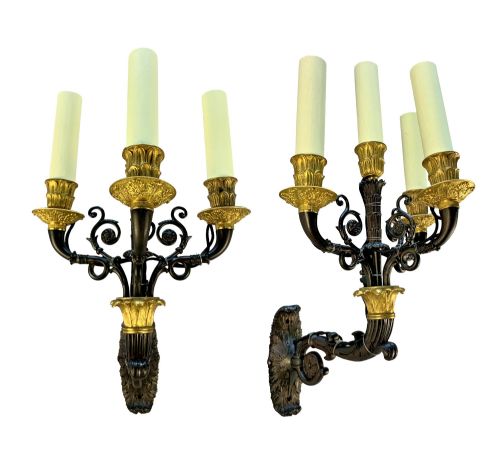
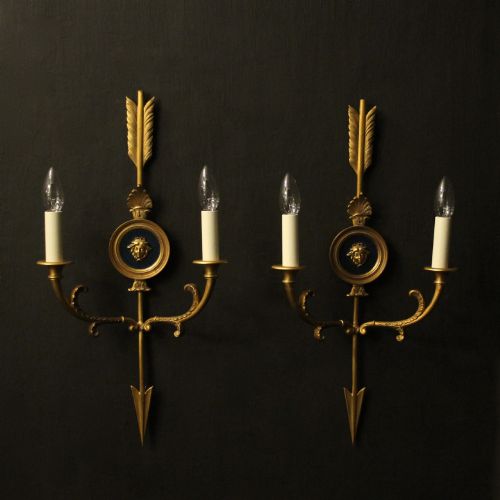
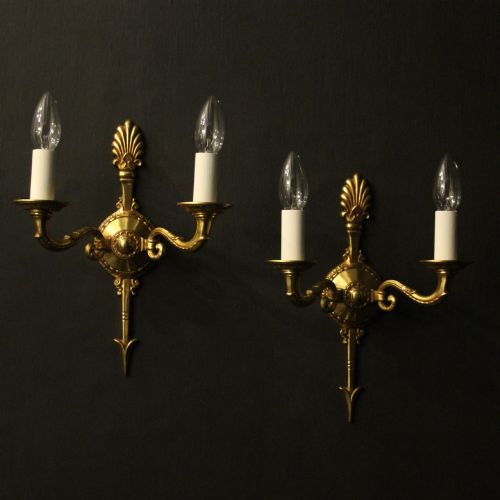
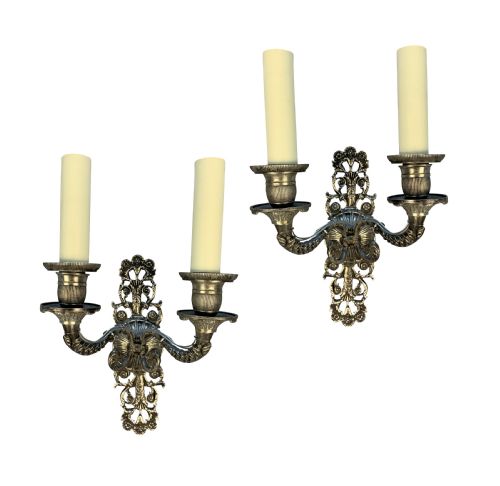
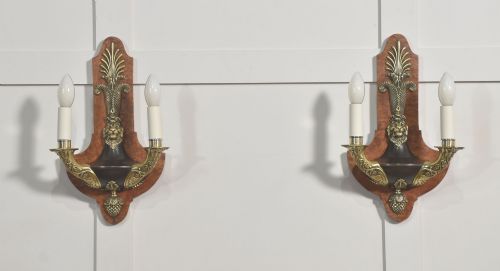
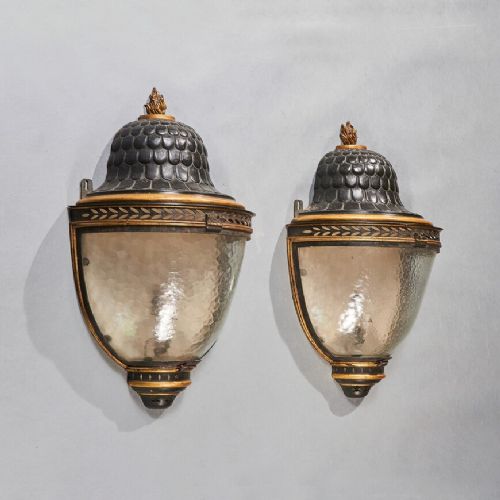
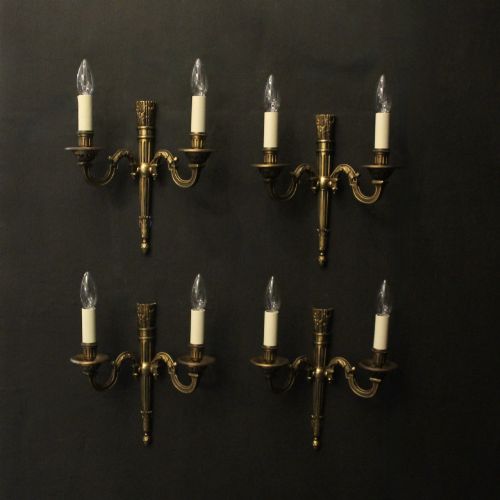
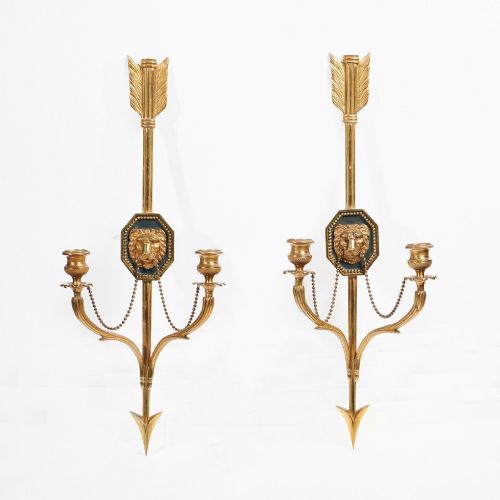
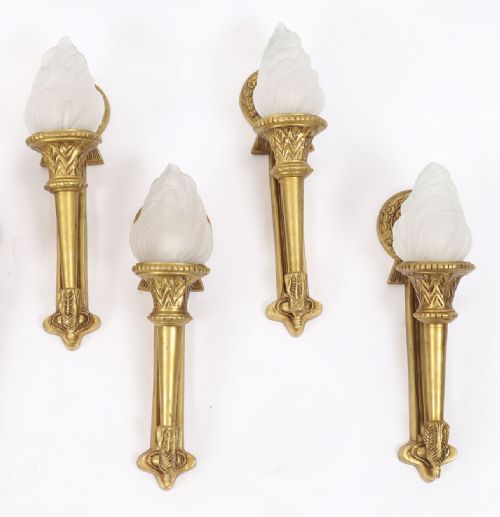
Empire wall lights include wall sconces, lanterns, and girandoles designed in French Empire, neoclassical, and Regency styles. These fixtures primarily date from the nineteenth century through the early twentieth century, encompassing periods like the Edwardian era and the 1930s. Buyers frequently encounter matched pairs and sets of four constructed for formal reception rooms.
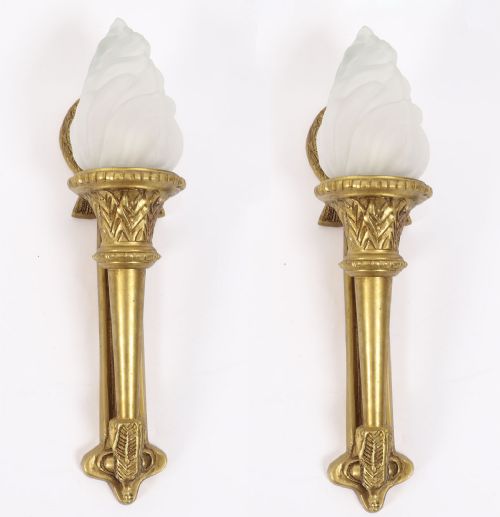
The silhouettes draw heavily on classical antiquity, featuring flaming torches, urns, and architectural brackets. Brass, patinated bronze, and gilded metals form the structural basis of these wall-mounted luminaires. French workshops dominate the available selection, often pairing metalwork with cut glass or crystal elements.
How they were made
Casting and fire gilding represent the primary methods used to create ormolu and gilt bronze components, yielding a deep, lasting metallic lustre. Toleware and metal panels receive hand-painted finishes or parcel gilt highlights, while brass components undergo traditional turning and assembly.
Makers integrated glass drops, frosted shades, and crystal tents into the metal frames to refract candlelight or early electric illumination. Structural elements rely on threaded brass rods and pinned joints to secure multiple candle branches safely to the wall backplate.
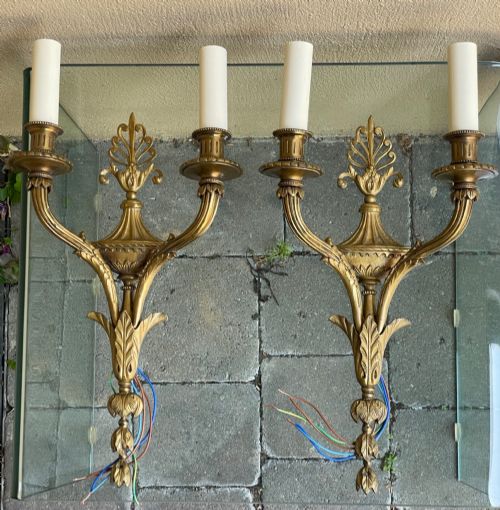
Listings span the nineteenth century through the 1930s, featuring brass, gilt bronze, toleware, and crystal materials within French Empire and Regency styles.
What varies in quality
The precision of the metal chasing dictates the crispness of leaf motifs, lion masks, and classical drapery on the casting. Heavy gauge bronze and thick ormolu retain their definition and warmth better than thinner stamped brass alternatives.
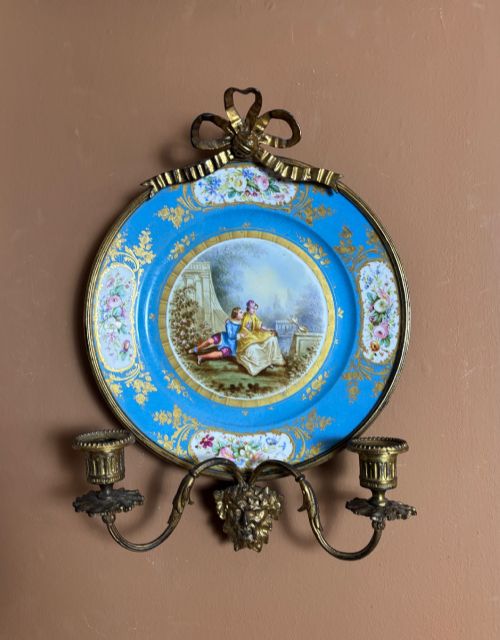
Design complexity separates standard single-arm sconces from elaborate multi-branch candelabra or multifaceted glass lantern assemblies. The integration of high-grade materials like Sevres porcelain inserts or rock crystal elements elevates specific examples above standard production pieces.
The Empire Wall Lights Glossary
- Ormolu
- Gilded bronze produced by applying a mercury-gold amalgam to a bronze base and heating it until the mercury vaporises, leaving a rich golden coating. This technique was widely practiced in French workshops.
- Girandole
- A branched wall light or sconce designed to hold multiple candles, frequently incorporating a mirror or reflective backplate to multiply the illumination. These pieces often feature crystal drops or gilded toleware.
- Applique
- A French term for a wall-mounted light fixture or sconce that secures directly to vertical surfaces. The descriptor appears frequently alongside neoclassical and ormolu designs.
- Toleware
- Lacquered or painted metalware, usually tinplate, shaped into decorative items such as wall lanterns and bouillotte shades. It often displays deep green or dark finishes highlighted with gold leaf.
- Bag wall lights
- Sconces featuring a gathered cascade of small glass beads or crystals suspended in a bag-like silhouette beneath the frame. They diffuse light softly and belong to Edwardian and neoclassical traditions.
Empire Wall Lights: Frequently Asked Questions
How do I install empire wall lights safely?
These fixtures require secure mounting to wall studs or masonry backing due to the considerable weight of cast bronze and glass components. Professional installation ensures that internal wiring meets modern standards while supporting the fixture safely.
Historic backplates often feature original screw holes that can guide placement on the wall. Consulting a qualified electrician guarantees proper earthing for metal bodies and crystal elements.
What rooms suit empire wall lights?
Formal dining rooms, hallways, and drawing rooms accommodate the strong classical presence of these fixtures. Paired placements flanking mirrors, fireplaces, or doorways create balanced, symmetrical illumination.
The vertical emphasis of torch and urn designs draws the eye upward, making them effective in spaces with high ceilings. Their metallic finishes reflect natural daylight even when unlit during the daytime.
How do I distinguish 19th-century pieces from later reproductions?
Nineteenth-century examples display hand-chased surface details on the bronze work and traditional construction methods like pegged joints and hand-cut threads. Weight provides a reliable indicator, as genuine ormolu and cast bronze pieces feel substantial.
Twentieth-century iterations from the 1920s and 1930s often incorporate standardised electrical fittings and lighter stamped brass components while continuing classical stylistic traditions.
How do I clean gilded bronze and ormolu?
Dusting gently with a soft, dry artist's brush prevents the accumulation of grime within intricate leaf and floral chasing. Moisture should remain away from historic gilt surfaces to preserve the underlying metal layers.
Harsh commercial metal cleaners strip away gold leaf and antique patina permanently. Mild soapy water on a damp cloth suffices only for durable glass or crystal drops removed from the metal frame.