



Empire Style Vanity
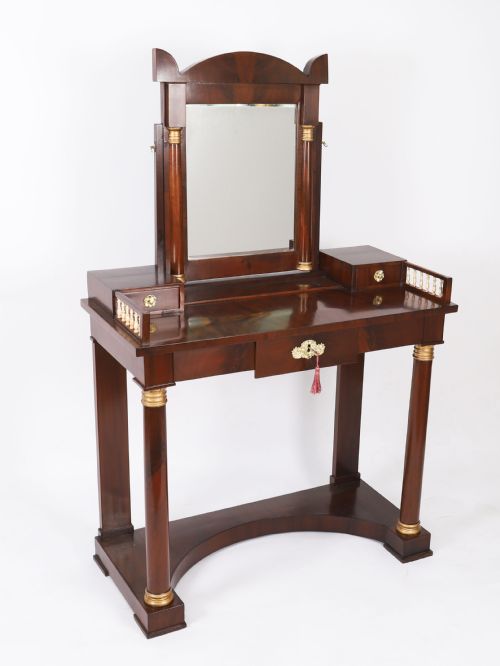
Empire style vanity pieces bring neoclassical symmetry and bold ormolu mounts to the bedroom, offering collectors stately mahogany dressing tables and matching stools.
Empire Style Vanity
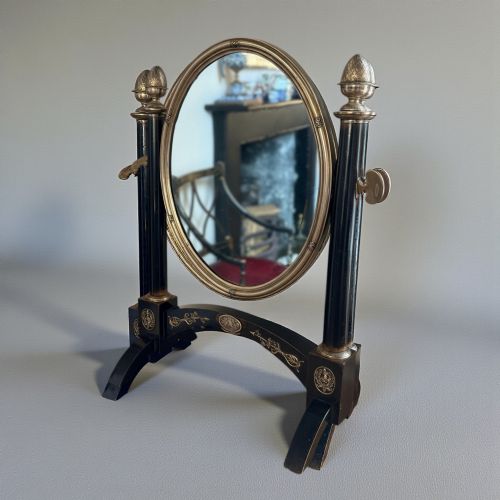
An empire style vanity search uncovers a distinct group of nineteenth century furnishings, predominantly French dressing tables, toilet mirrors, and seating such as X-frame and curule stools. These pieces draw heavily on French Empire, Neoclassical, and Second Empire design traditions, spanning the 1800s up to the late Victorian period.
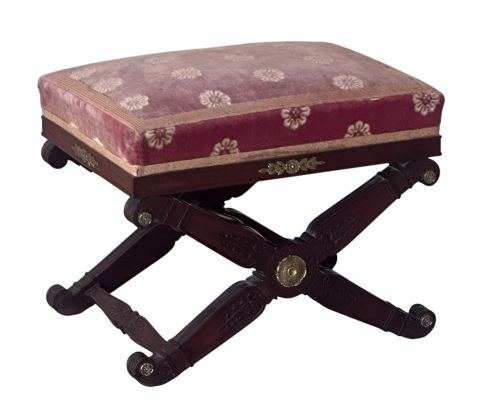
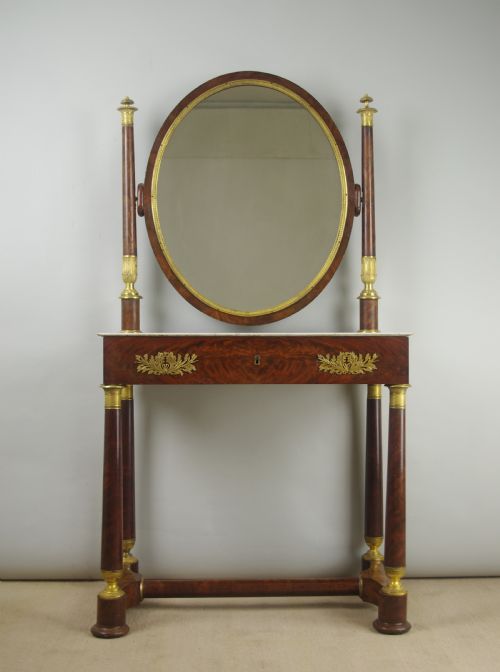
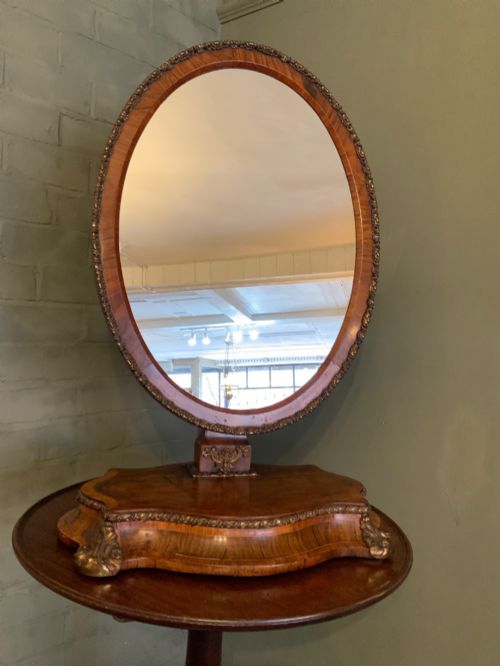
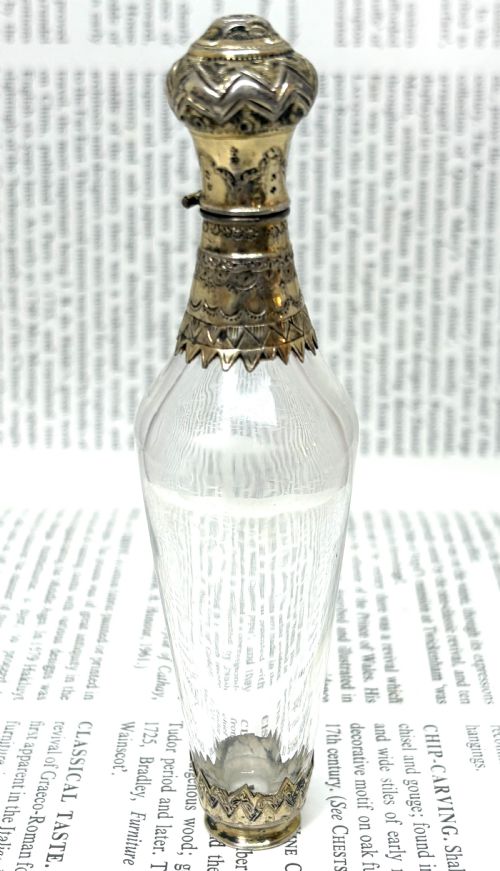
The primary forms found here include mahogany dressing tables paired with mirrors, alongside decorative accessories like scent bottles and display boxes. Stools and ottomans complete the grouping, often echoing classical architectural lines through carved mahogany, giltwood, or gilt-painted timber frames.
Materials and construction methods
Cabinetmakers relied on rich timbers, chiefly solid and veneered mahogany alongside walnut and kingwood, to build the core structures of these dressing tables and mirrors. Gilt bronze and ormolu mounts provide the signature metallic contrast, fastened securely to the polished wood surfaces.
Detailing often incorporates brass accents, marble tops, and carved gesso or giltwood on frames and stools. Velvet upholstery appears on seating elements, while adjustable screw mechanisms enable movement on specialised piano and toilet mirrors.
Empire Style Vanity Retail Price Guide 2026
Typical asking prices for empire style vanity among the pieces listed under this phrase on Sellingantiques today, from the lower quarter to the upper quarter. They describe what is for sale here now, not the wider market.
An adjustable screw-top stool lets a nineteenth-century pianist swivel with imperial dignity.
Judging the quality of empire pieces
The refinement of the cast ormolu mounts largely dictates the caliber of an empire style vanity, where crisp chiseling and heavy gilding separate superior work from simpler castings. Richness of timber grain and depth of polish on the mahogany surfaces further distinguish better examples.
Structural integrity and the retention of original components, such as matching marble tops or untouched mercury glass mirror plates, elevate the standing of a dressing table or stool. The precision in classical proportions and joinery marks the difference between standard production and master cabinet work.
The Empire Style Vanity Glossary
- Ormolu
- Gilded bronze used for decorative mounts on furniture. The technique involves applying a mercury and gold amalgam to cast bronze before heating.
- Curule stool
- An ancient Roman stool shape with X-shaped legs that curves outward. This form became a staple of neoclassical and empire seating.
- Neoclassical
- A style reviving classical Greek and Roman architectural and decorative motifs. It emphasises symmetry, restraint, and straight lines.
- Kingwood
- A dense, beautifully figured tropical timber often used for veneers. It displays rich brown tones with darker contrasting grain patterns.
Empire Style Vanity: Frequently Asked Questions
What defines an empire style vanity?
These pieces originate from nineteenth-century France and Britain, drawing on classical Roman and Greek motifs. They typically combine dark mahogany with bright ormolu mounts and strict architectural symmetry.
Buyers encounter dressing tables, large toilet mirrors, and curule stools within this design vocabulary. The aesthetic prioritizes bold visual weight and polished metal contrasts.
How were these dressing tables used?
Wealthy households utilised these mahogany tables and adjustable mirrors for daily grooming and personal care. The surfaces accommodated scent bottles, decorative boxes, and cosmetic accessories.
Seating such as X-frame stools and ottomans provided matching movable chairs for the dressing room or bedroom suite. They served both a functional role and a display purpose.
How do I style these in a modern home?
Position a mahogany dressing table against a plain wall to let the ormolu mounts and wood grain stand out. Pairing it with a velvet-topped curule stool introduces authentic period texture.
These pieces work well as focal points in bedrooms or as striking console surfaces in hallways. Keeping surrounding decor simple allows the neoclassical lines to command attention.
How can I tell nineteenth century pieces apart?
Examine the timber construction, mirror glass, and bronze mounts for signs of period handcrafting. Nineteenth-century cabinetmakers used specific joinery techniques and mercury gilding methods that differ from later reproductions.
Consulting the variety of woods like kingwood and walnut, alongside styles ranging from French Empire to Victorian revival, helps establish the era of origin.