



Empire Style Side Lamps
Empire style side lamps bring classical grandeur to interiors, combining bronze, marble and brass to light a room with architectural poise.
Empire Style Side Lamps
Empire style side lamps draw upon neoclassical vocabulary, using classical urn forms, columns and candlestick designs adapted for domestic illumination. These pieces bridge the gap between heavy architectural lighting and functional bedside or table placement.
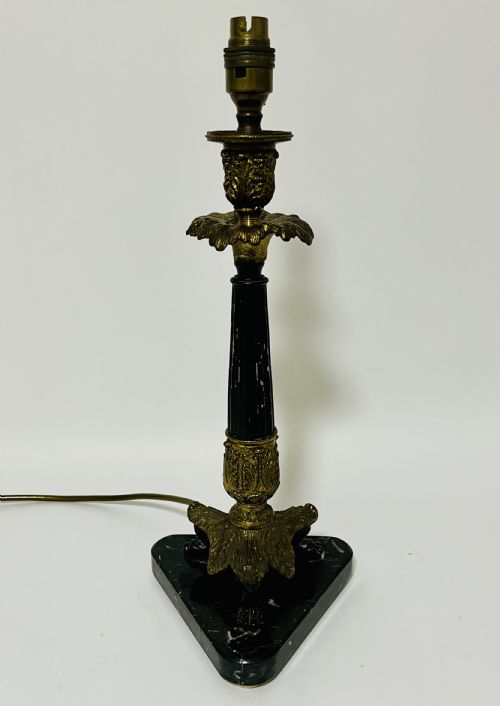
The version most commonly met on this page is the French or Regency table lamp, frequently fashioned from bronze, ormolu, brass and marble. They often reflect nineteenth century revivals, pairing robust metalwork with classical silhouettes.
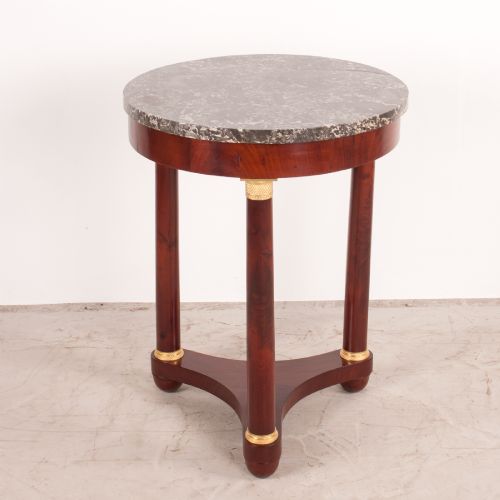
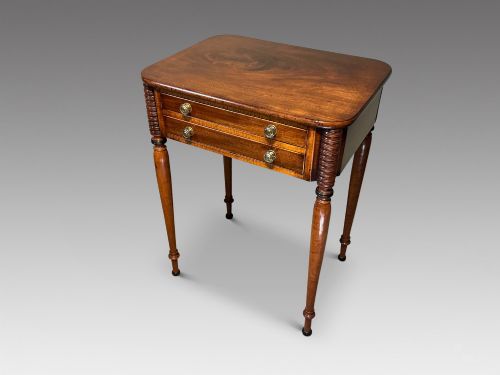
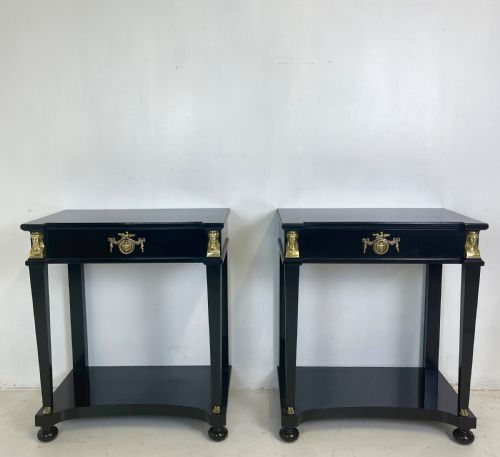
Alongside dedicated lamps, the search for empire style side lamps frequently encounters related gueridons, bedside tables and centre tables that share the same period vocabulary. Mahogany and ebonised wood frequently form the structural bases for these items.
What varies in quality
Quality rests in the crispness of the metal casting and the depth of the hand-chasing on bronze and ormolu mounts. Finer examples display sharp definition in classical motifs like rams heads or acanthus leaves, whereas lesser pieces show softer, blurred detail.
The selection of materials creates another distinction, particularly in the density of the marble and the figuring of the mahogany or ebonised timber. Heavier, well-balanced stone bases and solid timber construction indicate superior manufacture.
Early nineteenth century designs occasionally incorporate cast rams heads staring steadfastly from the wooden columns.
The Empire Style Side Lamps Glossary
- Ormolu
- Gilded bronze, applied to mounts and decorative details on furniture and lamps. This technique gives a rich gold-coloured finish that catches the light.
- Gueridon
- A small round table, frequently used as a side or occasional table in nineteenth century interiors. Many feature central pedestal columns resting on marble or wood bases.
- Bouillotte
- A traditional French table lamp featuring a central shaft and an adjustable shade. They commonly incorporate a shallow dish base for holding small items.
- Neoclassical
- A style inspired by the classical art and architecture of ancient Greece and Rome. It dominates the decorative vocabulary of the nineteenth century empire period.
- Ebonised
- Wood treated with a dark stain or finish to imitate ebony. This dark surface provides a sharp visual contrast to gilt bronze and ormolu mounts.
Empire Style Side Lamps: Frequently Asked Questions
What defines an empire style lamp?
These lamps draw inspiration from classical antiquity, featuring motifs like urns, columns and restrained geometric lines. They utilise materials such as bronze, brass and marble.
They reflect the design language of the nineteenth century and subsequent revivals, prioritising symmetry and architectural presence.
How were these lamps used originally?
They provided task and ambient illumination on side tables, desks and bedside cabinets in formal interiors. Their compact footprints suited placement on gueridons and occasional tables.
Their heavy bases ensured stability while illuminating parlours, bedrooms and drawing rooms.
How do I style a side lamp?
Pair them with mahogany side tables, gueridons or marble-topped cabinets to ground their classical proportions. They sit comfortably on surfaces alongside books and decorative objects.
Their metallic finishes complement both traditional wood tones and neutral contemporary interiors.
How do I tell nineteenth century pieces apart?
Look closely at the weight of the bronze or brass, the hand-chasing of the metal mounts and the turning of the timber. Nineteenth century examples typically show greater density in the materials and more deliberate craftsmanship.
Later revival pieces often display lighter castings and different patination techniques on the metal surfaces.