





Empire Style Seat
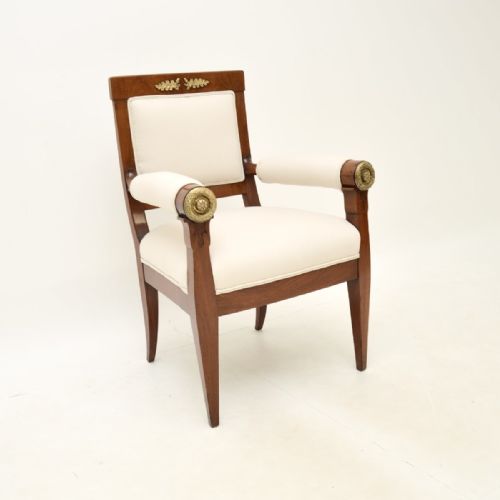
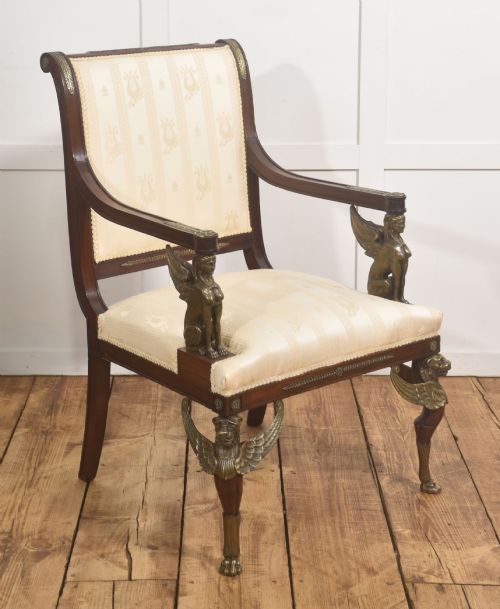
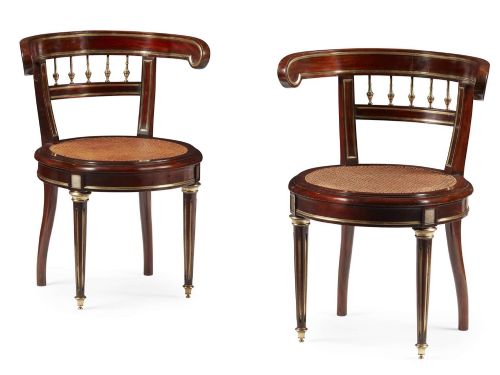
An empire style seat brings formal classical lines and rich mahogany or giltwood into a room.
Empire Style Seat
An empire style seat encompasses a range of seating furniture drawing on neoclassical and Napoleonic design, stretching from armchairs and salon chairs to settees, sofas, and window seats. The forms appear across the nineteenth century, including revival pieces from the latter decades as well as items from the Regency and Consulate periods.
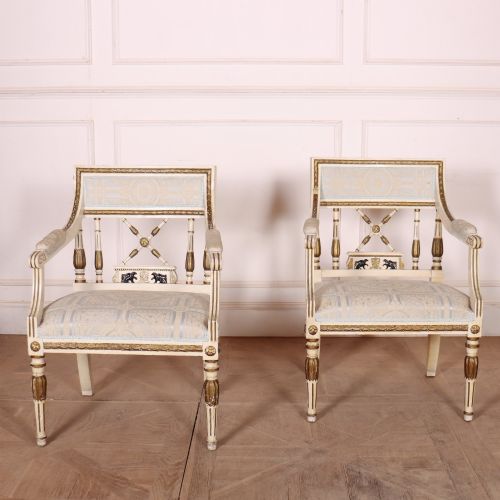
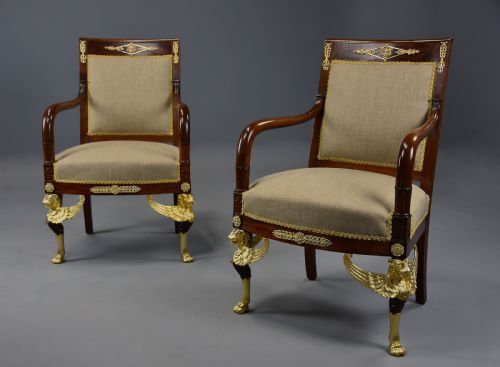
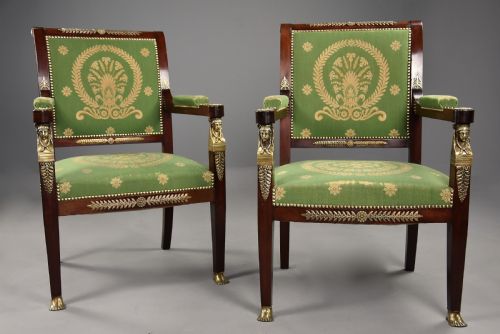
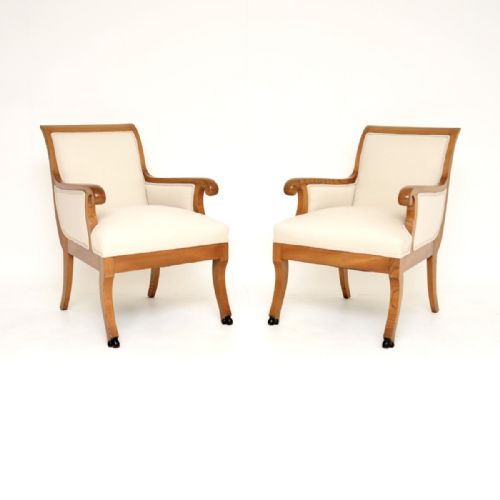
Armchairs, often referred to as fauteuils, and various forms of stools dominate the selection alongside settees and piano stools. Makers from French, Swedish, Italian, and Danish traditions interpret the vocabulary with local timbers and decorative finishes.
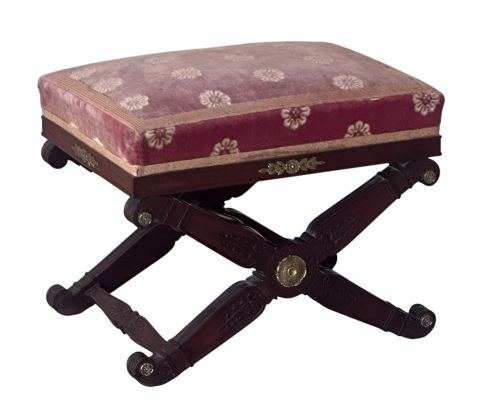
Stools take diverse shapes, including X-frame and curule variants alongside ottoman window seats. Larger seating includes matched pairs of armchairs and multi-piece salon suites.
Materials and construction methods
Construction relies heavily on mahogany, solid elm, birch, and walnut as primary timbers, often paired with painted wood or gilded surfaces. Giltwood and gesso provide bright decorative framing on Italian and Swedish pieces.
Ormolu mounts and gilt brass details accent mahogany and walnut frames, adding metallic contrast to the timber. Upholstery utilises fabric, velvet, and patterned textiles to cover seats and backrests.
Empire Style Seat Retail Price Guide 2026
Typical asking prices for empire style seat among the pieces listed under this phrase on Sellingantiques today, from the lower quarter to the upper quarter. They describe what is for sale here now, not the wider market.
Listings feature mahogany, birch, and walnut timbers, paired with ormolu mounts and giltwood surfaces across nineteenth-century seating forms.
Determining quality in seating pieces
Quality rests on the crispness of carved wooden details, the integration of cast or chased ormolu mounts, and the fidelity of the neoclassical proportions. Finer examples display meticulous joinery and substantial timber selection rather than superficial decoration.
The choice of covering material and the execution of gilding also separate standard items from exceptional ones. Cohesive suites and matched pairs command greater presence through uniform design execution.
The Empire Style Seat Glossary
- Fauteuil
- An open armchair with upholstered back and armrests, typically featuring exposed wooden framing. This French form is central to many salon seating groups.
- Ormolu
- Gilt bronze mounted onto furniture frames for decorative accent. The technique creates a bright metallic contrast against dark mahogany.
- Curule stool
- An ancient Roman stool shape featuring curved legs crossing in an X-form. Nineteenth-century makers revived this symmetrical design for formal seating.
- Giltwood
- Timber coated with gold leaf or a gold-colored preparation. It provides a reflective, opulent finish common on neoclassical and revival frames.
- Consulate period
- A French design phase preceding the full Empire style, bridging eighteenth-century restraint and nineteenth-century grandeur.
Empire Style Seat: Frequently Asked Questions
Where did empire style seats originate?
The style emerged from the Napoleonic Empire in France, drawing heavy inspiration from ancient Roman, Greek, and Egyptian forms. Makers across Europe rapidly adopted these classical proportions.
Swedish, Italian, and Danish craftsmen soon developed regional interpretations using local woods like birch and elm while retaining the strict neoclassical symmetry.
How do I identify a revival piece?
Nineteenth-century revival pieces often date from the 1870s, 1880s, or 1890s, using earlier French and Swedish design vocabulary. They combine machine-assisted precision with traditional hand-carving.
Examine the construction methods and wood ageing to distinguish these later interpretations from items produced closer to the original 1800 period.
Are piano stools adjustable?
Certain piano stools feature a screw-top mechanism allowing the seat height to be adjusted for the player. These functional pieces often incorporate X-frames or gilt-painted wooden structures.
Others take the form of standard fixed-height seating designed for domestic music rooms.
How do I style a settee in a modern room?
A settee or salon sofa provides a striking focal point against neutral walls, echoing the grand proportions of nineteenth-century drawing rooms. Pair them with simpler modern furnishings to let the mahogany frames and ormolu mounts stand out.
Window seats and ottomans work effectively in hallways or at the foot of a bed, utilising smaller footprints while maintaining classical lines.