



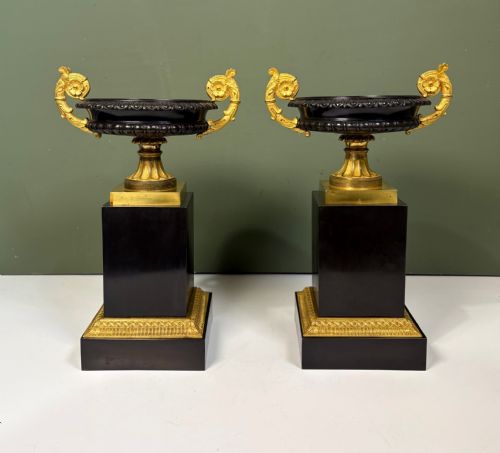


Empire Style Pedestal
These empire style pedestal pieces combine classical forms with heavy architectural presence, offering a commanding focal point for formal interiors.
Empire Style Pedestal
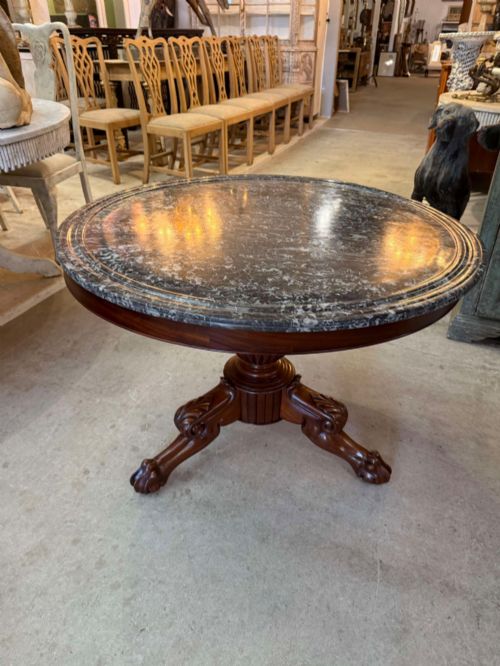
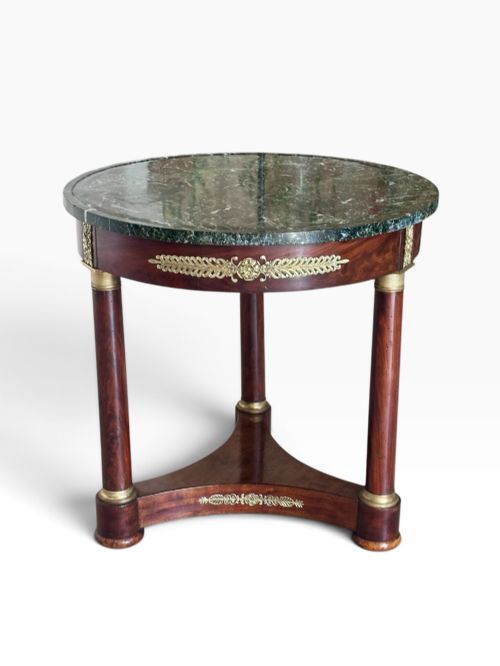
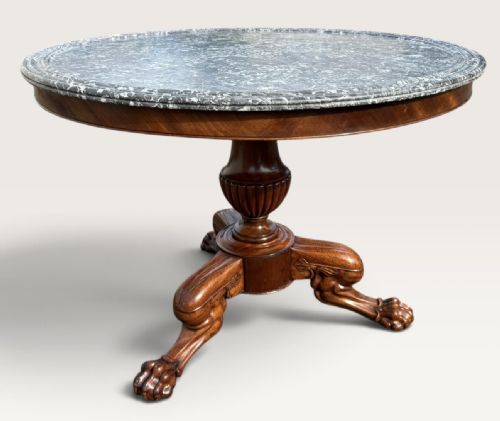
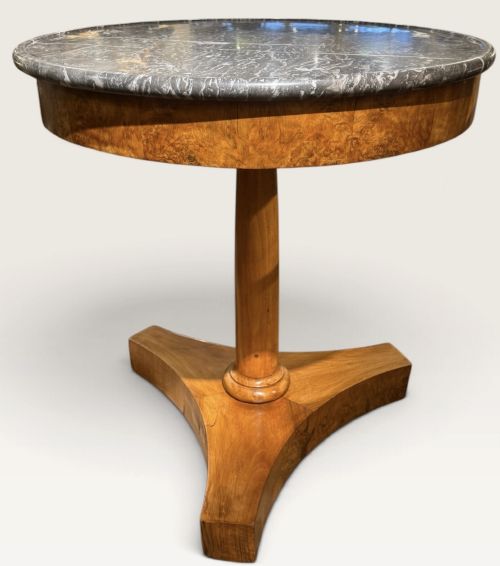
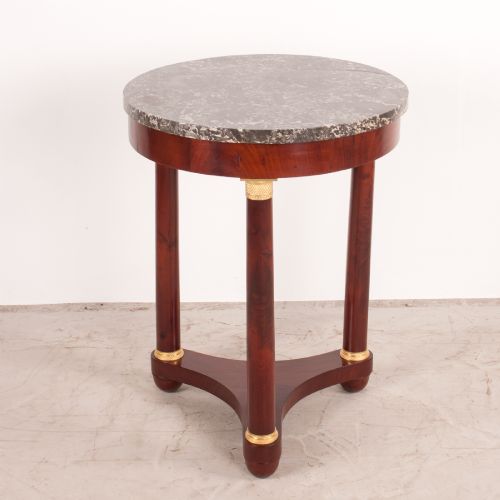
When you search for an empire style pedestal, you encounter architectural forms rooted in 19th century classical revival design. The pieces appearing most frequently across these listings include freestanding round gueridon tables, heavy office desks, and columnar supports associated with the French Empire and Regency periods.
Makers and manufacturers produced these items using substantial structural timbers like mahogany and ebonised wood, frequently topped with fitted marble slabs. Supporting elements often take the form of central pedestals rather than standard four-legged frames.
The aesthetic draws heavily on Neoclassical, Biedermeier, and French Restoration traditions. Buyers select these items to anchor traditional rooms with historic presence and formal symmetry.
Materials and construction methods
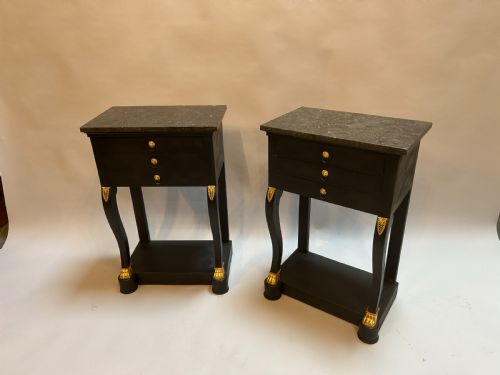
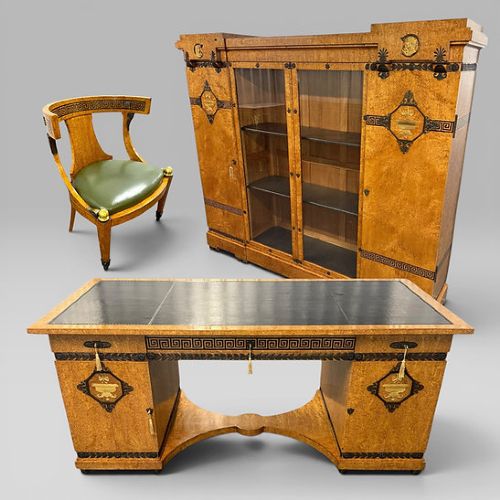
Cabinet makers constructed these pieces primarily from solid mahogany and birch veneers over secondary timbers, occasionally employing ebonised wood for high contrast. Marble tops appear frequently on round tables, providing a heavy, cool surface that balances the weight of the timber below.
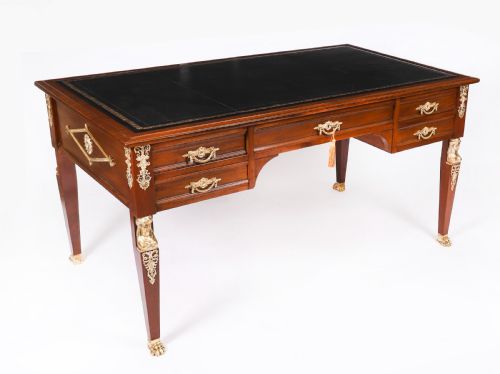
Metalwork forms an integral part of the manufacturing process, with cast or chased ormolu, bronze, and brass applied to corners, feet, and friezes. These metallic mounts accentuate the structural lines of the timber.
Secondary materials such as leather inserts for writing surfaces and carved wooden details like swan or ram head motifs demonstrate the detailed handwork involved in producing these formal furnishings.
Empire Style Pedestal Retail Price Guide 2026
Typical asking prices for empire style pedestal among the pieces listed under this phrase on Sellingantiques today, from the lower quarter to the upper quarter. They describe what is for sale here now, not the wider market.
Common object forms include gueridon tables, bureau plat desks, campana urns, and bedside cabinets.
Judging quality and execution
Quality separates into categories defined by the crispness of the cast metal mounts and the selection of the wood. Finer examples display cleanly chased ormolu and bronze elements that retain sharp relief, whereas lower tiers show softer, flatter cast details.
The choice of timber grain governs the visual appeal at the upper end of the scale, particularly where burr root maple or figured mahogany exhibits depth and movement. Plain, flat veneers indicate a more utilitarian standard of production.
Structural integrity relies on the hidden joinery of the central column and base. Superior pieces maintain rigid alignment under heavy marble slabs without relying on visible exterior brackets.
Mercier Frères·Messenger
The Empire Style Pedestal Glossary
- Gueridon
- A small French round table, typically supported by a single central column or pedestal, frequently topped with marble. This form serves well as an occasional or centre table in a reception room.
- Ormolu
- Gilded bronze applied as a decorative mount to furniture and decorative objects. The technique involves coating bronze with a mercury and gold amalgam before heating.
- Biedermeier
- A Central European style of furniture design dating from the early to mid 19th century, prioritising clean lines and utilitarian comfort over excessive ornamentation. It often utilises domestic timbers like birch.
- Campana
- A bell-shaped vessel form derived from ancient Roman pottery, commonly seen in bronze or porcelain urns. These pieces often feature flared rims and footed bases.
- Bureau Plat
- A large flat-topped writing desk, usually freestanding with drawers incorporated into the frieze. This form gained prominence in France during the 18th and 19th centuries.
Empire Style Pedestal: Frequently Asked Questions
What is an empire style pedestal desk?
An empire style pedestal desk is a large writing table featuring banks of drawers beneath the work surface, styled after classical 19th century designs.
These desks often incorporate heavy timber construction, such as mahogany, and are finished with brass or ormolu mounts and leather writing inserts.
How do I identify a gueridon table?
A gueridon is a round table supported by a single central pillar, often fitted with a heavy marble top.
They originated as small decorative stands and evolved into prominent centre tables during the neoclassical and empire periods.
Where should I place these pieces?
These items suit formal reception rooms, libraries, or grand hallways where their architectural proportions can command the space.
Round tables work effectively as centrepieces beneath a central light fixture, while desks function well freestanding in the middle of a room.
How can I tell a 19th century piece from a later revival?
Distinguishing period pieces involves examining the timber shrinkage, joinery methods, and the patination of the metal mounts.
Revival pieces from later decades often display machine-tooled elements and less organic timber movement than genuine 19th century examples.