

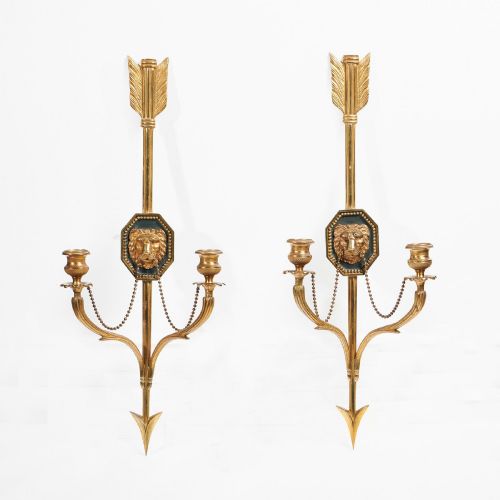
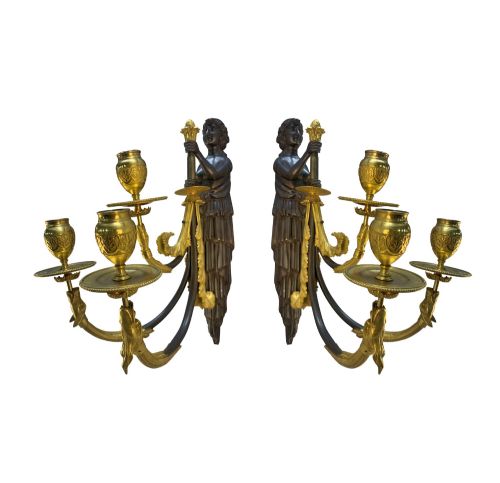
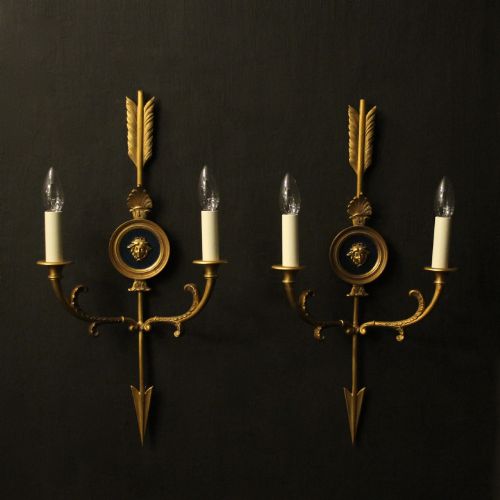
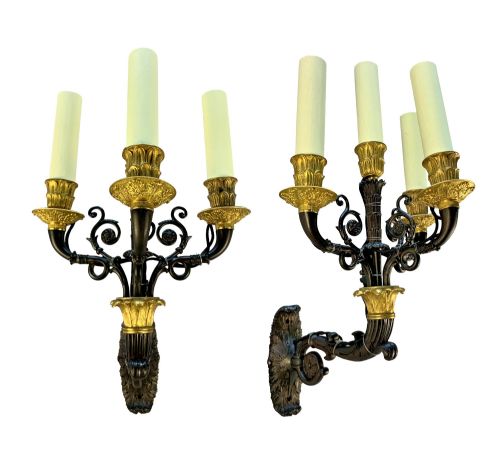


Empire Style Appliques
Empire style appliques bring formal neoclassical symmetry and classical lighting to interior walls.
Empire Style Appliques
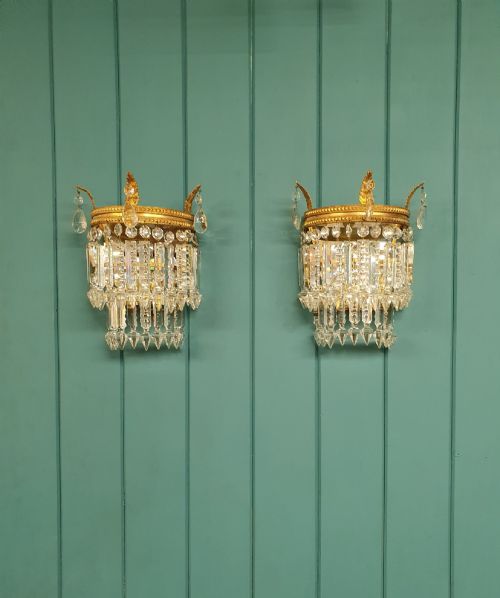
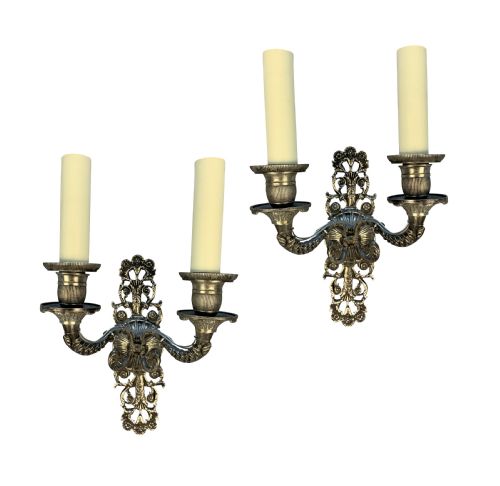
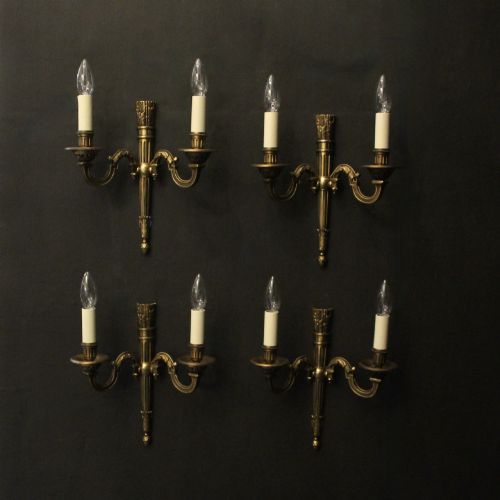
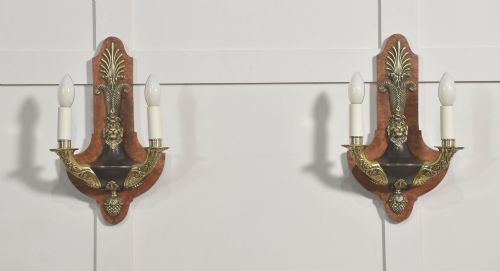
Empire style appliques are wall lights designed to illuminate period interiors with classical dignity. When you search for empire style appliques, you encounter wall sconces and wall lights rooted in nineteenth-century designs.
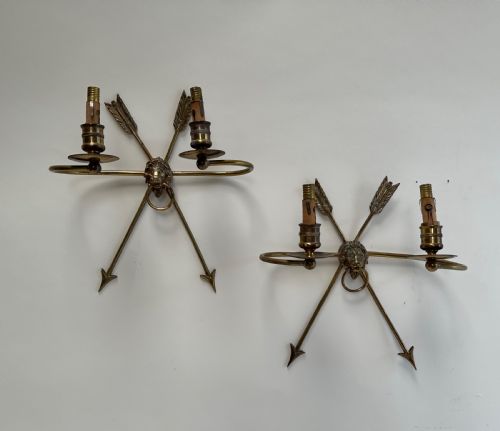
The pieces listed on this page span the nineteenth century, Regency period, and early twentieth-century revivals up to nineteen-thirty. Most examples appear as matched pairs configured for twin, triple, or four-branch lighting.
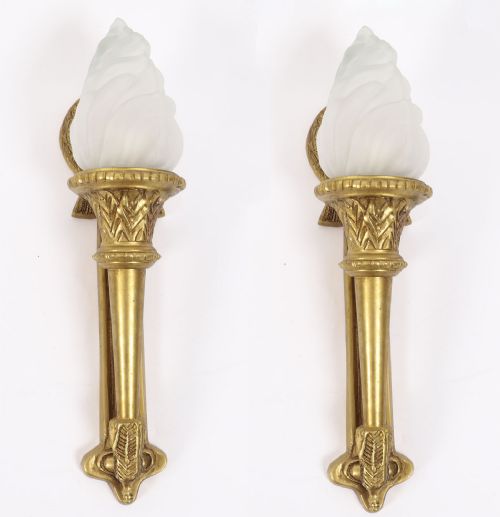
Origins heavily lean toward French workshops alongside Italian and English interpretations. Forms range from simple single-arm sconces to elaborate articulated mounts and flaming torch designs.
How they were made
Metalwork forms the structural core of these wall lights, utilising cast brass, ormolu, and patinated bronze. Artisans shaped metal through casting and chasing to achieve crisp classical motifs.
Gilding techniques provide the characteristic golden surface finish seen across gilt brass and gilded bronze examples. Crystal components and cut glass additions supplement the metal frames on select pieces.
Empire Style Appliques Retail Price Guide 2026
Typical asking prices for empire style appliques among the pieces listed under this phrase on Sellingantiques today, from the lower quarter to the upper quarter. They describe what is for sale here now, not the wider market.
Some wall lights double as flaming torches, letting your hallway channel ancient Rome while holding modern wiring.
What varies in quality
The crispness of the chasing on bronze and ormolu mounts separates standard production from superior work. Sharp detail in classical ornament shows greater skill in the foundry.
Weight and structural substance in the cast brass or bronze arms dictate durability and balance. Original mercury gilding or deep fire-gilding retains a richer depth than later plated finishes.
The Empire Style Appliques Glossary
- Ormolu
- Gilded bronze produced by applying a mercury-gold amalgam to a bronze base and heating it. This technique creates a durable golden layer characteristic of high-end lighting.
- Applique
- A wall-mounted light fixture designed to hold candles or electric bulbs. The term is frequently used interchangeably with wall sconce.
- Patinated bronze
- Bronze treated with chemical solutions to darken the surface and create tonal contrast. This finish highlights the bright gilded elements in neoclassical designs.
- Regency
- A British design period spanning the early nineteenth century that shares heavy classical influences with the French Empire style. Pieces from this era often feature crisp architectural lines.
- Neoclassical
- An artistic movement drawing inspiration from the classical art and culture of ancient Greece and Rome. This aesthetic defines the symmetry and motifs of empire lighting.
Empire Style Appliques: Frequently Asked Questions
How do I wire antique wall lights?
Wiring historic wall lights requires professional rewiring to meet modern safety standards while preserving internal channels. Electricians can thread modern flex through the original bronze or brass arms without altering exterior surfaces.
Qualified installers should mount these fixtures to suitable wall supports due to the substantial weight of cast bronze and crystal components.
Are these appliques wired for electricity?
Most twentieth-century revivals and nineteenth-century conversions arrive adapted for electrical circuits. Some earlier examples may require professional conversion from candle use to standard lamp holders.
Sourcing compatible small bulbs ensures the illumination flatters the cut glass and gilded surfaces properly.
How do I clean ormolu wall lights?
Dust bronze and ormolu surfaces gently with a soft, dry brush to prevent accumulation in recessed chasing. Avoid abrasive metal cleaners that strip away delicate gilt layers.
Professional conservators should handle deep cleaning of tarnished metalwork to maintain the original surface integrity.
How do I date an empire applique?
Dating relies on examining casting techniques, fixing methods, and material wear patterns across the metal frame. Nineteenth-century originals display hand-finished chasing that differs from later twentieth-century production methods.
Associated periods range from the Regency era through to nineteen-thirty revivals, each showing subtle shifts in neoclassical interpretation.