



Empire Period Side Table
An empire period side table brings monumental presence to a room through dark timber, classical lines and restrained classical ornament.
Empire Period Side Table
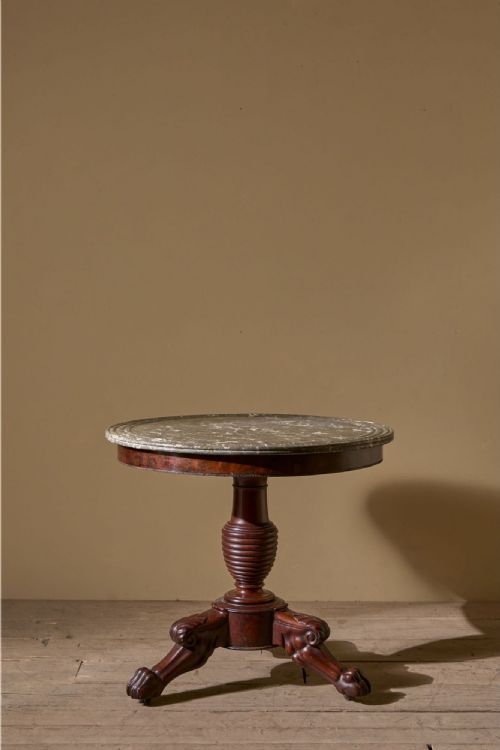
These pieces are freestanding or console tables created during the early nineteenth century, drawing on French Empire and Regency aesthetics. When you search for an empire period side table, you encounter forms ranging from circular guéridons and console tables to sofa tables and cylindrical pedestals. The examples found here date principally from the nineteenth century, encompassing 1800, Regency, and Restauration periods.
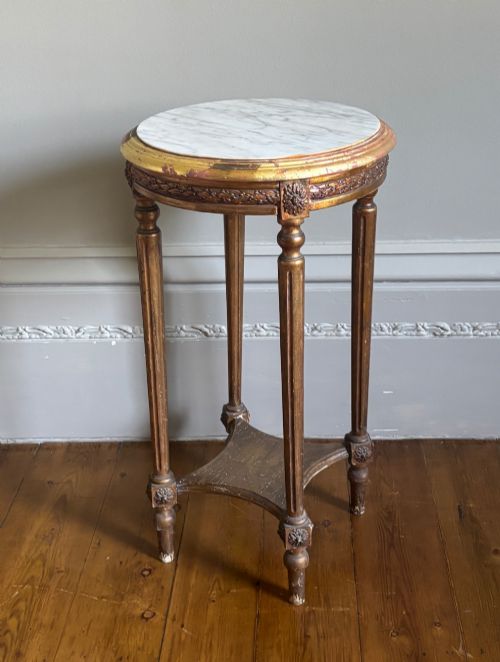
The primary forms on this page include mahogany guéridons topped with grey marble, alongside console tables, occasional tables, and lyre-form pieces. English interpretations in the Regency and George IV styles sit alongside continental French Empire and Restauration designs. Each variant shares a distinct architectural silhouette rooted in classical antiquity.
Materials and construction
Cabinetmakers utilised rich timbers such as figured mahogany and exotic coromandel, often accented with boxwood inlay or birch. Structural elements rely on solid construction techniques suited to heavy pedestals and substantial console frames.
Surfaces are completed with inset grey marble slabs or polished wood tops, while decorative accents incorporate cast brass, ormolu, and gold leaf. These metallic mounts define the structural junctions and friezes typical of the design vocabulary.
Empire Period Side Table Retail Price Guide 2026
Typical asking prices for empire period side table among the pieces listed under this phrase on Sellingantiques today, from the lower quarter to the upper quarter. They describe what is for sale here now, not the wider market.
Listings highlight nineteenth-century production, spanning the year 1800, the Regency period, and the French Restauration.
Judging quality and execution
Excellence in these pieces rests upon the selection of timber veneers, where highly figured mahogany or dense coromandel displays careful matching across the plane. The integration of marble tops, whether plain or grey, demands precise stonemasonry to sit flush within the timber frame.
The crispness of cast ormolu and brass mounts distinguishes finer examples from simpler workshops. Structural integrity in the central pillars, pedestals, and lyre supports dictates how well the table bears weight over centuries.
Jean-Joseph Chapuis
The Empire Period Side Table Glossary
- Gueridon
- A small circular table on a central pillar, frequently topped with marble and used as a stand for lamps or decorative objects.
- Ormolu
- Gilded bronze mounts applied to furniture to accent corners, friezes, and feet with classical motifs.
- Console table
- A table designed to stand against a wall, traditionally supported by wall brackets or front legs.
- Restauration
- A French design period spanning the 1810s and 1820s that retained classical proportions while lightening heavy Empire forms.
Empire Period Side Table: Frequently Asked Questions
What is an empire period side table?
These pieces are early nineteenth-century tables characterised by architectural dignity, dark timbers, and classical proportions. They draw inspiration from French Empire and English Regency design.
Such tables function as console surfaces, central guéridons, or occasional stands. Their substantial presence suits both traditional and contemporary interiors.
Where did these tables originate?
The primary origins span French workshops and English cabinetmakers working under Regency and George IV influences. Continental pieces often feature distinct ormolu mounts and marble tops.
English makers adapted these continental motifs into indigenous woods like mahogany. This cross-channel exchange created a varied group of related forms.
How do I style an empire table?
Place a round guéridon in the centre of a room to hold a lamp or display objects. Console tables anchor hallways or reception rooms against walls.
Pair the dark timber tones with neutral walls to let the classical silhouette stand out. The heavy marble and wood elements balance lighter upholstery and textiles.
How do I distinguish French and English pieces?
French Empire examples frequently employ gilt bronze or ormolu mounts alongside grey marble slabs. English Regency pieces often favour figured mahogany with subtle brass inlay.
Construction methods and timber selection also point to regional workshops. English pieces from the George IV era lean toward restrained architectural lines.