

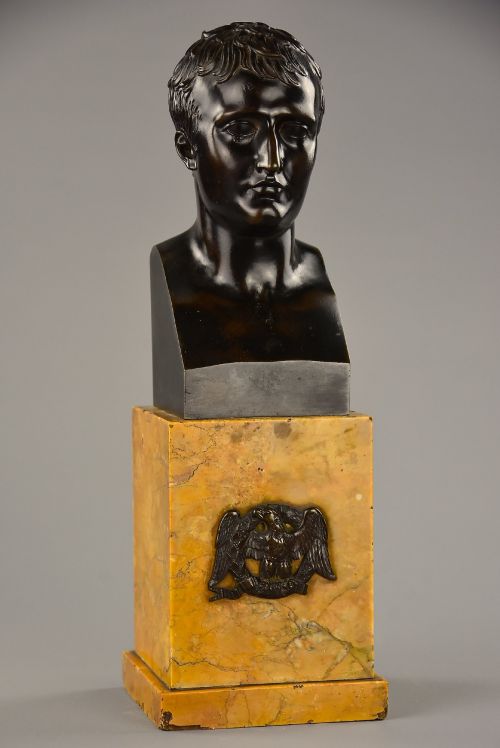
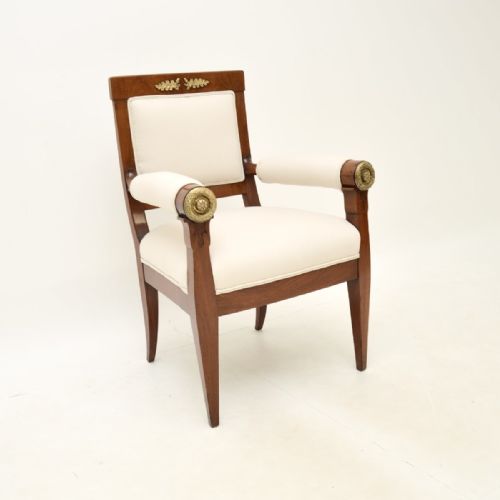
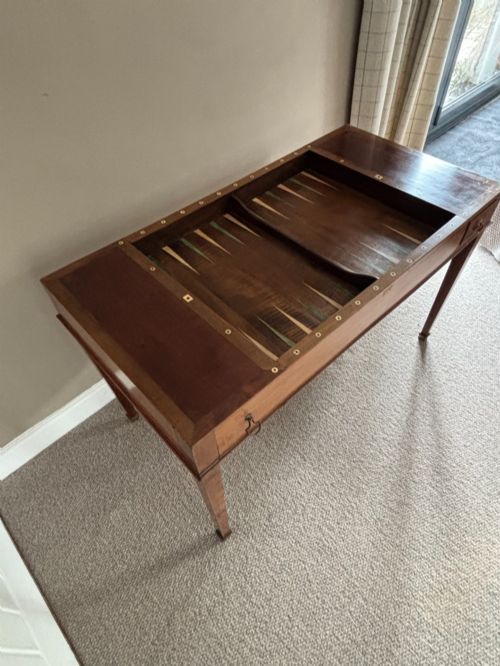
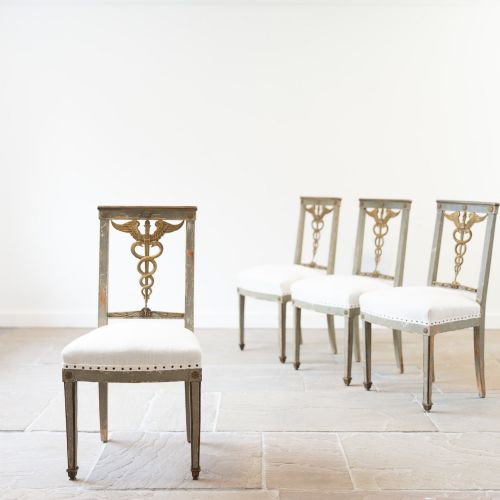


Empire Period Desk
An empire period desk brings striking classical authority into a room through heavy timber and gleaming bronze mounts.
Empire Period Desk
The selections recorded here encompass distinct variations, including ladies writing desks and related mahogany surfaces produced during the nineteenth century and later revival eras. These pieces serve as functional workstations while asserting a distinct historical character within an interior.
Materials and construction
Cabinetmakers utilised dense timbers such as mahogany and oak as the structural foundation for these desks. The natural grain of the wood provides a warm, dark visual depth across the writing surface and drawers.
Gilt bronze and ormolu mounts punctuate the timber frames, applied as cast classical motifs, foliage, and figural details. These metal elements require precise chasing and fire gilding to achieve the sharp contrast against the polished wood.
Empire Period Desk Retail Price Guide 2026
Typical asking prices for empire period desk among the pieces listed under this phrase on Sellingantiques today, from the lower quarter to the upper quarter. They describe what is for sale here now, not the wider market.
Materials recorded across the inventory include mahogany, oak, gilt bronze, ormolu, patinated bronze, and marble.
Assessing quality and execution
The calibre of an empire period desk rests upon the crispness of the bronze castwork and the fidelity of the mercury gilding. Superior examples display meticulously chased details that catch the light, whereas lesser pieces show soft edges and flat, uniform plating.
Timber selection and secondary wood usage also dictate the standard of the piece, with choice cuts of mahogany showing deep chatoyancy. Construction integrity within the drawer linings and structural joints separates utilitarian workshop output from exceptional cabinetmaking.
Jean-Joseph Chapuis·Reiche·Canaillor of Paris·Ravrio·Lefebvre of Belgium·FB Adams London
The Empire Period Desk Glossary
- Ormolu
- Gilt bronze ornaments applied to furniture and clocks. This technique involves fusing a mercury and gold amalgam to a bronze base through intense heat.
- Mahogany
- A durable, reddish-brown tropical hardwood favoured for high-grade cabinetmaking. Its stability allows for smooth flat surfaces and carved architectural details.
- Neoclassical
- A style drawing inspiration from the classical art and architecture of ancient Greece and Rome. It emphasises symmetry, straight lines, and classical proportions.
- Regency
- A British design period spanning the early nineteenth century defined by classical restraint and rich bronze mounts. Pieces from this era often share visual traits with continental empire furniture.
Empire Period Desk: Frequently Asked Questions
What defines an empire period desk?
An empire period desk is characterised by its formal neoclassical geometry, heavy mahogany construction, and application of gilt bronze mounts.
These writing surfaces reflect the classical revival aesthetics prevalent during the early nineteenth century and later revival periods.
How do I care for mahogany and ormolu?
Mahogany surfaces benefit from gentle dusting and occasional applications of microcrystalline wax to nourish the grain without buildup.
Gilt bronze mounts require soft, dry cloths to avoid abrasion, steering clear of chemical polishes that strip the historic gold surface.
Are these desks suitable for daily work?
These desks function well for contemporary writing and administrative tasks when paired with an appropriate chair.
Their sturdy timber construction provides a reliable surface, though historical finishes require mindful placement away from direct heat.
How do I distinguish original pieces from later revivals?
Distinguishing period pieces involves examining construction methods, timber shrinkage, and the hand-chased quality of the bronze elements.
Nineteenth-century originals exhibit construction traits and material wear consistent with early workshop practices, separating them from later twentieth-century revivals.