



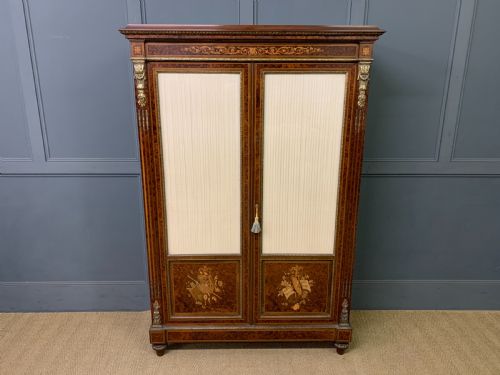

Empire Display Cabinet
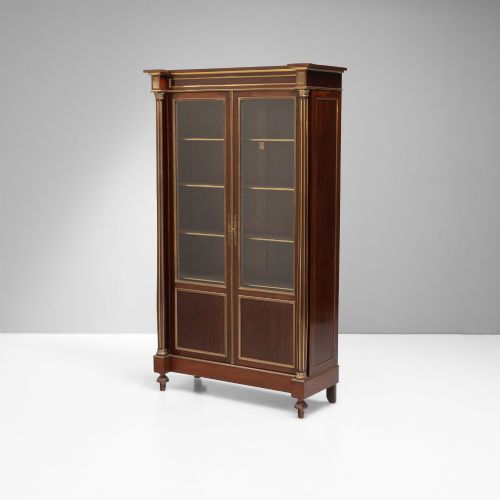
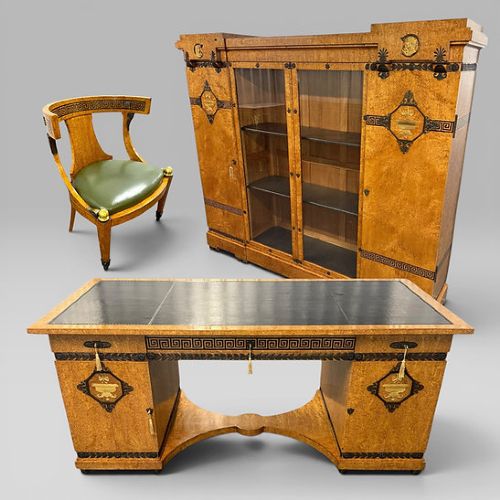
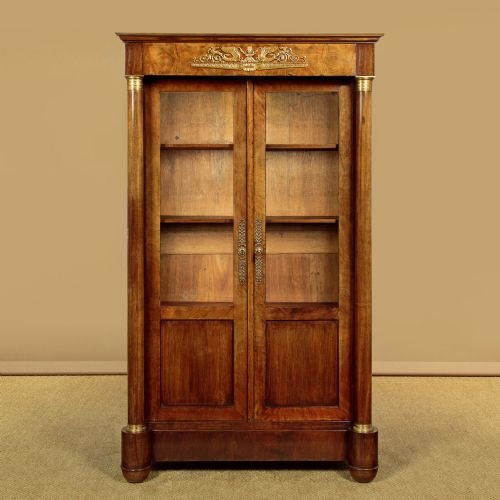
These empire display cabinet pieces bring classical symmetry and glazed storage to a room, constructed from rich woods and mounted with bright metal.
Empire Display Cabinet
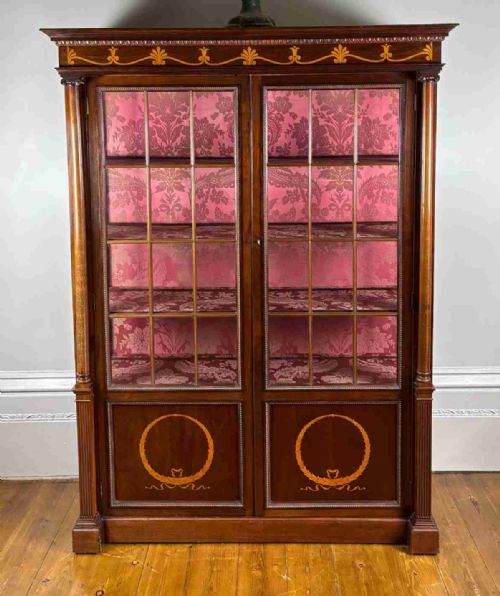
When a buyer seeks an empire display cabinet, they encounter formal nineteenth-century storage pieces designed to showcase books, porcelain, and curated objects behind glass. The pieces on this page span the nineteenth century, including Georgian examples, Victorian items, and later revival styles influenced by French design.
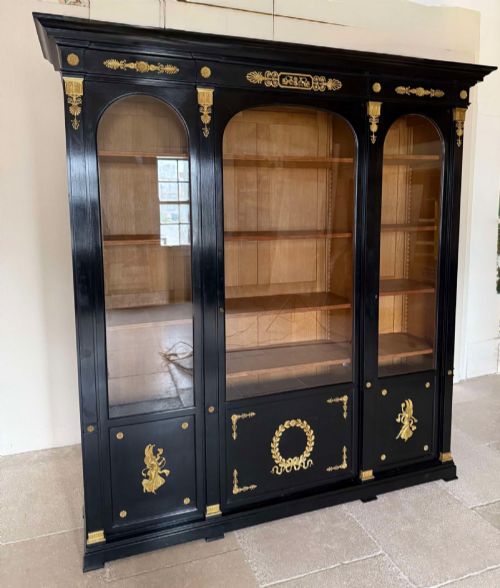
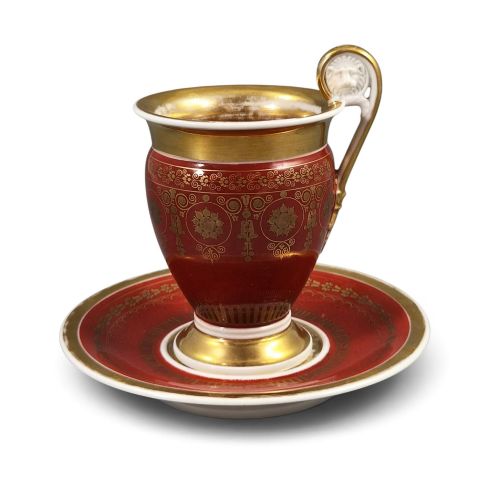
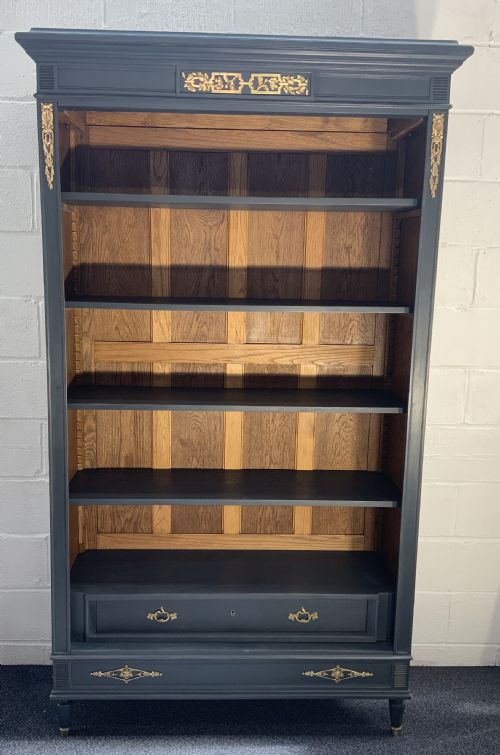
Most entries take the form of tall bookcases, side cabinets, and open bookcases constructed from mahogany, rosewood, and ebonised wood. Alongside these primary storage forms, smaller items such as cabinet cups, saucers, and decorative plates appear under the wider classification.
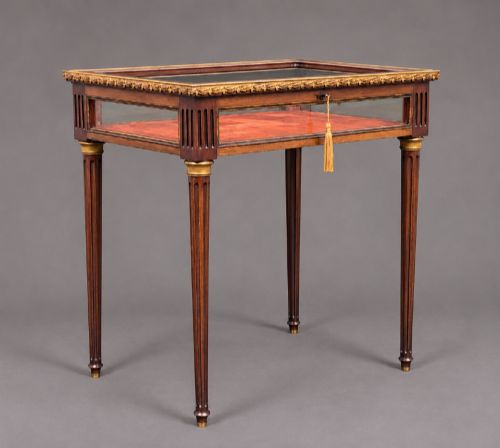
Origins heavily lean toward French workshops, with descriptors pointing to Napoleon III, Neoclassical, and Regency aesthetics. Buyers will find both imposing architectural bookcases and neat, glazed bijouterie glass cases suited to intimate collections.
Materials and Construction Methods
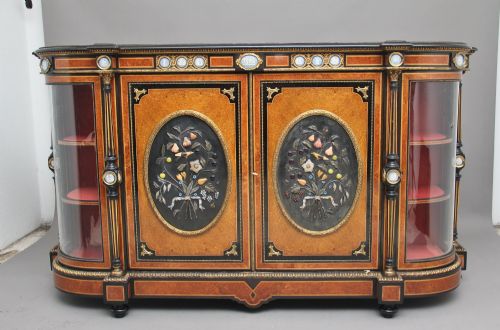
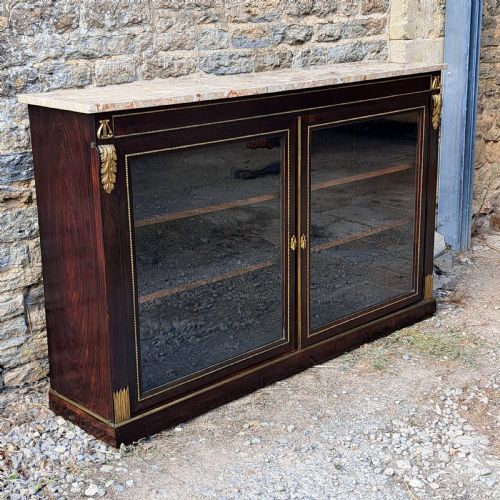
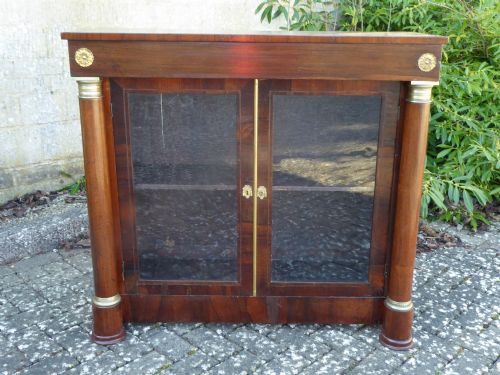
Cabinet makers utilised dense timber foundations of mahogany, rosewood, amboyna, and burr maple, often applying ebonisation or simulated paint finishes to alter the natural grain. These carcasses support glazed doors and open shelving configured for the display of bound volumes and ornaments.
Gilt bronze and ormolu mounts provide structural accenting and classical motifs, complemented by brass embellishments and gilt metal framing. Sevres style porcelain plaques and hand-painted porcelain components are integrated into cabinet surfaces as decorative panels.
Marquetry techniques, such as boulle work, appear on select nineteenth-century bibliotheques, combining tortoiseshell and brass inlay within dark timber surfaces. Structural glass panels are fitted into doors to protect contents while maintaining visibility from all angles.
Empire Display Cabinet Retail Price Guide 2026
Typical asking prices for empire display cabinet among the pieces listed under this phrase on Sellingantiques today, from the lower quarter to the upper quarter. They describe what is for sale here now, not the wider market.
Listings incorporate nineteenth-century periods alongside revival eras up to 1910, spanning oak, mahogany, glass, and marble.
Distinctions in Quality and Execution
Quality rests upon the crispness of the cast ormolu mounts and the precision with which they are secured to the timber carcass. Superior pieces display finely chased gilt bronze details that retain their definition, whereas lesser items rely on simpler, flatter metal ornamentation.
The choice and figuring of the timber foundation dictate the visual weight of the piece, with dense plum pudding mahogany, burr maple, and rich rosewood commanding attention. Cabinetwork that exhibits tight joinery, balanced grain matching, and intact marquetry sits at the upper end of the range.
The integration of decorative elements, such as hand-painted porcelain plaques or lion mask handles, separates standard utility furniture from high-status salon pieces. Original glazing bars and well-fitted adjustable shelving further indicate careful initial construction.
Mercier Frères·Darte Brothers
The Empire Display Cabinet Glossary
- Ormolu
- Gilded bronze used for decorative mounts and furniture embellishments. This technique was widely applied during the nineteenth century to highlight classical architectural lines.
- Bibliotheque
- A large freestanding bookcase or cabinet designed for the storage of libraries. These pieces often feature extensive glass doors and elaborate wood veneers.
- Ebonised
- Wood treated to imitate ebony through staining or painting. The process creates a dense, dark finish popular in nineteenth-century French cabinetmaking.
- Bijouterie
- A glass-topped or glazed cabinet intended for the display of small valuables and curiosities. Such cases protect delicate items while offering all-round visibility.
- Boulle marquetry
- An elaborate inlay technique utilising brass and tortoiseshell set into a dark wood ground. It is named after the French furniture maker André-Charles Boulle.
Empire Display Cabinet: Frequently Asked Questions
What is an empire display cabinet?
An empire display cabinet is a formal storage piece characterised by classical proportions, glazed doors, and metal mounts. These items were designed to house books, porcelain, and decorative objects in domestic salons.
Origins trace back to French and English workshops of the nineteenth century, incorporating styles from the Regency and Napoleon III periods. Their enduring appeal lies in the combination of architectural dignity and practical display space.
How do I date an empire display cabinet?
Dating relies on identifying the primary timbers, construction methods, and decorative motifs present on the piece. Earlier nineteenth-century examples often feature figured mahogany, rosewood, or burr maple paired with hand-chased ormolu.
Later nineteenth-century and revival pieces from around 1890 or 1910 may show machine-cut veneers and different standards of brass mounting. Comparing the hardware and internal shelving construction to documented cabinetmaking trends helps narrow the era of production.
Where were these cabinets originally used?
These cabinets served primarily in formal rooms such as libraries, drawing rooms, and studies. They provided dust-free storage for leather-bound volumes and prized collections.
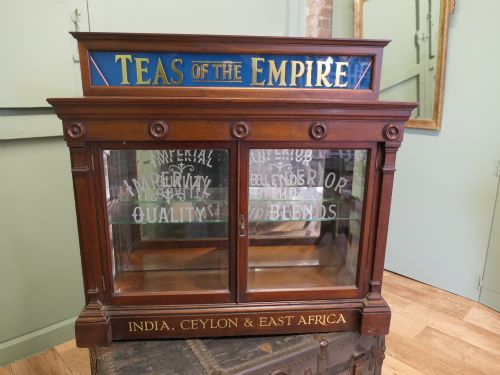
Smaller variants, including tea cabinets and glazed bijouterie cases, found a place in morning rooms and specialised tea rooms for entertaining guests. Today, they adapt readily to modern living spaces as focal storage units.
How do I care for mahogany and ormolu?
Maintenance requires keeping timber surfaces away from direct sunlight and sudden temperature shifts to prevent wood splitting. Regular dusting with a soft, dry cloth preserves the finish without building up residues.
Ormolu mounts should be cleaned gently without abrasive polishes that could strip the original gilding. Care must be taken around glass panels and delicate porcelain plaques during routine cleaning.