
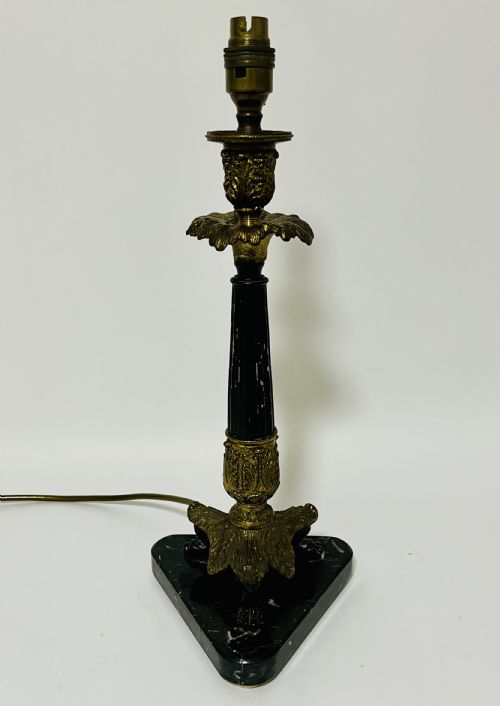


Empire Desk Lamp
An empire desk lamp brings neoclassical proportion and warm metalwork to a workspace.
Empire Desk Lamp
When you search for an empire desk lamp, you encounter lighting fixtures shaped by French Empire, Regency, and Louis XVI styles originating mainly from the nineteenth century.
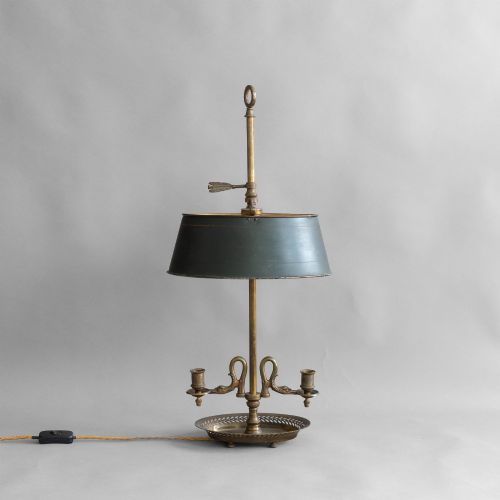
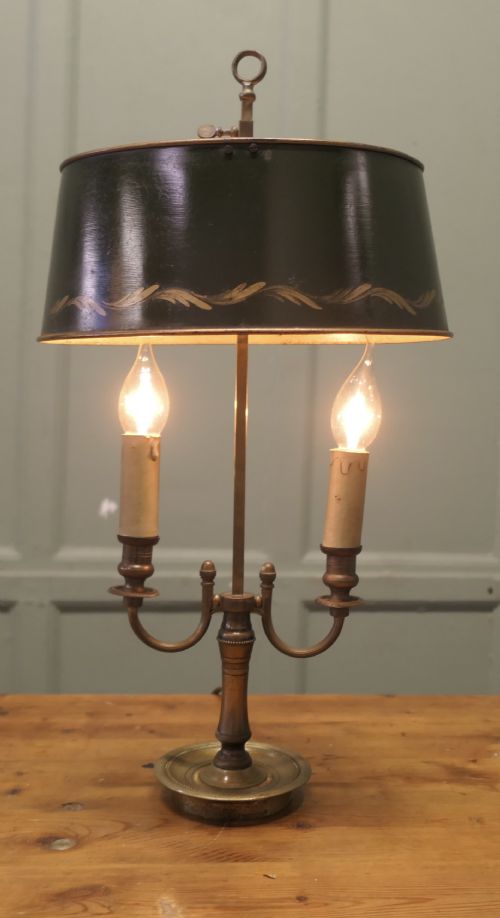
The most common versions on this page combine bronze, ormolu, and brass with painted toleware shades, often taking the form of bouillotte lamps or classical columns.
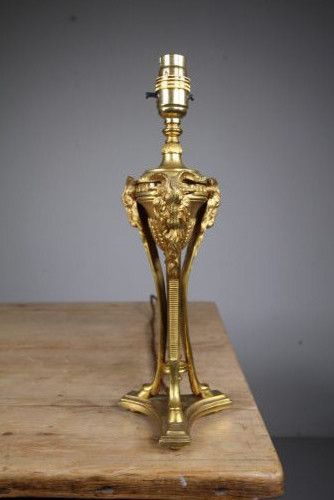
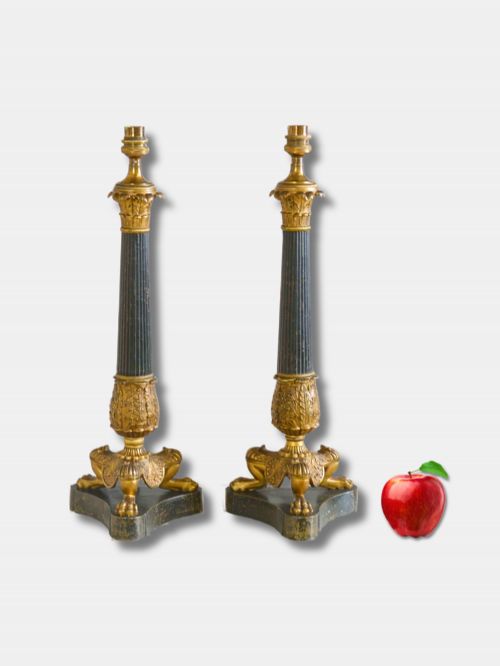
Makers drew on ancient Greek and Roman motifs, resulting in pieces supported by lions paw feet or adorned with rams heads and classical masks.
How they were made
Craftsmen utilised cast bronze and ormolu for the primary structural mounts, combining fire gilding with dark patinated bronze to create sharp tonal contrast.
Bases frequently incorporate white or dark marble plinths, while shades are constructed from painted toleware or fabric silk supported by brass frames.
Several columns stand atop loyal lions paw feet, ready to guard your desk against disorderly paperwork.
What varies in quality
The standard of chasing in the bronze and ormolu work dictates the visual depth of the ornamentation, separating crisp hand-finished mounts from softer secondary castings.
Integration of materials distinguishes the range, seen in the harmonious weight of a solid marble plinth paired with heavy fire-gilded components rather than plated alternatives.
Jean-Démosthène Dugourc·Messenger
The Empire Desk Lamp Glossary
- Ormolu
- Gilded bronze produced through mercury gilding or modern electroplating techniques. This surface treatment provides the characteristic bright golden finish found on classical mounts.
- Bouillotte lamp
- An adjustable desk lamp featuring a central shaft, multiple candle arms, and a distinctive toleware shade. It takes its name from an eighteenth-century card game.
- Toleware
- Enamelled and painted sheet metal utilised primarily for lamp shades and canisters. The painted finishes commonly appear in dark green or black with gilded accents.
- Neoclassical
- An artistic movement drawing inspiration from the classical art and architecture of ancient Greece and Rome. This aesthetic dominates the decorative vocabulary of the period.
- Patina
- The surface sheen and oxidation developed on metal over decades of handling and exposure. Collectors value undisturbed patination as evidence of age.
Empire Desk Lamp: Frequently Asked Questions
What is a bouillotte lamp?
A bouillotte lamp is a traditional desk light featuring a central metal shaft holding two or three candle arms beneath an adjustable painted tole shade.
Originally designed for card players to direct light downward onto the table, these lamps function effectively as focused task lighting on modern desks.
How do I identify a nineteenth-century piece?
Nineteenth-century lighting displays heavy cast bronze bodies, hand-chiseled ormolu mounts, and natural patination across the metal components rather than uniform modern plating.
Construction methods often reveal hand-turned threaded fixings and heavy marble bases rather than lightweight composite substitutes.
Where were these lamps made?
The majority of these lighting pieces originate from French workshops adhering to Empire and Louis XVI design canons, alongside English interpretations from the Regency era.
French pieces frequently incorporate detailed figural elements such as cherubs, sphinxes, or classical columns resting on marble plinths.
How do I care for antique brass and bronze?
Maintain the metal surfaces by dusting gently with a dry, soft cloth to prevent the accumulation of abrasive particles without stripping the historic patina.
Avoid chemical polishes and abrasive cleaners entirely, as these substances remove the original fire gilding and aged surface character.