





Empire Clock Set
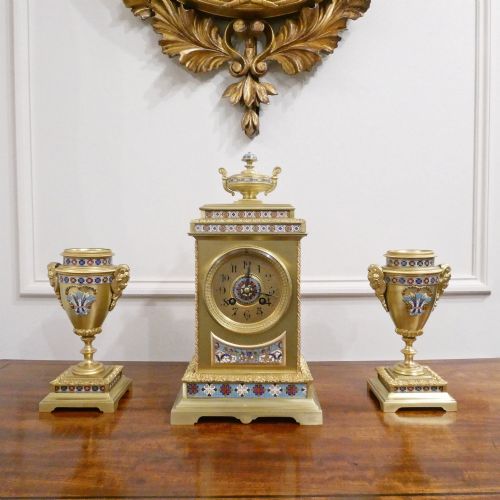
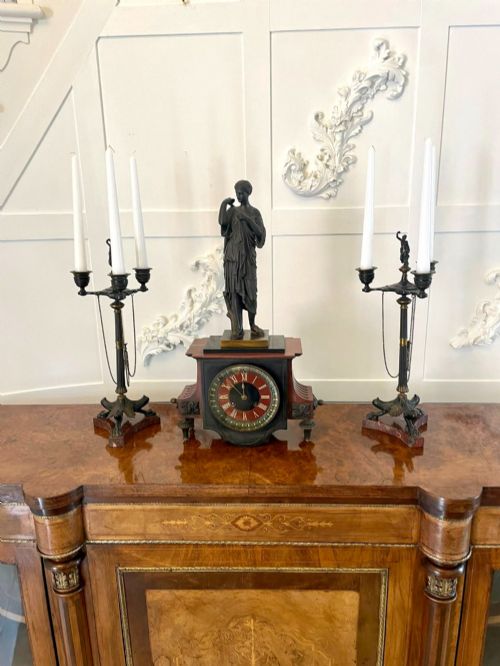
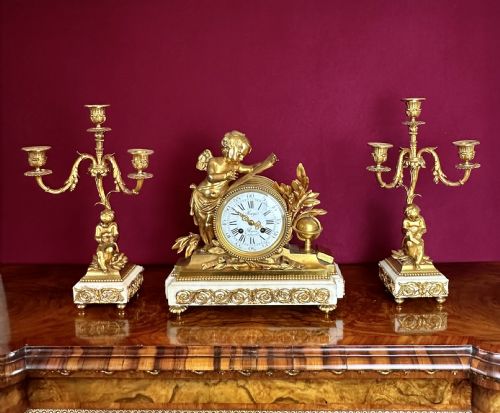
These impressive empire clock set pieces combine monumental French bronze and marble with classical styling to anchor a mantelpiece.
Empire Clock Set
An empire clock set groups a central mantel clock with matching side ornaments like urns or candelabra, forming a complete garniture for a room. The items found here span the nineteenth century, including Victorian pieces, Regency creations, and Napoleon III designs.
Most examples originate from French workshops, drawing on Neoclassical, Louis XVI, and French Empire styles. You will frequently encounter heavy marble bases paired with striking metalwork.
The object types range from full clock garniture sets to individual mantel clocks accompanied by side pieces. These assemblies dominate the formal decorative metalwork on display.
Materials and construction
Foundries cast figures and mounts in bronze, patinated bronze, and brass, often finishing surfaces with rich ormolu or gilding. This metalwork provides the heavy, sculptural detail central to each garniture.
Cuts of marble, siena marble, onyx, and glass form the substantial plinths and bodies that support the heavy metal components. Enamel dials provide the crisp face markings for the eight day striking movements.
Empire Clock Set Retail Price Guide 2026
Typical asking prices for empire clock set among the pieces listed under this phrase on Sellingantiques today, from the lower quarter to the upper quarter. They describe what is for sale here now, not the wider market.
Judging the workmanship
The selection of the marble and the solidity of the matching garniture pieces dictate the overall presence of the set. Heavier stone bases and balanced side ornaments elevate the composition.
VINCENTI of PARIS·Deniere, Paris
The Empire Clock Set Glossary
- Garniture
- A set of matching ornamental vases, urns, or candelabra designed to flank a central clock on a mantelpiece.
- Ormolu
- Gilded bronze achieved through the application of a mercury and gold amalgam, creating a bright metallic finish on nineteenth-century mounts.
- Patinated bronze
- Metal treated to produce a dark, protective surface layer that contrasts with bright gilded highlights.
- Siena marble
- A distinctive yellow-orange marble with dark grey veining, frequently utilised in nineteenth-century decorative stonework.
- Napoleon III period
- The French design era spanning the mid to late nineteenth century, characterised by eclectic revivals of earlier imperial styles.
Empire Clock Set: Frequently Asked Questions
What is an empire clock set?
An empire clock set is a matching decorative group featuring a central mantel clock accompanied by two side ornaments, such as urns or candelabra.
These pieces were designed to sit together on a mantelpiece or console table to create a balanced, formal display in nineteenth-century interiors.
How do I date an empire clock set?
Dating relies on examining the combination of materials, such as siena marble or onyx, alongside the specific revival style visible in the bronze casting.
Maker signatures on the movement backplates or dials, combined with the presence of eight day striking mechanisms, help narrow down the decade of production.
Where should I place a clock garniture?
These large assemblies require a deep mantelpiece, sideboard, or large table capable of supporting the combined weight of the marble and bronze.
Keep the central clock positioned firmly between the matching side pieces to maintain the symmetrical arrangement intended by the maker.
What maintenance do these clocks need?
Mechanical movements require professional cleaning and oiling every few years to keep the eight day striking mechanism functioning accurately.
Dust the bronze and marble gently with a soft dry cloth, avoiding harsh cleaning agents that can damage the delicate ormolu surface.