



Empire Brass Sconces
Empire brass sconces bring commanding classical proportions and warm metallic lustre to a room, offering functional wall illumination rooted in nineteenth-century design.
Empire Brass Sconces
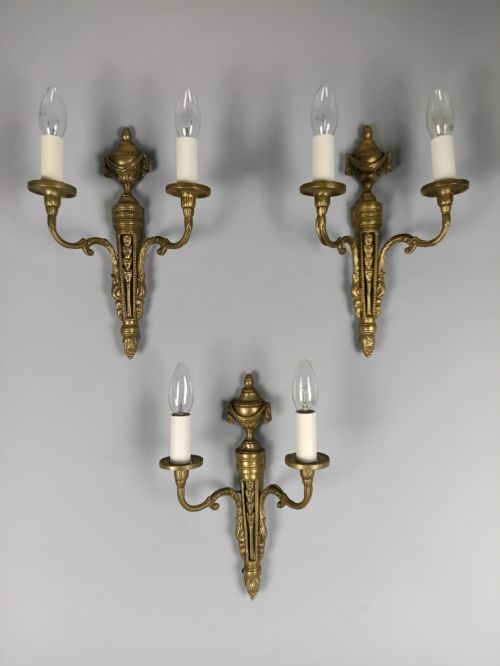
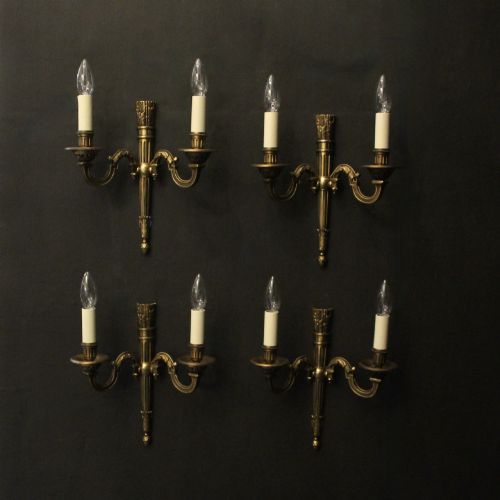
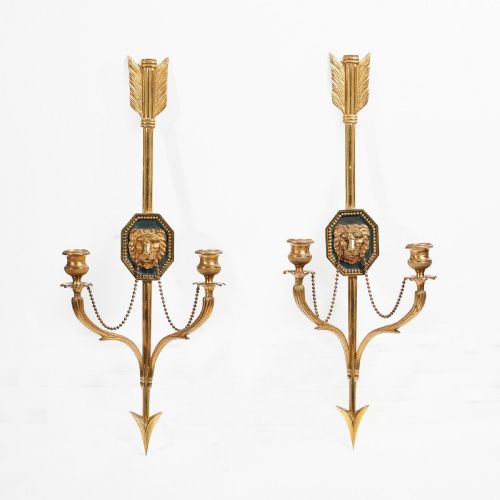
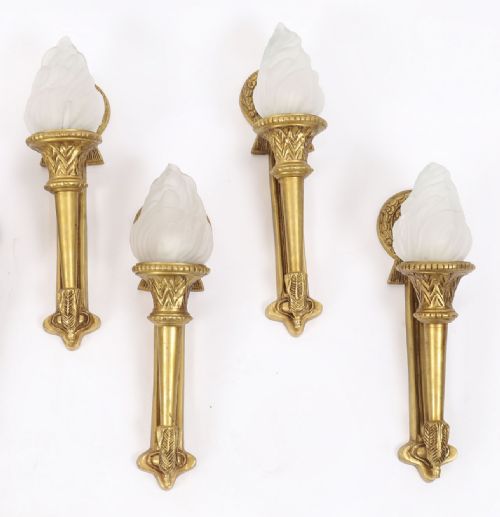
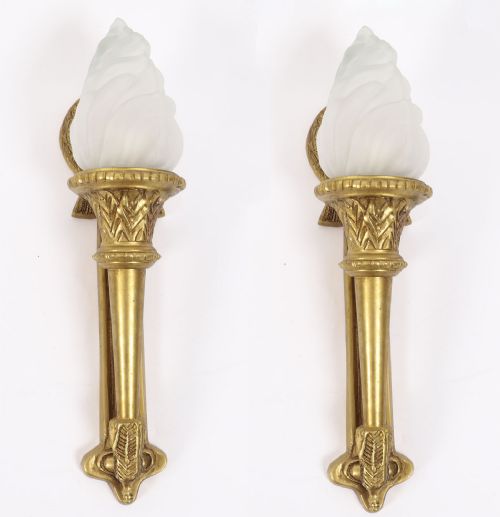
When you search for empire brass sconces, you encounter wall-mounted lighting fixtures heavily influenced by French Empire, Neoclassical, and Regency styles. These pieces range from twin-arm and triple-arm configurations to specialised forms like flaming torch designs and girandoles.
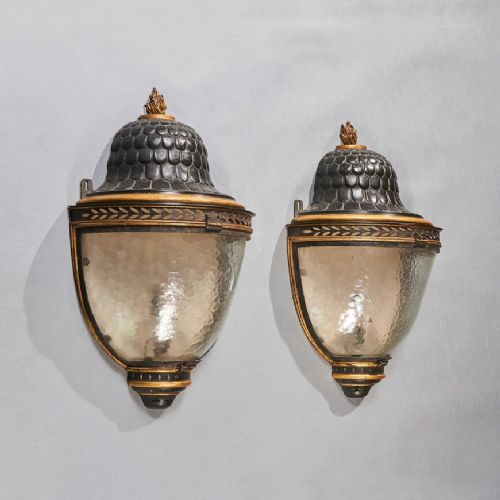
The selections span the nineteenth century through the early twentieth century, taking in Edwardian interpretations and later 1930s revivals. While the majority function as wall lights, related forms such as carriage lights, wall lanterns, and even mirrors with brass candle holders appear among the items.
Materials and Construction
Makers utilised a combination of cast brass, bronze, and ormolu, frequently applying surface gilding to highlight ornamental details. Patinated metal and toleware also feature in specific regional designs to create visual contrast against polished metallic elements.
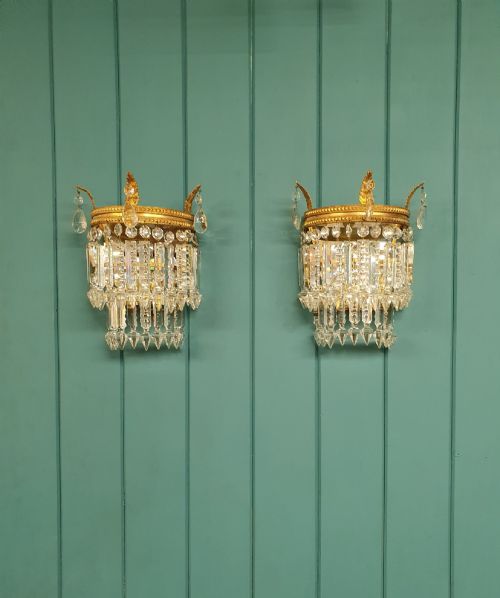
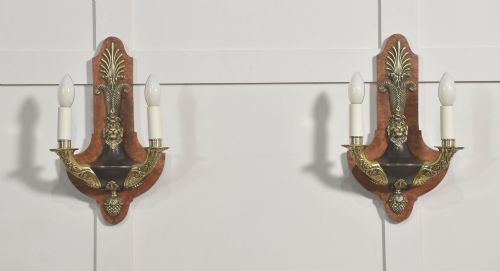
Glass elements such as cut crystals, frosted glass panels, and tent drops integrate directly into the metal armature to catch and refract light. Heavier items incorporate structural support like white marble or burr walnut to back the metalwork.
Components were cast, chased, and joined mechanically or through pinning, allowing for complex multi-branch formations like twin-branch and triple-arm wall lights. The integration of glass drops and faceted crystals required precise wire-wrapping or pin-setting by hand.
Empire Brass Sconces Retail Price Guide 2026
Typical asking prices for empire brass sconces among the pieces listed under this phrase on Sellingantiques today, from the lower quarter to the upper quarter. They describe what is for sale here now, not the wider market.
Lion heads glare stubbornly from heavy nineteenth-century wall brackets, keeping an eternal, metallic watch over the hallway.
Evaluating Quality
The distinction between standard output and finer examples rests on the crispness of the casting and the depth of the chasing. Superior pieces display sharply defined acanthus leaves, lion heads, or putti, whereas lesser items show softened details from worn moulds.
Surface finishing dictates visual weight, distinguishing heavy fire-gilded ormolu and mercury-gilded bronze from simpler lacquered brass or basic paint applications. The integrity and completeness of original glass components, such as cut crystal drops or frosted shades, heavily influence the overall standard of a fixture.
The Empire Brass Sconces Glossary
- Ormolu
- Gilded bronze, where a layer of gold amalgam is applied to a bronze base and heated to drive off the mercury. This technique produces a durable, rich metallic lustre characteristic of high-end classical lighting.
- Girandole
- A branched wall light or sconce that incorporates mirrors or glass to reflect and multiply the light cast by candles or lamps. They often feature elaborate gilt bronze frames.
- Applique
- A French term frequently used interchangeably with wall sconce or wall light, mounted directly onto vertical surfaces. These fixtures typically display decorative backplates.
- Tole Peinte
- Painted sheet metal, often tin or steel, utilised in shades and backplates to introduce colour such as green or dark tones to a lighting fixture. It provides a contrast to exposed brass elements.
- Cheval Mirror
- A freestanding mirror mounted in a frame that allows it to swivel, sometimes incorporating attached candle holders or sconces made of brass.
Empire Brass Sconces: Frequently Asked Questions
How do I install antique sconces safely?
Professional rewiring is standard practice for older fixtures to meet modern electrical safety standards while preserving original backplates and mounting points. Qualified electricians can adapt internal wiring without altering the exterior brass or bronze structure.
Mounting requires secure anchoring into wall studs or appropriate masonry fixings due to the substantial weight of cast bronze and glass components. Ensuring the bracket distributes the load correctly protects both the wall and the antique metalwork.
Were these fixtures originally meant for candles?
Many nineteenth-century examples were designed exclusively for wax candles before being converted to electricity during later twentieth-century updates. The presence of drip pans or original sockets indicates this early functional history.
Later iterations from the 1920s and 1930s were frequently manufactured with dual purposes or early electrical wiring in mind. Inspecting the interior of the nozzles reveals whether they retain original candle tubes or modern bulb fittings.
How should I clean polished brass and ormolu?
Dusting with a dry, soft microfiber cloth prevents the accumulation of particulate matter that can dull gilt surfaces over time. Avoid abrasive commercial polishes, which strip away thin layers of historical gilding on ormolu and bronze.
For stubborn grime, a gentle wipe with a damp cloth followed by immediate drying is sufficient. Preserving the natural patination maintains the visual integrity of nineteenth-century metalwork.
What defines the French Empire style in lighting?
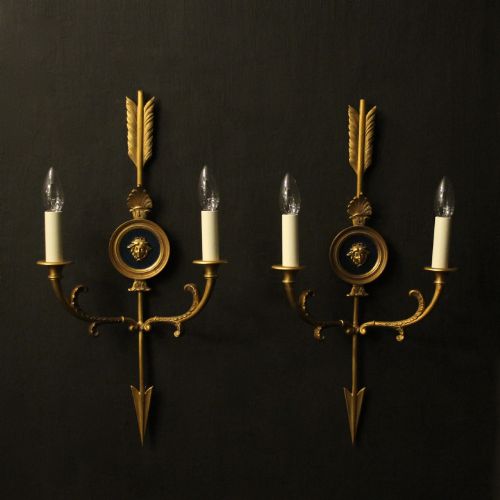
The aesthetic draws heavily from classical Roman and Greek motifs, featuring symmetrical arrangements, military trophies, wreaths, and palmettes. These design elements reflect the neoclassical revival popular during the early nineteenth century.
Materials are deployed to project authority and grandeur, using heavy gilt bronze alongside dark patinated metal. This creates a striking visual contrast typical of formal reception rooms of the period.