




Empire Accent Table
These pieces bring neoclassical weight and polished marble into a room, making an empire accent table a striking focal point for interiors.
Empire Accent Table
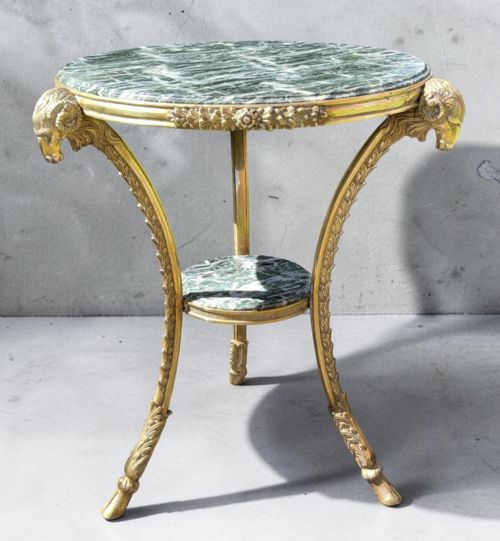
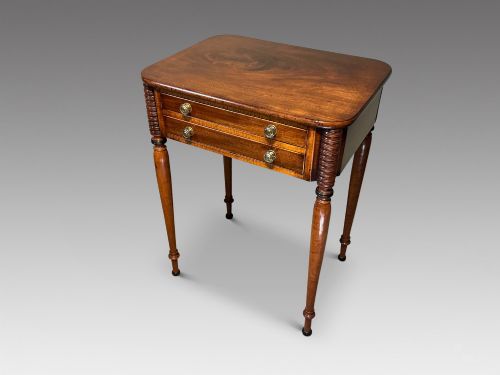
An empire accent table encompasses circular gueridons, marble-topped side tables, and occasional stands shaped by French Neoclassical, Regency, and Napoleon III design. Buyers search for these pieces to introduce classical architectural proportion and dark timber into sitting rooms or hallways.
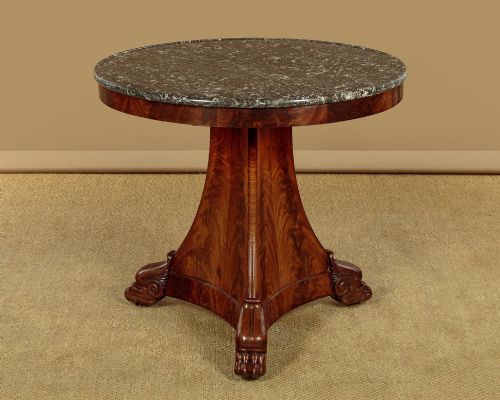
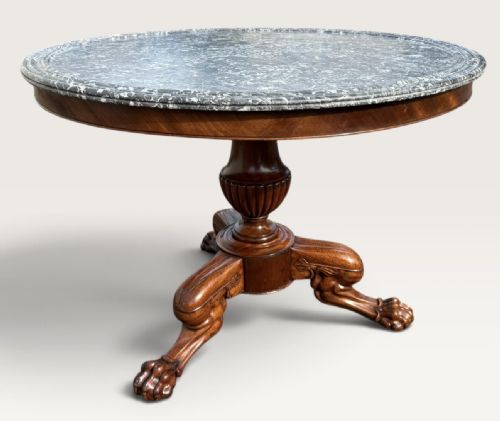
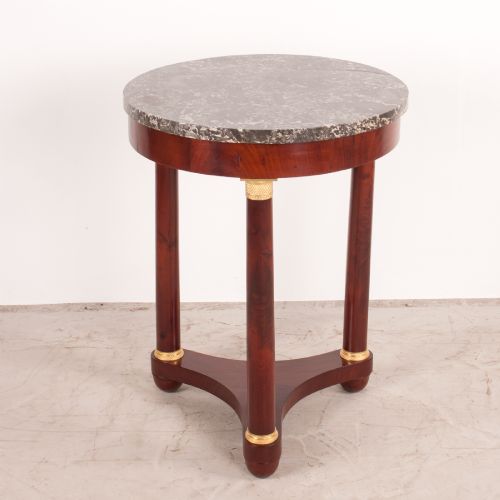
The version met most frequently on this page is the 19th century French gueridon, typically featuring a circular marble top resting on a tripod or columnar mahogany base. Alongside these stand occasional tables, console tables, and bronze-mounted table lamps drawn from the same design vocabulary.
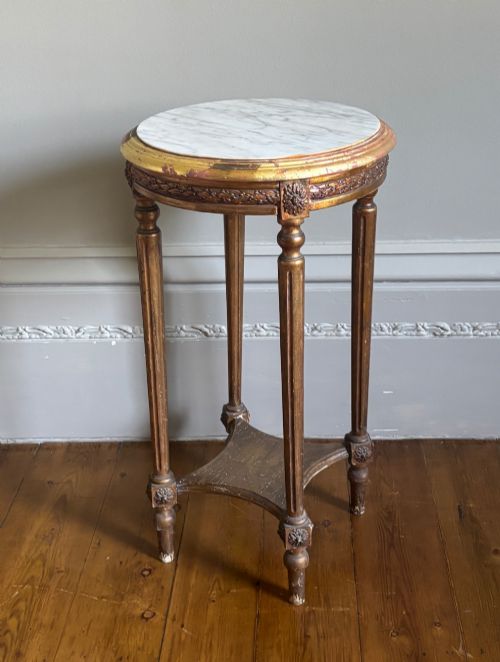
Origins stretch across France, Sweden, Italy, and England, reflecting a widespread European adoption of classical motifs from the early nineteenth century onwards. Swedish examples often favour birch, while French and English pieces rely heavily on flame mahogany, ormolu, and giltwood.
Materials and Construction Techniques
Makers constructed the primary carcasses using dense timbers such as mahogany, birch, rosewood, and walnut, frequently selecting flame veneers for visual depth. Tops often incorporate inset white or black marble slabs, while smaller surfaces utilise canework or marquetry inlay.
Cast bronze and ormolu mounts provide the characteristic classical detailing, taking the form of rams heads, swans, dolphins, and classical masks. Guilders applied leaf gold to carved wooden frames, and turners shaped central pedestals to support heavy stone or timber tops.
Empire Accent Table Retail Price Guide 2026
Typical asking prices for empire accent table among the pieces listed under this phrase on Sellingantiques today, from the lower quarter to the upper quarter. They describe what is for sale here now, not the wider market.
Listings feature 19th century pieces alongside later revivals from 1920, incorporating mahogany, marble, and ormolu.
Craftsmanship and Material Selection
Quality rests primarily in the crispness of the bronze and ormolu casting, where finely chased details on rams heads and mounts outshine soft, flat castings. Timber selection also divides the range, with dense, well-figured flame mahogany or burr walnut elevating a piece above plain secondary woods.
The integrity of the structural joinery and the weight of the fitted marble top indicate superior workshop practice. Original mercury gilding and well-preserved patination separate pieces retaining their intended finish from later alterations.
The Empire Accent Table Glossary
- Guéridon
- A small French round table, typically supported by a single central pillar or three legs. These tables often feature inset marble tops and bronze mounts.
- Ormolu
- Gilt bronze produced by applying a mixture of gold and mercury to a bronze base and firing it. This technique creates a durable, golden surface seen on mounts and lamps.
- Giltwood
- Timber that has been carved and coated with a thin layer of gold leaf. It appears frequently on neoclassical frames and console tables.
- Marquetry
- The art of applying pieces of veneer to a structure to form decorative patterns. Craftsmen utilised contrasting woods to create geometric or floral scenes.
- Canework
- Woven cane or rattan material utilised for lower tiers or secondary surfaces. It lightens the visual weight of heavier timber frames.
Empire Accent Table: Frequently Asked Questions
What defines an empire accent table?
These tables draw on early nineteenth century neoclassical aesthetics, marked by symmetrical forms, dark hardwoods, and classical bronze mounts.
They appear frequently as round gueridons with marble tops or rectangular side tables designed to anchor a room.
Where should I place a gueridon?
A round gueridon functions well as a central hall table or an occasional surface beside a chair.
The circular shape allows it to sit comfortably in spaces where rectangular furniture might obstruct movement.
How do I care for marble tops?
Marble surfaces require regular wiping with a soft, damp cloth to remove dust and prevent staining.
Avoid acidic cleaners and place protective pads under glasses to protect the polished stone from etching.
How can I tell the period?
Dating relies on timber selection, construction methods, and the quality of the bronze casting.
Nineteenth century pieces show hand-cut joinery and heavy patination on the timber and metal mounts.