



Emerald Halo Dress Ring
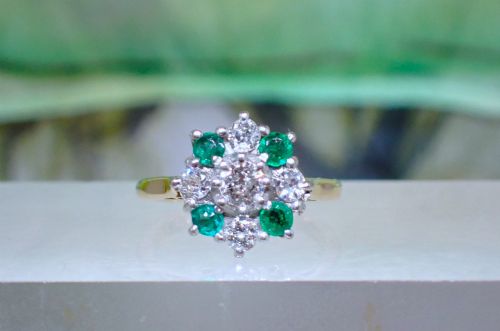
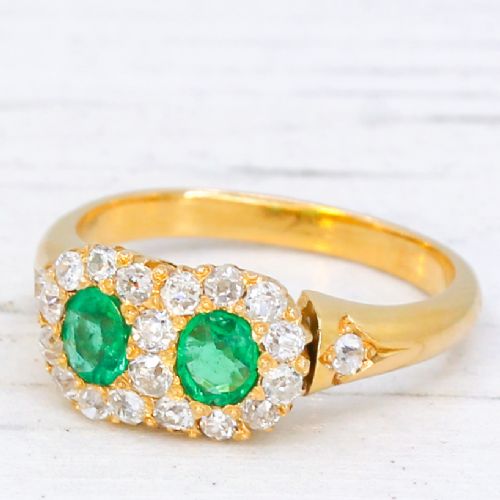
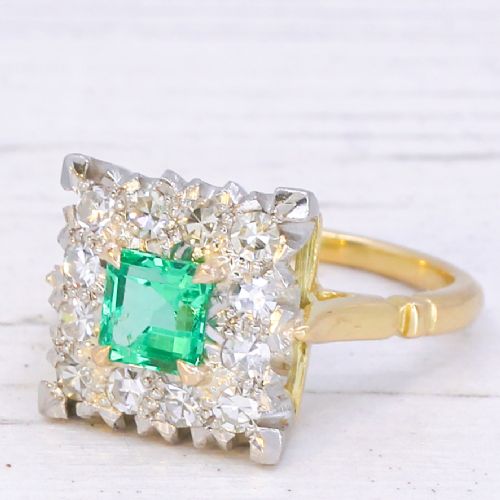
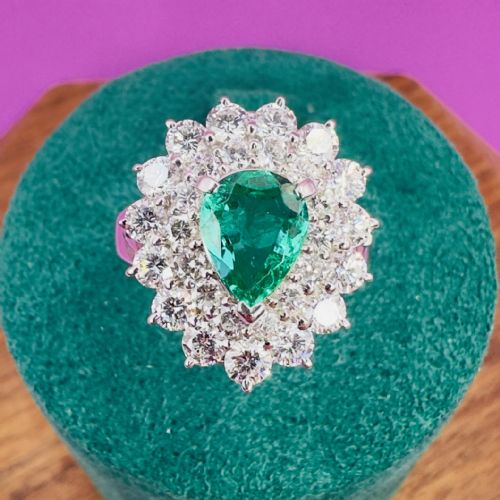
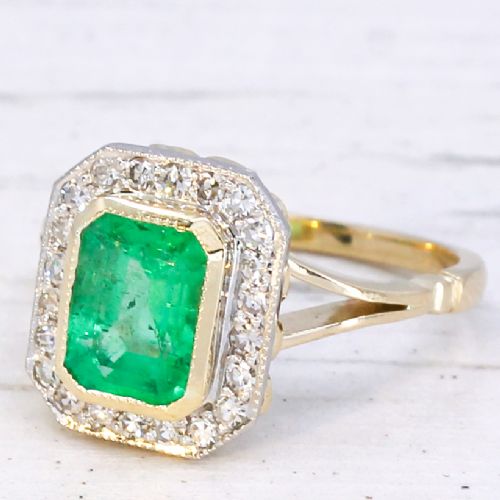
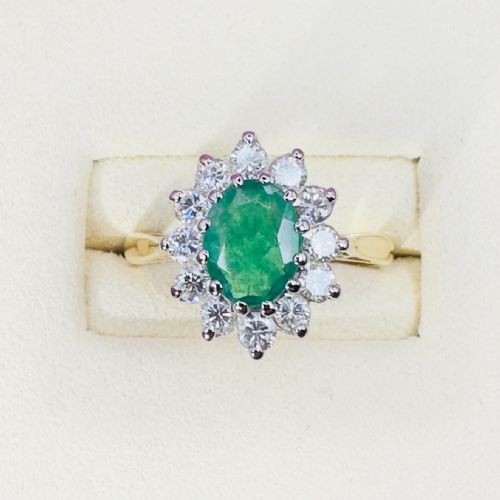
An emerald halo dress ring centres a vivid green stone within a sparkling border of diamonds, bringing immediate brilliance and character to the hand.
Emerald Halo Dress Ring
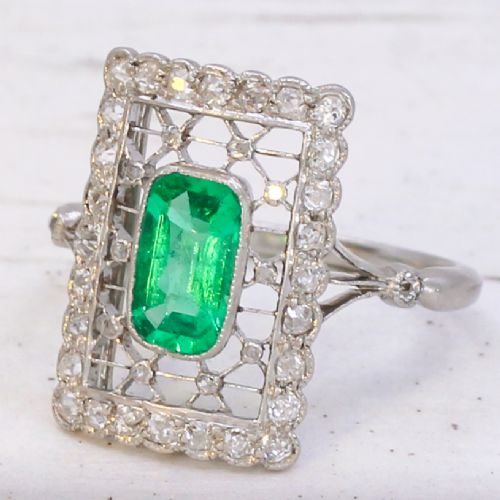
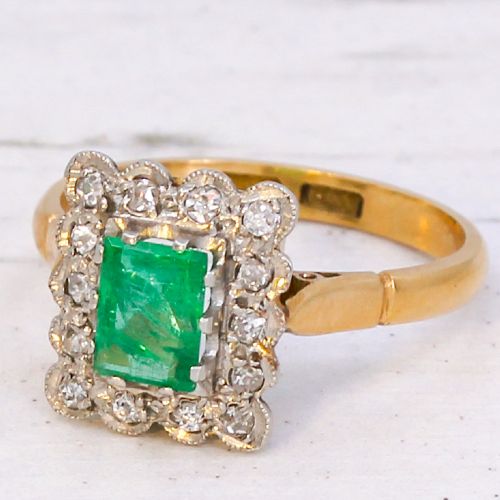
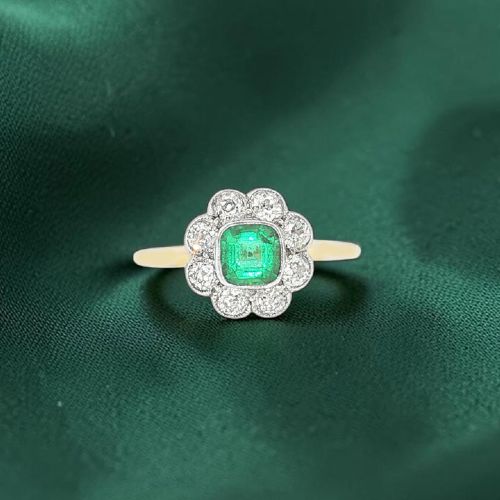
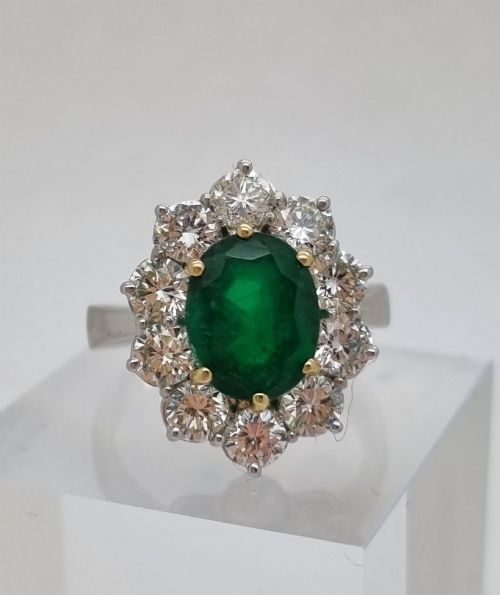
An emerald halo dress ring is fundamentally a cluster arrangement where a central green beryl is encircled by smaller diamonds or accent stones. This page offers examples stretching from Georgian and Victorian origins through Edwardian, Art Deco, and Mid-Century periods.
The most common form on this page is the cluster ring, alongside cocktail rings and traditional dress designs, utilising central stones cut in oval, pear, princess, marquis, and emerald cuts. These pieces range from delicate Edwardian mountings to substantial platinum and gold mountings from the mid-twentieth century.
Materials and construction
These rings are constructed primarily from precious metals including platinum, white gold, yellow gold, and occasional lower-carat variations, providing a robust housing for the principal gems. Stones are secured in claw settings, bezels, or integrated cluster mounts that position accent diamonds tightly around the central beryl.
The lapidary work involves distinct cutting styles such as old-cut diamonds paired with natural Colombian or Zambian emeralds, sometimes accompanied by certification detailing oil treatments. Metalwork techniques span hand-fabricated platinum frames to cast 18ct gold shanks, occasionally featuring adjustable designs or detailed shoulders.
Several rings feature secret little gallery piercings beneath the stones, letting light dance through the green beryl in ways only the wearer ever notices.
Factors that separate the finest examples
Quality rests significantly on the saturation, clarity, and origin of the central emerald, with minor or negligible oil treatments and Colombian provenance commanding particular attention from collectors. The integration and matching of the surrounding diamonds also determine the overall visual harmony of the piece.
The integrity of the metalwork, whether crisp platinum geometric lines from the Art Deco era or fluid yellow gold curves from the mid-century, dictates the standard of manufacture. Well-preserved claw settings and minimal wear to the facets of the stones elevate a ring above standard production.
The Emerald Halo Dress Ring Glossary
- Halo cluster
- A setting style where a central gemstone is completely surrounded by a ring of smaller accent stones, typically diamonds.
- Old cut
- A diamond facet configuration predating modern brilliant cuts, characterised by a smaller table, higher crown, and open culet.
- Colombian emerald
- Emerald material originating from specific mines in Colombia, historically recognised for a deep and vibrant green hue.
- Ballerina ring
- A complex cocktail ring setting featuring a central stone encircled by tapered baguettes or radiating diamond arrangements that resemble a dancer's tutu.
- Minor oil
- A laboratory grading term indicating a low level of fracture-filling clarity enhancement in an emerald using natural oils.
Emerald Halo Dress Ring: Frequently Asked Questions
How do I care for my ring?
Emeralds are softer than diamonds and require gentle cleaning with warm soapy water rather than ultrasonic machines. Avoid wearing the ring during heavy manual tasks to protect the setting.
Regular checks by a jeweller ensure the claws holding the central stone and the surrounding halo remain secure and tight.
What is the difference between a cocktail ring and a dress ring?
Cocktail rings are traditionally larger, bolder pieces designed to catch attention during evening wear. Dress rings encompass a broader range of everyday or formal styles that may be more restrained in scale.
Both categories frequently utilise the halo cluster layout seen across these specific listings.
How can I tell the period of the mounting?
Art Deco pieces display geometric platinum lines and stylised symmetry, while Edwardian examples often feature delicate millegrain work in platinum or yellow gold. Mid-century designs introduce heavier yellow gold shank constructions and distinct cluster silhouettes.
Examining the underside of the setting and the cut of the accent diamonds helps confirm the era of manufacture.
Are all emeralds treated with oil?
Many natural emeralds undergo minor or moderate clarity enhancement using colourless oils to fill natural fissures and improve transparency. Gemmological certificates often state the extent of this treatment.
Unenhanced stones with no oil present are less common and typically noted specifically in independent reports.