



Emerald Halo Cluster Ring
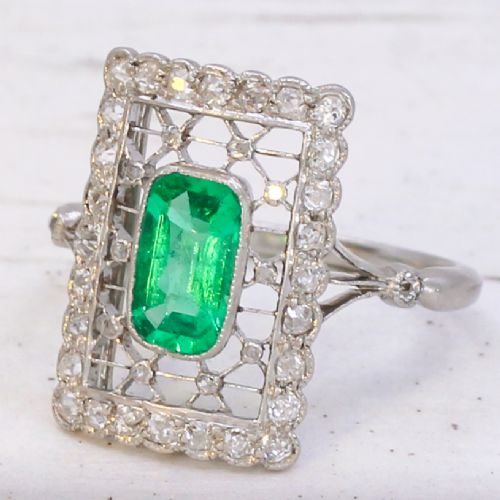
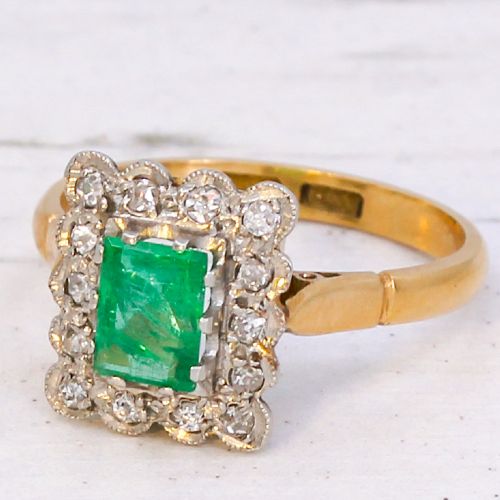
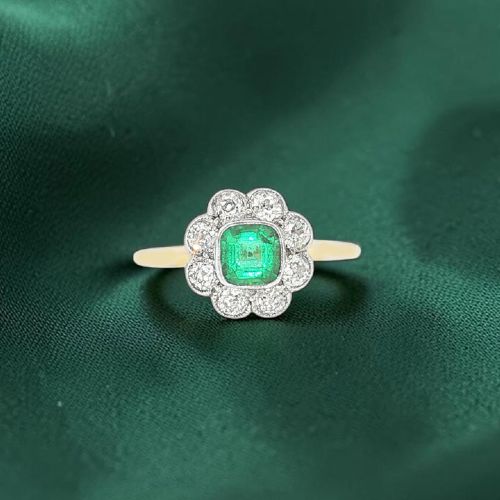
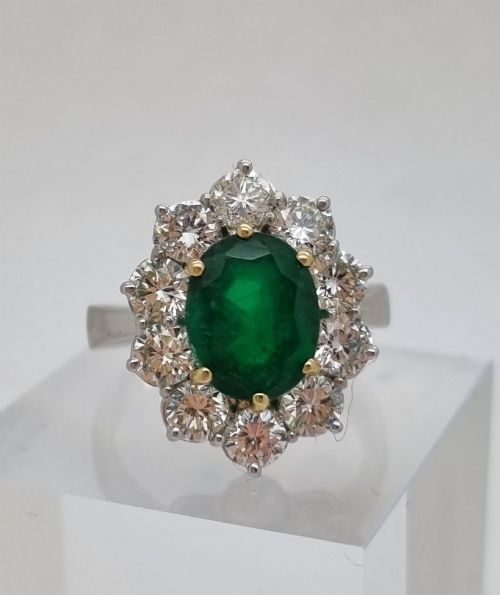
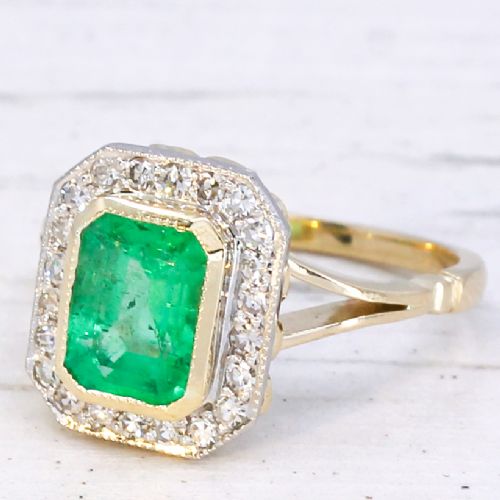
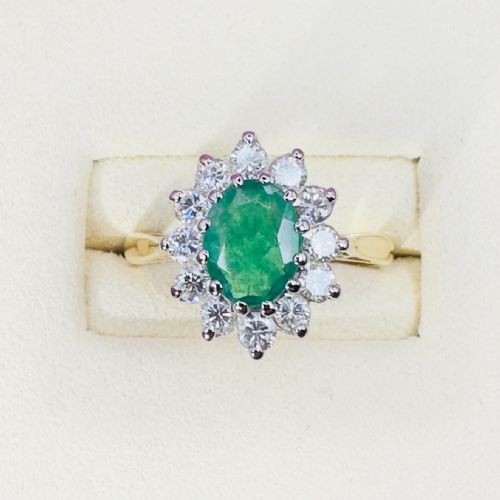
An emerald halo cluster ring brings together a central green beryl surrounded by glittering diamonds in designs spanning from the Georgian era to the mid-century.
Emerald Halo Cluster Ring
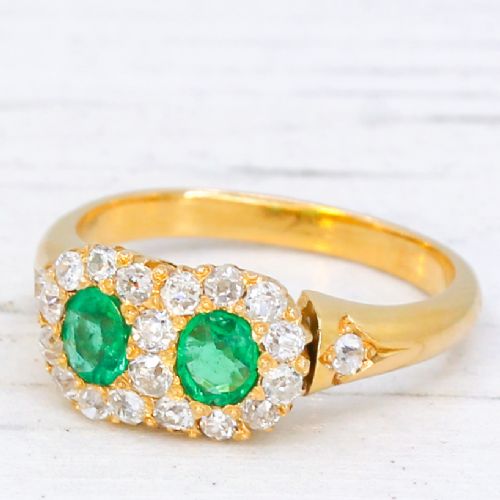
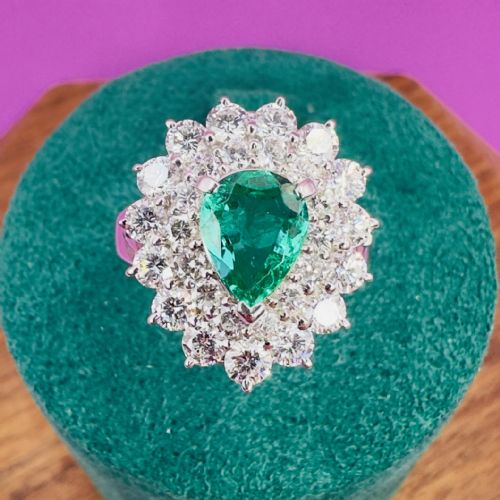
An emerald halo cluster ring positions a central green stone, most often an oval, pear, or emerald cut, directly in the middle of a frame of surrounding diamonds. These configurations operate primarily as rings, cocktail rings, and cluster rings designed for finger wear.
The selection ranges across distinct historical periods including the Edwardian era, Art Deco period, Victorian times, and the 1950s and 1960s. Buyers frequently encounter mid-century and Art Deco interpretations alongside pieces bearing origins from Colombia and Zambia.
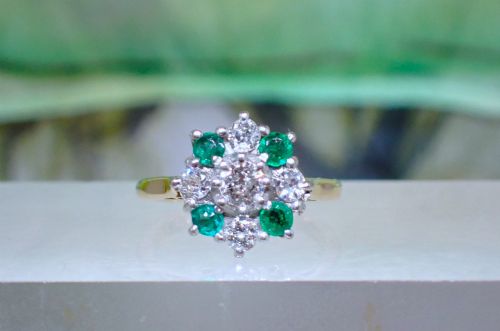
Makers set these stones into varied structural forms, from traditional round clusters to complex double halo configurations and snowflake layouts. The central emerald often possesses specific certification details regarding oil treatments, ranging from negligible to minor or no oil.
How they were made
Goldsmiths constructed these mountings utilising a combination of platinum and various gold purities, including 15ct, 18ct white gold, 18ct yellow gold, and occasional lower carats like 9ct and 14ct. Platinum proved particularly common during the Art Deco period for securing intricate stone arrangements safely.
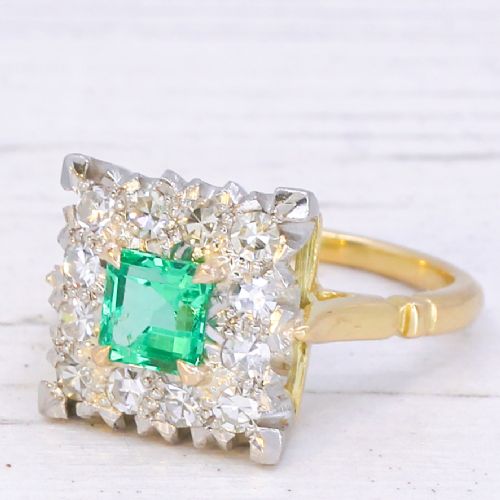
The diamond surrounds utilise old cut, brilliant cut, and var-cut stones set closely around the central beryl to maximise light reflection. Jewelers shaped the central emeralds into distinct geometric profiles such as emerald cuts, oval cuts, marquis cuts, and princess cuts before mounting them into the metal basket.
Materials utilised across the current selection include platinum, 18ct yellow gold, 18ct white gold, and occasional examples in 9ct and 15ct gold.
What varies in quality
The quality of an emerald halo cluster ring depends heavily on the saturation and clarity of the central beryl, particularly when natural Colombian origins and specific oil treatment classifications are present. Stones possessing minimal enhancement and deep natural green colour command greater regard.
The proportion and matching of the surrounding diamond melee significantly influence the overall standard of the piece. Masterful metalwork in platinum or high-carat gold, evidenced by secure claw settings and balanced geometric symmetry, separates exceptional examples from standard production.
The Emerald Halo Cluster Ring Glossary
- Cluster ring
- A ring design featuring a central gemstone encircled by a group of smaller surrounding stones. This configuration maximises visual spread on the hand.
- Halo
- A concentric ring of pavé or prong-set smaller stones surrounding a larger central gemstone. It serves to optically enlarge the main beryl.
- Old cut
- A diamond facet arrangement typical of antique and Edwardian jewellery, characterised by a smaller table, higher crown, and open culet. These stones exhibit a distinctive chunky light return.
- Ballerina ring
- A complex cluster style where tapered baguette or brilliant cut diamonds radiate outwards like a dancer's tutu. This form gained prominence during the mid-century period.
- Columbian emerald
- Beryl sourced from specific mines in South America known for distinct trace elements producing a vivid green hue. These stones frequently hold certification regarding clarity enhancements.
Emerald Halo Cluster Ring: Frequently Asked Questions
What is an emerald halo cluster ring?
An emerald halo cluster ring is a finger ornament featuring a central green emerald framed by a border of smaller diamonds. These pieces appear in various historic styles from the Georgian period through to the mid-century.
The central stone is typically mounted in gold or platinum, utilising settings designed to protect the softer beryl while highlighting the surrounding diamond border.
How do I identify the period of a ring?
Dating relies upon examining the mounting techniques, metal choices, and diamond cut styles employed in the construction. Art Deco pieces often utilise platinum with geometric arrangements, while Edwardian examples display lighter millegrain detailing.
Mid-century and 1950s iterations introduce heavier gold bands and specific cluster variations like ballerina or double halo forms. Certification papers often provide further documentary evidence of the era.
Are emerald treatments important?
Treatment descriptions on certification indicate whether natural oils or resins have filled the microscopic fissures within the emerald. Classifications range from negligible and minor oil to no oil.
Stones with minimal or no oil enhancement are less common and generally attract greater interest from collectors of fine antique jewellery.
How should I care for my ring?
Emeralds require gentle handling due to their natural internal characteristics and slightly lower hardness compared to diamonds. Avoid ultrasonic cleaning cleaners and harsh chemical dips which might strip natural oils from the stone.
Regular inspection of the claws by a professional jeweller ensures the central beryl and surrounding diamond halo remain secure within their platinum or gold mount.