
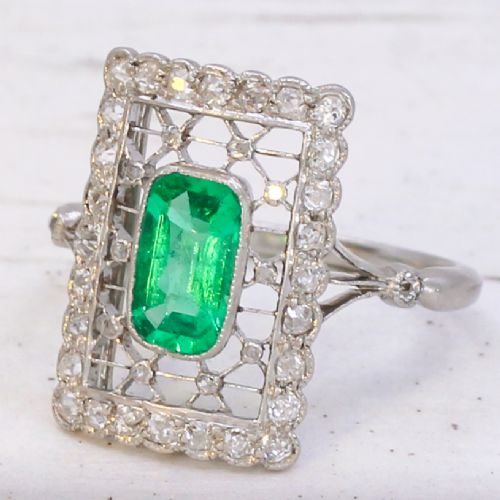
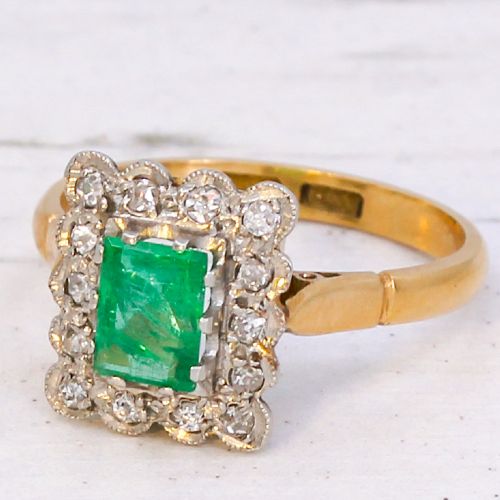
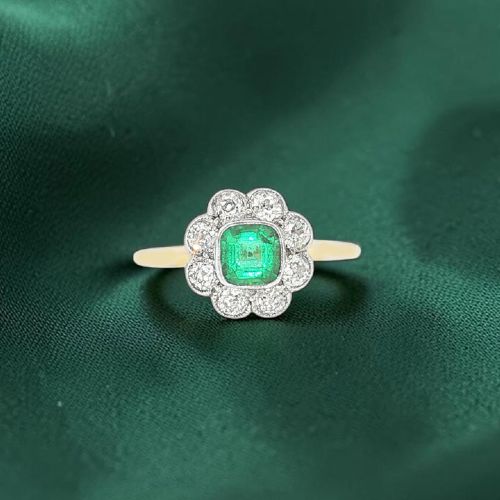
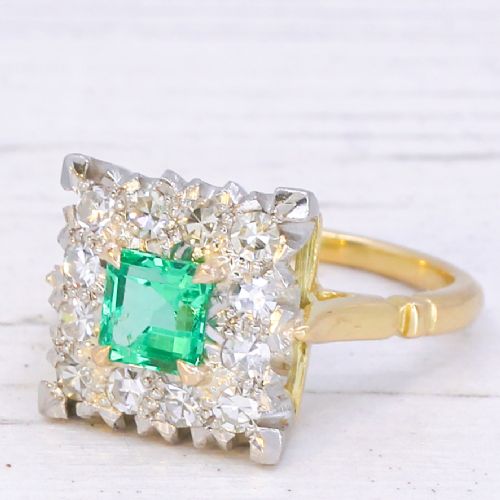
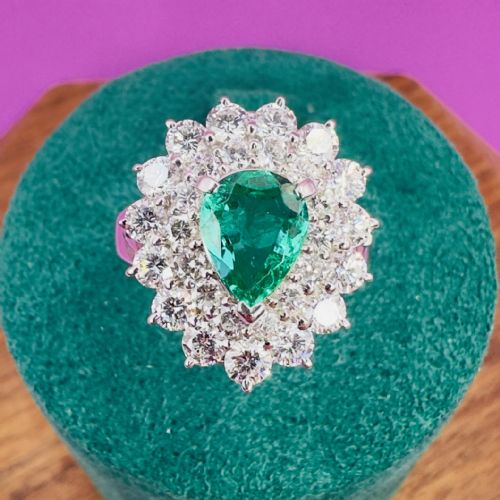
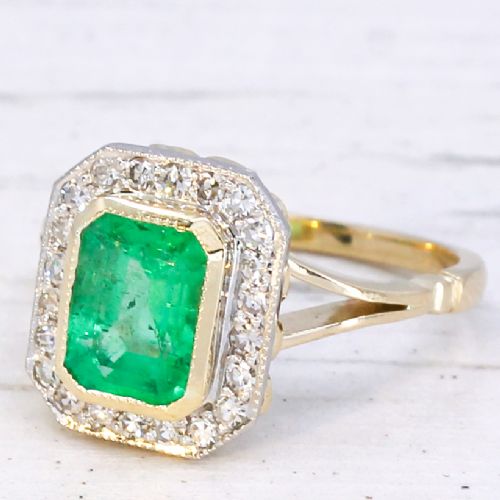


Emerald Cut Halo Ring
An emerald cut halo ring centres a striking gemstone within a sparkling border, offering timeless geometry that buyers seek for exceptional finger presence.
Emerald Cut Halo Ring
An emerald cut halo ring brings together a central rectangular stone surrounded by smaller accent gems, creating a distinct geometric silhouette. The selection on this page spans periods from the Edwardian era through the 1930s Art Deco movement and into the mid twentieth century.
Most examples combine emeralds and diamonds within precious metal settings, though variations incorporate sapphires, aquamarines, and tourmalines. Forms range from delicate cluster configurations to substantial cocktail and ballerina designs originating across the early to late 1900s.
How they were made
Master jewellers constructed these rings primarily using platinum and various purities of gold, including yellow gold, white gold, and eighteen-carat compositions. Platinum offered strength for intricate wirework and secure claw settings during the Art Deco period, while gold foundations dominated earlier Edwardian and later mid-century workshops.
Stones were hand-cut and meticulously set by hand, balancing old cut diamonds, rose cut diamonds, and step-cut emeralds within compact cluster arrangements. Metalwork often integrated delicate millegrain edges to soften borders and enhance the brilliance of surrounding diamonds.
The listings span multiple decades from the Georgian era through Edwardian, Art Deco, and mid-century periods, utilising platinum and gold alongside varied gemstones.
What varies in quality
Quality rests upon the natural origin and clarity of the central emerald alongside the proportional harmony of the surrounding diamond halo. Stones possessing certified origin reports or minimal oil treatments command greater appreciation among collectors.
The precision of the metal smithing and the uniformity of the stone settings distinguish finer examples from standard production. Superior execution shows in balanced proportions where the halo complements rather than overpowers the central gemstone.
The Emerald Cut Halo Ring Glossary
- Halo
- A concentric border of smaller diamonds or gemstones surrounding a larger centre stone. This framing technique increases perceived brilliance and visual presence on the hand.
- Emerald cut
- A rectangular gemstone cut with stepped facets and cropped corners. This facet arrangement emphasises stone clarity and depth of colour over direct sparkle.
- Millegrain
- A decorative technique featuring tiny raised metal beads along the edge of a setting. It provides a soft texture characteristic of Edwardian and Art Deco jewellery.
- Ballerina ring
- A complex cluster setting featuring tapered baguette or brilliant cut diamonds radiating outwards like a dancer's tutu. This form creates a dramatic tiered silhouette.
- Old cut
- A diamond cutting style prevalent before modern brilliant standards, characterised by smaller tables and high crowns. These stones display softer candlelight reflections.
Emerald Cut Halo Ring: Frequently Asked Questions
How do I care for my ring?
Clean your piece gently using warm soapy water and a soft brush, avoiding harsh chemical dips that might harm softer gems like emeralds. Store jewellery separately in fabric-lined boxes to prevent metal abrasion and stone scratching.
Regularly inspect claw settings by gently tapping the stone to check for movement. Professional checks every few years ensure structural integrity remains sound.
Are these rings suitable for daily wear?
Many examples withstand everyday wear if handled with care, though softer centre stones require mindfulness during physical tasks. Platinum and eighteen-carat gold provide durable foundations for regular use.
Removing your jewellery before swimming, gardening, or heavy lifting protects delicate settings and prevents accidental gemstone damage.
How can I tell the period?
Examination of mounting styles, metal choices, and cutting techniques reveals the era of manufacture. Edwardian pieces often display delicate platinum filigree, while Art Deco designs favour bold geometric symmetry.
Mid-century examples introduce distinct organic curves and varied cluster layouts. Hallmarks and maker marks stamped inside the shank offer further chronological clues.
What is minor oil treatment?
Natural emeralds commonly undergo traditional oil clarity enhancement to fill microscopic surface-fissures. A minor rating indicates a very small quantity of filler material is present.
Certificates from gemological laboratories specify the extent of these treatments. Lower oil enhancement grades generally correlate with higher collector value.